Friday, August 31, 2012

FAULTS; Imbalances in Wine II

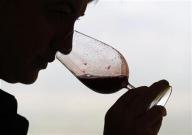
Walking into the wine faults exam, I was feeling  prepared and confident.  I had taken the Faults & Imbalances exam before and knew what to expect.  For this effort I had practiced recognizing the imbalances of excess sulfur dioxide or acetic acid at home using measured samples provided by the Society of Wine Educators.  Unlike any preparation in the past, on the day prior to the exam I tasted through a flight of faults with a noted certified Wine Educator, and thought that I did well. Along with the other eight(8) students I was called into the exam room that late-July early afternoon and upon reaching the threshold was immediately blinded by the exam room's brilliant white light that washed through the west facing windows. Ready to employ my new identification strategy, I quickly realized that this was going to be a challenge in a different environment!
Sight

Almost four(4) weeks had past.  I was confident and anxious to get the results that would proclaim that I had successfully cleared the second to the last wine hurdle to my goal of becoming a Wine Educator.  When my call to the Societies offices in Washington D.C. was returned I sank beneath the weight of their informed reply. Sugar, alcohol and SO2 were not identified correctly on my exam.  Although I had significant improvement in my scores from previous efforts, the heavy disappointment was draped upon me.
Sniff

But, I am getting closer to my goal with each step, so I'll try again.  The next scheduled exam for aspiring Wine Educators is in late September, and I'll register, pay the fees and be there.  In the period prior to the exam, I'll again look at and taste faulted, imbalanced wine samples to get a sensory memory for their qualities. And, I will look with a greater emphasis on the faults that were incorrectly identified on my most recent previous attempt. It is frustrating, because excess sugar, alcohol and SO2 are faults that should have been among the easiest to identify because of the way they feel in the mouth.

Taste
Excess sugar may be difficult to detect by sight or sniff, but it should have a fuller body than wines offering less sugar.  These samples should of course be noticeably less tart and have a richer mouthfeel, and this I should have been able to identify.  Ethanol or alcohol is actually sweet, but not to the rich extent of sugar.  It may offer less viscosity or texture when the wine is swirled in the glass, and as previously described, be hot on the palate and in the nostrils upon exhale.  I should have not missed this one either. SO2 or Sulpur Dioxide should be recognized by the distinctive 'burnt match' aroma off the glass.

I need just one more correct answer in this test section, and there's a good chance I'll get it done in September.


Sunday, July 22, 2012

FAULTS in Wine; Always Too Much!

Imbalances in a wines character or composition are considered to be a fault(defect) in the wines character & physiology. Good wine should be a complex and balanced living entity where its building blocks are perceived to be in balance with one another.  These principal elements are the same for all wines: alcohol, sugar, acids, polyphenols(tannins & pigments), and grape extract(flavor). Beyond that, all wine is about 80-85% water.  It is the recognition of imbalances in the same base wine that will be tested on the third chapter of my upcoming Wine Educators certification exam, titled "Faults and Imbalances Wine Identification".

Nine(9) glasses of the same base white wine are displayed across the tasting mat, including two un-altered wines.  Of the remaining seven(7) samples, all have been altered to around the threshold of recognition for various composition/tasting faults.  The game is to correctly identify each of these, including the un-altered(base) wine.  On sight, they are all not the same color, as several samples appear to be a darker hue. The noticeably darkest sample is immediately isolated, as it can be only one of two possible faults: excess tannin or oxidation.  If overly tannic, it will won't give away its imbalance by aromas, but by taste where it will quickly dry the top & bottom gums of moisture(protein-based saliva)and have a short, very dry finish by comparison. If oxidized, it will have a distinctive cooked fruit or sherry-like aroma, and upon taste may offer a memory of caramelized sugars with a dry roof of the mouth as well as a short finish when compared to the control sample..
Oxidation may darken wine color early.

Upon nosing the glasses, scent molecules collected thru the nasal cavity are transmitted to the exposed nerve receptors and on to the olfactory bulb of the brain, hopefully triggering a scent memory. Samples that smell of rotten eggs or burnt matches probably are the result of excess hydrogen sulfide, a common wine production additive (sulfur dioxide) that prevents spoilage. Aromas that remind us of vinegar or nail polish remover(ethyl acetate) probably indicate an imbalance in the wines necessary acetic acid once it combines with alcohol(ethanol). This perceived imbalance should 'burn' the nose, and create a flatter wine with an almost pasty body to it. As a fault, this combined character in wines is known as acescence.  Another tainted sample that may feel like a singe of the nasal hairs is excess alcohol, but it won't have the ethyl acetate characters.
Acetone or Ethyl Acetate pronounced aromas

An imbalance of alcohol can create greater 'body' in a wine, and I find that familiar whiff of alcohol to be presented upon an exhale through the nostrils following a taste. By appearance, higher alcohol may also be represented by more defined 'tears' running down the glass following a swirl. Another wine sample with the feeling of greater or richer body would be a wine imbalanced with excess sugar(sucrose).  Because it's sweet component is in greater proportion, this wine should usually taste cloyingly less tart and offer a mouthfeel of richer body.

Not surprisingly, acidity in wine balances out sweetness and bitterness. Of the acids found in grapes, tartaric, malic and citric acids are primary and tend to be 'fixed' in the chemical process of winemaking.  Tartaric acid is the most important among these, as it provides a prominent role in maintaining the stability of any wine. It holds things together, just like cream of tartar. But when it is out of balance, it excessively lowers acid strength(pH), robbing the wine of freshness and usually making wine citric tart.  If we correctly identified our samples, the wine that matches the control sample should be the single taste remaining.  Good Luck!


Many other faults, such as diacetyl(rancid butter) or brettanomyces(barnyard, gamey horse aromas) can also be present in commercial wines.  These can reflect everything from poor hygiene or improper wine stabilization in the cellar and post-production incidents such as heated storage or dirty glassware. Even as volatile and complex compounds compose each and every wine,  individual recognition thresholds for any defect or flaw are unique and vary to each wine taster. Beyond making recognizing trace faults in wine that much more difficult, I also have a limited recognition threshold with any wine when I have had too much!.

The exam is next week at the Societies annual conference, and I'll report results as quickly as I'm advised or become sober, whichever comes first.


Tuesday, June 26, 2012

FLASH: Value Wine Driven?

Perhaps my quest for certification as a Wine Educator is just an excuse to amp up my life-long hobby of searching out the wine worlds quality values.  Regardless, over the last few years I have gotten great satisfaction in exploring and utilizing the new wave of the wine industry's flash marketing web sites. Combined with the increasing number of Tweets, blog pages and magazine articles that arrive on my desk top each day, I am absorbing more current wine information than ever before. Each of these tools helps to bring into focus the ever-evolving global wine market that consumers increasingly have unparalleled access to.

Lots of choices make it hard to focus!

Generally, flash wine marketing sites are professional and well-run, offering buyers a limited amount of time to select from a limited number of daily wine specials at very attractive markdowns. A flash site can focus on a number selections of one brand or a single wine selection, but either way the opportunity to buy at a discount may be gone in a flash. For these wine brokers and marketers, the results of their effort to create a irresistible offer is almost web immediate.  Consumers here can't procrastinate, and typically feel like if we move quickly we're getting a great deal. Plus, these sites usually don't share their proprietary customer information with the suppliers(winery/brand), so for these retail sites there's no relationship building with the winery, only the e-commerce discount sites.
Good retailers direct us to fewer choices.

In the last half decade, wineries have been dealing with a long, recessionary economy and the consolidation of many wine distributors that can restrict their channels of revenue. Yet, wine sales have remained solid and per-capita consumption(and dollars) continues to grow across the nation. The wineries don't generally want to be known as discounters because it is so hard to rebound from, and are always market building for sustainable perceived value for their brand(s). So why use another revenue flume, like flash marketing? With flash marketing sites, wineries can clear out slow moving inventory, and raise some quick cash, and extend their reach to a savy new customer base that otherwise they may not have accessed. Plus, these sites can be a launch pad for a new brand or an easy way for an established winery to hold its pricing and merchandise their second label wines to savvy consumers.
Each a Great Wine, but which one to choose?
Current Flash Marketing sites, Like Lot 18 or WTSO(WinesTillSoldOut) fall into one of two models: either they buy the wine from a wholesaler or directly from the winery and then fulfill the order themselves. Or they take and process the order, and leave the producing winery to fulfill their order and deal with the ever-changing shipping issues. Just four(4) years ago, 25 states only allowed direct shipping from wineries or brokers, with current thirsty voter and revenue-conscience state house legislative actions, today it's grown to 38 states! Back in April of 2011 the NY Times wrote that these new flash marketing sites quickly have gained sales ground, producing annual sales in excess of $100 million. And sales for flash marketing sites continue to grow as a viable revenue alternative, moving quality wines in a persistently sluggish economy.


As flash marketing sites evolve, perhaps we'll see their tracking(and marketing) of customer selection & price point preferences, or maybe the creation of buying clubs so that like customers can take advantage of group quantity discounts.  There surely will be new access apps developed, if they are not already in the works, so that you can use links to social media sites or mobile devices to have consumers are always connected to the latest deal.  Regardless, flash marketing companies will evolve and eventually learn how to sell. Over time, the best of these innovators will succeed and find inventive ways to connect us to the deal. "Customers using these sites are loyal to the deal, not the winery", says Patz & Hall President Russ Joy.

Regardless, as the pretenders will fall by a wayside of empty wine bottles, consumers will have one more way to search out the global ocean of quality value wines.  Ultimately, these sites provide consumers like me with a broader selection of fine wines that otherwise we would not have access to in our retail communities. And, because we are thirsty and want to explore the wine world, these sites are definitely not a flash in the pan!

My focus should really be on faults in wine.  Next month I'll test(once again) to see if I am able to identify correctly the faults in six(6) glasses of the same wine at the Society of Wine Educators national conference.  In the past, I have used the fault formulas found in The University Wine Course, or a Wine Tasters Essence Kit. But, I have not been able to improve my faults recognition on testing, so I ordered an expensive kit from the Society.  Anxiously, I opened the shipping box, only to find that the ethanol or another vial had leaked, and all the identification labels were washed.  But, I'll feel better if I order some more wine on-line!

Sunday, May 20, 2012

CALIFORNIA: Thirsty Work

Cruise ship Old World wine selections
Cruise ship winelists are not unlike the average to below average restaurant wine lists in my Sonoma County neighborhood, except the limited choices are large production wines of national or international distribution.  So cruisers should expect to find Bogle California Chardonnay for around $32, and Ecco Domani Pinot Grigio for a little above $42.  My wife and I recently returned from a much needed and sunny Caribbean cruise, making wine choices that included better quality to value Oyster Bay Sauvignon Blanc($33.) and Melini '06 Chianti Classico Riserva($42.). Our wine holiday was a celebration of sorts.  Over the past four months we have seen the passing of each of our family pets, as well as the end of a long-term and courageous battle from my wife's only brother. On a brighter note, I was advised that I had earned a passing score on yet another portion of the Wine Educator's certification exam, the worldly blind Varietal/Appellation Varietal Identification. It was time to take a break and re-set.

Grape flowering promotes Fruit set

It is not surprising that in our absence our garden and in the surrounding vineyards things continued to grow in the Spring sunshine. Premium grape growing is farming, and as such is subject to many of the same factors and influences as those shouldered by apple or soybean growers.  Here in California's North Coast, over the last 50 years premium grape growers have endured many cycles of supply and demand, threatening vineyard pests, and flavor-of-the-week consumer trends. In Sonoma County, every harvest following 2007 has been smaller than the one before, with harvest wild fires, critically wet Springs and irregular growing seasons thrown in along the way. With the nation's economy in recovery mode, wine bottle pricing at retail has for consumers has fortunately remained generally stable, if not stagnant. But now the winds of change are blowing across these vineyard lands.

Recent surveys from wineries and grapegrowers offered stark indications of what consumers should expect in the years ahead. Can you say 'domestic wine price increases'?  My overview understanding is that the California bulk wine market(they buy unsold left-overs & lower end fruit) has very shallow inventories currently, and that grapevine nurseries have very little inventory for needed replanting or vineyard expansion. Industry symposiums in this part of the state have reported that wineries are working hard to secure long term grower contracts now after a succession of marginal volume harvests. To confirm,  recent reports have indicated that many Lake County Sauvignon Blanc contracts have increased by as much as 50% for premium fruit that only last year could not find buyers. Here in Sonoma County we are seeing premium Cabernet Sauvignon fruit contracts now approaching double what they were just last year at this time!

Fruit set
Land(vineyard) costs, labor costs, quality costs combined with production costs each contribute to that bottle price of California wine.  As a result, we have a broad range of price points from the generic to the very specific(vineyard).  But, what about the prestige of the brand name? “For something like Poppy(Pinot Noir), it could be a wine that is very well made, but it's made from Monterey County so the vineyards don't have that prestige,” wine consultant Fred Daniels explains. "While the(higher) $46 bottle comes from the Russian River Valley. “The wines there are typically run in this price range. If I go to Russian River and buy grapes from that area, the wines automatically will be priced in this price range.” And consumers should expect to pay more for these 'prestige' wines, as well as many more generic wines in the near future.  The current supply and demand challenges are just another reason that savvy wine consumers are looking to the quality wines of foreign producers: from New Zealand to South Africa, and the Languedoc region of France or the Dao of Portugal.

Domestic wine consumers do have, of course, domestic options. In a recent addition of Wine Spectator (April 30 '12) more than 100 West Coast value wines were reviewed and rated. Noted were more than 25 Sonoma County wines, and another 20 Central Coast wines rated very good to excellent at $20, or less. Widely distributed California brands like Estancia, Dry Creek and Kenwood made the annual value list. Not to be outdone, Washington State offered more than 20 value wines in this review, anchored by venerable Chateau Ste. Michelle and Columbia Crest wineries, contributing to the sub-$20 'Smart Buy' parade. For my part, I'll continue to pursue certification as a Wine Educator and continue to search out these and other quality international/domestic wine values.

The Society of Wine Educators annual conference in July will be yet another opportunity for me to measure my wine knowledge. One of the last hurdles in my quest, the Faults and Imbalances Wine Identification  has always been a big challenge for me.  But, with a new perspective after my re-set,  I look forward to re-focusing my attentions once again to the wines of the world. It is just another reminder that this is globally thirsty work!


Tuesday, March 27, 2012

BRAMBLES; Growth and the Muscat

Flooded Vineyards are a Problem

There was a plan in our small Sonoma county garden.  Organized nature, I think it was, with a tapestry of colors, shapes and textures that blend into one another over small spaces, seemingly isolated from one another. That was five(5) years ago, and we continue to move and re-plant, replace and mourn our garden losses.  My curtain of vitis vinifera grape vines and our barrels of seedless vinifera table grapes over the same period have also never really reached our modest expectations.  There would be overly vegetal growth with long, irregular canes and poor fruit-set; or when they had promise, like in 2010, my fruit would became a steady diet for local birds or raisin from a flash of summer heat.  Chronically disappointed by these developments(or lack thereof), this new Spring is now following a dryer than normal, and again a mild winter, and I have come to the new philosophy that sometimes things just do not grow the way we want.  We just need to grow with it!
Domestic Concord grapes

What continues to grow are wine $ales. I remember hearing once that the 'American sweet tooth' was reflected by the commercial dominance of sweet wines in the domestic marketplace.  With sweetened White Zinfandel, Boones Farm, Concord and other fruit wines prominent outside of dry-wine California, it seemed to make sense. It was also understood that an easy way to mask flaws in any wine is to add up to the allowable measure of sugar. But recent trends here are indicating that there are now newly discovered wines that have continued to add to the domestic power of sweet.
  • Wine Business reports that sales of retail wine, off-premise segments below $20 and above $20 all showed significant growth in the four(4) weeks prior to early March. This continuing trend is supported in large part by the great growth of sweet red wines and the newly found popularity of white moscatos(Muscats).
  • As impressive as that is, Wine Business has also reported that U.S. imports of Rose' wines from the Provence region of southern France grew at an astonishing 62% in volume in 2011 over the previous year!
  • Continued domestic wine growth has currently been reported by the Wine Institute as well as Nielsen Company, citing the 18th consecutive year of volume growth for our industry.  In addition, current numbers confirmed that U.S. wine drinkers are continuing to firmly be the World's largest wine consumers by overall volume.
  • Western Farm Press noted that a 2011 survey of California nurseries showed a whopping 25%+ of all grape variety sales were for the Moscato vine. It is expected that plantings of Muscat grapes are to increase by as much as 136% by 2015!
Immature Moscato

Perhaps the world's oldest domesticated variety, Muscat grapes(WINE STUDY:01/23/12) known by many synonyms are grown around the world, and as such are a thirst-quenching workhorse. They have evolved into a pretty large grape family. Uniquely, the variety has high concentrations of antioxidant flavonoids; about the amount found in many black skin grape varieties. It can produce dry wines in Spain or Alsace, semi-dry wines in Croatia(near its ancestral origins), or a sweet wine in the U.S. or Austria. Muscat is often fortified to arrest its fermentation or sun-dried to concentrate its sugars as with the VDN's of France or the passito wines of Italy, respectively. It even is the base for sparkling wines, most notably the Moscato d' Asti products of Asti Spumante made from the pressurized-tank Charmat method.
Moscato d'Asti Vineyards

An azure blue bottle with a golden foil sat chilled recently on our dinner table.  What could only be described as tropical aromas escaped even as I opened the bottle. A clear, golden straw tinted wine poured into the glass and what arose left impressions of stone fruits and warm Summer flowers.  The La Sirena 2007 Napa Valley Moscato Azul enjoyed that evening was a rich, dry and balanced wine; described by my wife as being what could be only imagined as a papaya/ guava galette. Delicious, textured and flavorful, and it could not be mistaken for fresh. But, the evolution of this nectar was such that it filled and enriched our senses with its warm color, its complex aromas and its mouth-filling fruit character. This was one terrific food wine that added so much to our meal, and I had a moment where I understood its now growing varietal popularity. 
Ripe Moscato


From what has been reported by current wine trends and this reporters personal wine journey, Muscat or Moscato is in pretty good shape.  Pricing, both imported and domestic, continues to reflect value, and selection seems poised to grow consistently in our marketplace. Sometimes we just need to grow with it. Now where did I put that bottle of dry Provencal Rose'?

Update: Wine Educator practical exam results should be coming out in the next few weeks, and I'll advise.

Salute!