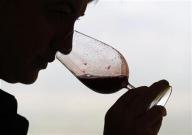
Showing posts with label Wine Faults. Show all posts

Friday, May 31, 2019

BRAMBLES: Amazing Taste!

One of many papillae types on the tongue

 Mostly, I sit back with amazement when in the company of more perceptive tasters.  The insights that their palates share with their brains just blows my mind, and humbles me in that I did not share in the same immediate recognition.  I feel better when I remember that a minority of the population may have inherited the abilities of 'super-tasters', the benefit/curse when many chemical compounds are perceived more strongly.  As it turns out in this inexact science, it may effect s much as a quarter of the population.  It was helpful then to re-examine how it is that we recognize 'taste'.

 Our taste receptors are not universal. These individual sensors ignite a chemical reaction to a smell, then compounded with those recognized by the tongue and throat receptors, all sending sensory information to the singular brain.  Additionally, our brains also help when we anticipate how something familiar will taste once we see it.  That perceived smell too becomes an integral part of what we savor and connects to our taste histories that are as individual as we are.  Common basic tastes of sweet, sour, salty, bitter, and umami(savory), can be found in just about everything we put in our mouths, with some strong compounds easier to detect than others. Add pungent, and astringent tastes, and you've got a real mental exercise for the brain to decipher with each anticipated gulp or bite.  Simply, the ability to taste uniquely for our species is just amazing.

Anticipation of taste sets a response.
 Even as a scent can be strongly impressionable, its the blanket in our mouth holding numerous receptor cells, each papillae with thousands of tiny taste buds that is tasked with sending a stream of recognition impulses to our brains.  As it turns out, it is in our individual brains where we actually  'taste'.  This relationship between our sight, our nose, our tongue, our throat and our brain means that 'taste' is unique to each individual taster.  An individuals taste history aside, strong 'flavours', like strawberry, lime or tar(can't forget that smell) are more commonly recognized, while many others require individual repetition and memory.  The exercise of taste, of recognition and repeat helps us to catalog and then anticipate what things actually taste like.  If we had never tasted a kiwi it would have very little flavor anticipation for most of us.


It happens in an instant.  We make connections that spark a memory, impulses that run non-stop from our brains to our olfactory perception and back again.  If it smells bad, we may decide not to drink it.  With nose-blindness or odor fatigue our brains can eventually create an inability to recognize certain odor compounds(consider folks who work at the city dump).  Plus, our sense of taste changes as we age, even as its taste memories remain.  Plus, a loss of recognition is generally accepted as we evolve into mature consumers of food and beverage, so much so that a fabulous sampling years ago of a acclaimed '69 Bordeaux may never be repeated.   


A beverage temperature(cold mutes aromas), the tasting environment(two vodkas and a heavy perfume), and certainly our health(stuffy nose?) also will effect how we are able to perceive taste. Tasting then is always trying to catch those past memories that may never come again. No two experiences are never exactly alike, and for each taster it becomes uniquely sensual.  It is this human ability to taste recognize so much, to experience wide variation, that keeps us in pursuit of the savor moment.  Tasting for us is the here and now of recognizing pleasing aromatic and flavor compounds, and the new memories they may create.  So, if I continue to enjoy drinking what I like, and focus on what is physically happening in that moment, it will happen again. Now I don't feel so out-witted when raising a celebrated glass, because I too am blessed with amazing taste!

Salute'


WineLinks:
  https://foodinsight.org/the-science-of-taste/
  https://www.sciencealert.com/scientists-demonstrate-that-taste-comes-from-the-brain-not-the-tongue

Tuesday, April 30, 2019

BRAMBLES: Chasing Greatness...

Beginnings of greatness on Sonoma Mountain AVA
Flowering grapevines now blanket the North Coast vineyard landscape, a fresh start with the annual anticipation of a great harvest bathed in warmer degree days later in the volatile growing season. Comparatively, it is not unlike the national pass time, where groomed conditions awaken in the early spring, in preparation for the long developing run into, hopefully, the post season and a chance for ever-elusive renown. Greatness should, after-all, be elusive, served only to the most resilient, the strongest, and the very best.
Prized Riesling vineyards of Johannisberg, Rheingau
For most wine consumers greatness is ever elusive, as the overwhelming majority of consumers sponge low price point wines consistently produced by large industrial complexes where accountants or shareholders may carry more influence than contracted growers or accomplished winemakers. Those that casually quaff the best of global wines, also find greatness as rare as fine vintages or perfect growing conditions for the most esteemed estates.  Additionally, something as personal as wine has always had the handicap of being subjective: what's good to me may be swill to you.

Part of what makes wine so socially enjoyable is the constant quest to discover a lasting memory that can be shared. Imagine a wine that you can have a conversation with, a goblet that for that instant becomes so much more than just a social beverage. When we find a wine that speaks to us, that opens its soul so that we have a relationship with it, that can be a moment to remember.  There are certainly wines that have all the bells and whistles, all the shining varietal characteristics delivered in balance across almost all price points.  But, a wine that can transport you to a place, to a surprising memory, or for a brief moment to display a story of its unique path is a very special wine that may be on the cusp of greatness.  It can be authentic, an honest expression.
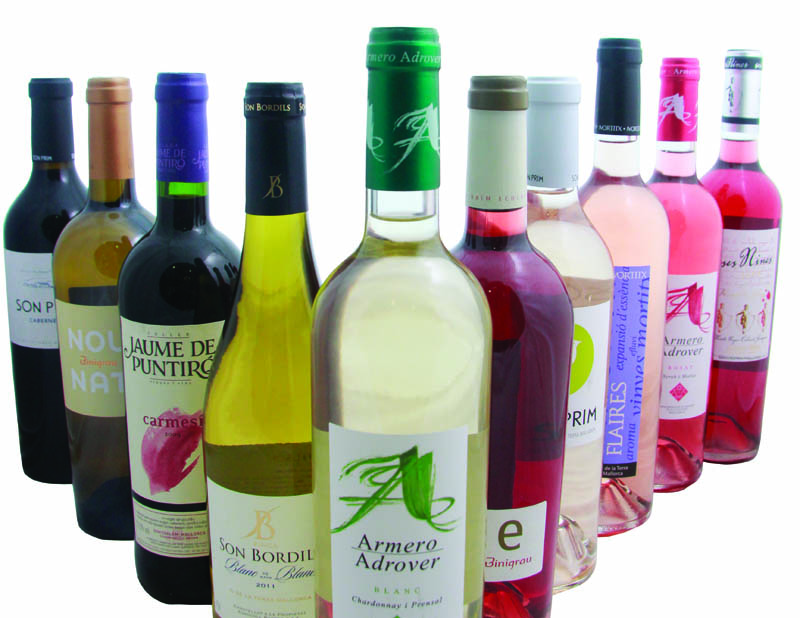
Terraced Syrah vineyards of Cote Rotie
Authenticity is not common to all wines, in spite of what may give us the appearance of vintage consistency. A harmony of the nurtured vine, its true fruit expression in concert with its place and environment, where its 'whole' is more that the total of its parts is then so much closer to authentic. Even as it may appear to most as too esoteric, when found in the glass authentic wines tend to stand out.  For many wine lovers' it becomes their 'ah-ha' moment.  These then are 'honest' wines, a liquid story of a time and a place and careful nurturing that allows them to approach greatness.  Routinely, this is more difficult with the dilution of multiple vineyard sources, where the singular focus becomes prismatic.  Talented winemakers then can then take numerous instruments to compose very unique, yet still authentic, liquid compositions.

It is those rare, innate attributes that are the reasons wine lovers continue to search for greatness.  In that moment when the bottle is pulled from the shelf or ordered off a well-tailored wine list can be filled with the weight of mystery, but buoyed with the yearning to find greatness.  Historically there are prized vineyards or estates that routinely get to the post season for wine lovers because they define, because they know who they are. How fortunate are then are those chasing greatness when its expression can be surprisingly found in the unexpected.  It's even richer when it is a consumer value.

Salute!


Saturday, December 29, 2018

BRAMBLES: Holiday Surprise!

Baby, it's cold outside, but winter pruning awaits
 Lucky boy. Over the course of these current holidaze, there are always surprises in store for the domestic wine lover.  It could be that long lost friend found at a local party, with a chance to catch up on the time that was missing.  Or, that surprise gifted bottle, festively dressed, for which you find yourself unprepared to reciprocate at that particular moment.  And, it may also be that discovery of taste, something fantastic in your wine glass that you have never before had a chance to explore.  Indeed, this time of fellowship and good will, a time of seasonal joy and warming fires, may just offer the wine lover who has gathered with good natured friends an unexpected and eye-opening surprising wine holiday.

In the north of Italy, framed by the alpine foothills and the lakes Como & Garda, lies the ancient Lombardy vine region of Franciacorta DOCG. In spite of making wine here for thousands of years, this important region has a relatively young sparkling wine tradition of producing traditional method sparkling wines(second ferment in bottle, just like Champagne).  Only designated DOC for its wines in 1967, it became the first Italian region to regulate the laborious bubble process just back in 1995 when elevated to DOCG status.  Only regional chardonnay, pinot blanc and pinot noir are permitted, and the minimum 18 month lees contact in bottle is greater than that required in the traditional sparklers of Champagne AOC.  This typically results in fine bubbles, and a yeasty, but refined, mouth-watering signature.

Like soldiers on a parade ground, the stemmed flutes were lined up as the cork escaped from the celebratory bottle of non-vintage Franciacorta.  In the golden glass, beads of tiny bubbles streamed to the top.  With anticipation, upon our first whiff of its bouquet it was apparent that this wine was faulted by TCA(trichloroanisole), a natural chlorine based compound that mutes the nose and mouthfeel, promoting a flat and musty character akin to damp newspapers or 'wet dog in a phone booth'. Despite its appearance, the 'corked' wine had lost its magic, and as a result, muted the hopeful celebration.  As such, it was again a reminder, a holiday surprise that we are always hopeful to avoid in such gleeful company.  Faults can occur when our excitement and our spirits are high.
Summer Chardonnay of Franciacorta
With shopping bags at your feet, sliding down the restaurants' wine list, one may dismiss selections that are more than twice the cost of any entree, until finding a familiar name.  So it was with an Anderson Valley AVA pinot noir selection from a quality boutique producer, Phillips Hill. Perhaps it was the warm hospitality found inside the old apple barn off Hwy. 128, or the distinctive, artsy labels, and certainly, the high standards of quality enjoyed across the winery's portfolio selections. But, it resonated a trust and anticipation that was rewarded when a 2016 vintage Boontling Pinot Noir, Anderson Valley is presented at table.

Shimmering garnet in the glass, its pronounced aromas fill the head with the scent of racked dark seasonal fruits.  On the palate, it was a broad, but refined range of cherries, red currants, and a hint of baking spice that evolved across the mid-palate to a deliciously lingering finish, all held together by its brisk acidity.  The wine represented all that's grand about this cool region; the diversity of its soils and micro-climates, it's high standards of expression from a blend of local pinot growers'.  Bites of the rabbit casserole at table sang harmoniously with the pairing, lifting spirits bright.  Oh, what fun it is to find in one's glass a delight that is so much more than just a beverage.  It's a warm memory, a whimsical escape, a dinner companion that's a joy to share, and, a delicious Holiday Surprise.

Salute! 

Wine-Links:
 https://www.franciacorta.net/en/wine/typologies/
 https://www.avwines.com/

Friday, August 21, 2015

TASTE; Apples to Apples


"The quest for taste might be nothing other than a voyage out of childhood...It then occurred to me that perhaps what I was searching for in my own quest for taste was some sort of adulthood."
L. Osborne, The Accidental Connoisseur


Golden, bright honeysuckle in color, the glass offered aromas that reminded me of a sliced apple dipped in butterscotch.  Recognition of that 'apple' character promising to be found in this Chardonnay just had been taken for granted.  I have simply come to expect and anticipated finding something reminding me, even slightly, of apple or pear in the varietal Chardonnay. Interestingly, later that afternoon I sliced in to a beautiful, pristine orb of a Gala, and took a bite.  There was no 'apple' taste at all. Beyond its conventional and polished appearance, how should its taste, I thought, be different than that of an Asian Pear, or even that chilled glass of Chardonnay? What actually is the process of taste, and how do I recognize the alteration of the unique sensations of what we generally describe as taste? It was going to be more than just apples to apples!


By appearance/sight it looks like a fruit that we have had before; a familiar shape, color and texture. Observationally, that glass of wine seems also to be recognized: clear to bright, a light straw to golden in hue. There are even a few in my tasting experience that have offered a slightly green tint to that brilliant glass. My nose above the glass, its aromas lift to recognition thru the nasal cavity, stimulating the olefactory bulb with a quick relay to the limbic system in the brain, the reaction matching previous sense memories. It looks like an apple.  It even smells like what I had anticipated an apple to smell like. Taste, after all, is an individual sensory detection.  It evolves into a rationalized cognitive: the knowing and perceived rational thoughts of distinction; a genetic pre-disposition that affirms the recognition of various sensations, flavors or textures. As a chemical reaction, thousands of taste buds on the tongue, react consistently to these recognized primary tastes: sweet to sour, salty to bitter, and then unami, or savory. Yet, even as our universal recognition or impressions of these primary notes continues to evolve over a lifetime, scientists have recently identified the sensation of fat to the buffet of basics. That initial sense of smell, as well as our feelings for textures, and temperature also will influence ultimately what we perceive as taste.


Unfortunately, these gustatory perceptions begin fade with age, and additionally, not all of us taste things in exactly the same way. There are even a minority of the populations that are recognized 'super tasters' due to a mysterious genetic concentration in their taste buds!  Yet each of us over a lifetime have enough reinforcement of the same or similarly experienced chemical reactions to re-actively recognize and even to categorize taste; the red fruit family(strawberries, raspberries, etc.), the stone fruits(you know who they are), the chemical family(petrol, anyone?), the tertiary family(mushrooms and wet earth), etc. As a result, a marketable contemporary lexicon has become the convenient language for the presumed sensory identification, the sensual description of the living, breathing, ever-changing elixir that is wine. In my case, when a fruit, like an apple, does not taste the way it had previously been categorized a flavored disappointment is bound to set in.
Chardonnay ready for the press


Wind to Wine Grand Tasting, recently featured the wines and the winemakers of the geographic Petaluma Gap region of southern Sonoma County.  Currently part of the broad Sonoma Coast AVA, this contiguous low land region is an east-west wind gap extending from the Pacific Ocean to San Pablo Bay. Offering foggy mornings with generally sunny days, it typically has windy afternoons which thicken grape skins and shut down photosynthesis in the sun drenched vines. Arrested by the areas cool nights that retain a naturally high acidity in the fruit, this sub-region is home to around 4000 acres of vines across more than 200,000 acres of rolling coastal hills; a mix of alluvial soils: gravel to loam, that stretch from Marin to southern Sonoma counties.


After tasting many Chardonnay's from this contiguous region, I assessed that an apple personality, under-ripe to over-ripe, tart to crisp was a flavor foundation to most samples. Its perceived personality jockeyed for attention with many other recognized elements: pear, citrus, barreling, and mineral. As for sight recognition, each selection was on its bottle clearly marked 'Chardonnay', and I began to feel the waning loss of the once pretty apple that did not really taste like an apple.


"I want to live in a world of thousands of different wines, wines whose differences are deeper than zip code, each of them revealing fragments of unending variety and fascination of this lovely green world on which we all walk."
T. Theise, Reading between the Wines

Cheers!


Sunday, June 28, 2015

BRAMBLES: Tasting Science


*The following will offer a minimum amount of science.

Fermentation: a 'natural' physical change with happy results.

Science. Even an exploratory thought of it was never of interest to me, and even the baking soda fueled rockets of childhood that left the family yard were a just a passing flight. In high school when given the choice between chemistry and physical science I chose the latter and was lucky to just get by. As a result, the basic wine science required by the many industry examinations remained a very challenging and difficult understanding for me to fully comprehend. Plus, I don't think my brain works that way.  Perhaps I am more of a visual artist, recognizing patterns, textures and contrasts.  But as much as I love wine, I am beginning to enjoy the relationship that wine has always had with science.  Wine, of course, is life in a bottle!


A simple grape holds the physical properties that allow it to reflect the environment in which it was grown, give it the elements to produce healthy fruits and juices, and can also create an intuitive and developing life apart when captured as wine.  On its skin sit millions of native yeasts that in the right environment will feed upon its hosts sugars(6 carbon- fructose and glucose) and a resulting ferment creates an amazing physical change.  With the resulting by-product of CO2, the catalyst produces alcohol(ethanol); plus a ferment will contribute more personality and character to the juice, built on the backs of its principle(among many) acids(tartaric and malic) and developing organic compounds.  These magic yeasts need air to do their work, and yet too much air will drastically change the character, even the nature of wine(think vinegar from acetic acid). Thankfully, it is a controlled fermentation that makes wine apart, more evolved than just grape juice.


The resulting acids add important balance to the 'fruity-ness' of the wine, inhibit the production of bad bacteria, and unfold to bring out a wines flavor(personality). Once fermented, oxygen becomes their enemy, or their friend, depending on the style of wine created. Oxygen can be safely hidden from outside the must cap of an open top fermentor, or measurably introduced to produce a unique veil of yeast(flor) to slow the wines' change.  White wines that are about freshness hide from too much oxygen, while red wines in barrel measure an oxygen exchange thru porous barrel staves or bungs to purposely create oxidative and reductive environments. Magically, all the natural accidents happen, and wine appears.  It tells of its nurturing, the hours in the sun and its journey to the bottle.

All that CO2 must go somewhere!
It is a wonderful accident, repeated over and over again.  The best of wines, like the 2003 Opus that just recently happened to be near the table, offer it consistently. Older vintages come together, evolve as the strength of their acids age along with their vitality. And when offered the freedom of oxygen the wine will flower, offering an all too brief  bridge to a lifetime of nurturing in the bottle.  As I was recently reminded, nurturing to maturity can be a very pleasing and good thing to enjoy, but certainly greater to share. I do still, however, need to be reminded of my wine science.


Anthocyanins: water soluble plant pigments,  influenced by strength of the acids
Aromatics: the results of volatile esters(good & bad) produced during and after fermentation.
Esters: result of ethanol & acid at the same party, and you smell them.
Fusel alcohols: natural heavy alcohols come along, and may not be wanted.


Malic acid: think Granny Smith or Pippin apples, and you'll be fine.
Mercaptans: volatile sulphur compounds stink
Polyphenols: bitter tannins, anti-oxidents and the coloring compounds held in grape skin
Tartaric acid: principle acid that crystallized to become cream of tartar


Raise a glass to the marvel of science, and Cheers!


Monday, March 30, 2015

RED BLENDS: A New Old Trend

Vineyards of France Sud front the Pyrenees
Budbreak has started in the spring-like Russian River Valley, a sure sign that our growing hopes to produce the very best wine(s) is renewed.  Recently, a January Nielsen 2015 report noted that domestic red blends, as a consumer category, eclipsed $900 million in annual retail sales; strong evidence that this is a very fast growing selection trend for a growing number of wine lovers. But why? There have almost always been blended wines. And, marketers have trained us consumers to follow the minimum 75% rule for varietal identification. My local wine shops display vast selections of domestic wines, with prominent signage by grape variety. As a consumer trend it seems what was old has once again been renewed, just like our grapevines.

Today, I believe,  there are more widely distributed producers offering consistent wine quality than ever before. And, the science of global viticulture, promoted by world leading institutions such as University of Adelaide(Australia), the University of Bordeaux, and our own UC Davis, among others, continue to promote advancements in sustainable, quality grape farming.  Plus, a growing number of wine consumers have wine traveled, explored broader international selections in wine by the glass programs, and may have found blended wine pricing easier on their young pocketbook.  Yet, for more than a thirsty generation, many consumers have been adamant that they would only drink Cabernet Sauvignon, or anything but Chardonnay(ABC's). 


What we know about blending wine is that it can add complexity: more than a single flavor or personality, it can enhanced a wines color, power or finesse. A blend varietal may be needed to add balance, to offset sharp astringency or to contribute a firmer backbone or an acid adjustment to bring the wine into balance.  Many times, for these 'built' wines, the sum becomes greater than its component parts. Over the centuries, wine grape growers have discovered which varieties grew best(productively) in their vineyards, producing quantity that many times sacrificed quality. A local blending may have been required to produce a better wine. Importantly, the market was historically local, so comparisons and competition were non-stop. And not all production would have been in the hands of the grower, as a specialist, a negociant, would have built the wines from local resources.

With mandated standardization, the southern Rhone wine based in the widely grown red variety Grenache, Châteauneuf-du-Pape once allowed 13 designated blended varietals.  Initially designating 10 approved varieties in 1923, it grew to 13 in 1936, and currently allows 18!  Further north a Côte-Rôtie AOC is typically a blend of Syrah and up to 20% Viognier.  Over in world-famous Bordeaux AOC, we find a classic red marriage of Cabernet Franc, Cabernet Sauvignon and Merlot, providing the house(chateau) the resources to create a blend that reflects their unique place.  White Bordeaux's typically blend Sauvignon Blanc, Semillon & Muscadet, to create their signature, and a domestic 'Meritage' is by definition a blend.

Traditional method sparkling wines are not immune. Classic Champagne is a blend. Head south to Spain and sparkling cavas are blends, too.  As is the Fino Sherry I adore. With more than 500 chronicled grape varieties, Italy's Super Tuscans, and most wines produced from their twenty DOC wine regions are typically blends.  With some of the earliest protective wine regulations, Portugal's red native's: Touriga Nacional, Toriga Francesa, and Alicante Bouschet are prominent among the hundreds of grape(castas) varieties approved for production of Port wines.  The winemaker can ferment the varieties together, combine during the aging process, or marry in a tank prior to bottling, all with the goal of creating a better wine.

If a drinking memory serves, two generations ago you could easily find a restaurant wine list that offered, "Red - White - Rose'".  Those bulk wines were blends, and seemed to pair effectively with everything on the menu.  Then you needed to be 'Cab-savy', or trend with the latest and greatest Chardonnay.  Perhaps it was the business meals and the expense account, or maybe it was just easier to remember Merlot rather than Amarone della Valpolicella, but we called out single grape varieties.  Today, it seems just as common to call for an easy drinking, great food-pairing proprietary blend.  We are renewed, having happily grown into something new that is an old trend.

Values Found:
  • Dona Paul Black Label Red Blend 2012(Argentina)
  • Bogle Vineyards 'Essential' Red Blend 2012(California)
  • E. Guigal Cotes du Rhone 2013(France)
Salute!


Friday, May 31, 2013

BRAMBLES: Grape A to Z

Alexander Valley Zinfandel
As with old vine Zinfandel, long-in-the-tooth persistence can pay off.  I've been on a long quest for a prized certification, and have been frustrated with my results as of late.  With age comes perspective, they say, and so I have come to recognize that this coveted prize is just as much about how you get there as the goal.  As a result, I've decided to pull back, to go back to the basics to begin anew an understanding of the composition of wine and why we taste it the way we do.  For me that means going back to wines origin: the grape.

ACID:  important in the production and life of wine, acids can make a wine taste flat or it can make it taste tart, even sour. Acids are also responsible for a wines freshness, its crisp mouthfeel, and are  building blocks for the longevity of the wine.
  • Tartaric is the principal organic acid in all wines, and naturally, largely comes from the outer layers of the grape as this chemical factory in edible skin develops.
  • Malic acid is common and widely fixed in many fruits; in winegrapes it is sharp and tart(think green apples), concentrated in the flesh of the berry.
  • Citric is in all wines, but relatively minor compared to other fixed acids. Cool climate grapes are generally high in fixed acids(as in Riesling or Marlborough(NZ) Sauvignon Blanc), where warm climate grapes offer fixed acids at more moderate levels.
  • Volatile acids, like Acetic acid, which has a hard, vinegar-like taste, is produced by the process of fermentation. The other fermentation acids: Lactic acid, which is not a 'sharp' acid(think dairy, please)  and Succinic acids(bitter-sour), are fixed in fermentation.
AIRE'N: Native to Spain, Aire'n is the most widely planted white grape variety in the viticultural world. A late ripening, trailing variety, it is quite drought tolerant, and also harvested as an eating grape.
Grenache

GRENACHE: Among the most widely planted red wine grape varieties in the world, if not the most widely planted.  It is a world traveler, likely native to Spain(Aragon), it has spread globally from southern France to Australia, and as a result, known by many synonyms(Garnacha, Alicante. Connonau, etc.).  Its nature is to be high in sugar, light in acid, tannin and color; it buds early and ripen late, making it adaptable to warmer climates where it is principal in many blended wines and rose'.

GRAPE: Vitis, by genus, and for most of the world's winemaking, vinifera by species A wines character and personality is defined mostly by the outer layers of each grape. As a bio-chemical factory, dark berries are typically richer sources of poly-phenols, anthocyanins,  and other nutrients.  Traces of minerals, vitamins and pectic substances are also composed within the grape, but the grape berry is mostly water by volume.

IMBALANCES:  Opposite of  balance in wine, where these identifiable characteristics, traits or measures stand out and prevent harmony in any wine.


OFF AROMAS: Smells that are perceived as being out of balance, as is stale, un-fresh or fowl, dominantly sherry-like( and its not a sherry), dirty or alcoholic.


PHENOLIC COMPOUNDS: Contributing color, flavor and texture to wine, they are naturally found in the seeds and skins of winegrapes. Tannin is a phenolic compound that provides structure and texture to a wine, and anthocyanin compounds provide color.
.
SUGAR: Carbohydrates Fructose and Glucose comprise about 20 - 25% of the fruits volume at harvest, and are the grapes ferment-able six carbon sugars.


TANNIN: found on the grape stalks(pedicel), skins and seeds, is a structural building block for the wine, providing flavor and aroma. Tannin, an organic phenol compound, is part of our natural world.  It exists in the bark of trees and in the pits/seeds of fruit.  In wine, tannins, will produce an astringent or drying effect in the mouth, just like black tea(which also is tannic), and are largely responsible for the color stability of red wines.

 VITIS LAMBRUSCA: Native to North America, the most widely know variety is the Concord grape.  This species of grapevine is generally characterized by its pronounced musky or earthy(foxy) aromatic compounds. Delaware and Niagara are other popular cultivars.

The pulp of the matter is that there is so much more to the fruiting berry known as grapes.  But, history to production has been covered, in part, by other entries in this journal, and the chemistry may be over my head.  As I have been given a unique opportunity by the Society of Wine Educators to fulfill my ambitions in wine education, this survey was about being reminded of wine's foundations.   I continue to gather and store more wine information, so it is necessary on occasion to step back and gain(hopefully) perspective.  After all, the long and storied history of wine has been part of our human culture for thousands of years...just like Zinfandel.

Cheers - A Glass full of Life!


Tuesday, March 5, 2013

BRAMBLES; My New Faults

Graphically illustrated, a recent chart displayed in Wine Enthusiast magazine, showed a steady decline over the last decade of global wine production. Think about it; nothing is getting cheaper, availability of wine imports seems to grow every year in this marketplace, and the quality standards adopted by wine producing countries, as well as consumers, continues to improve. With a short supply, the handwriting's on the wall: your favorite new wine should only be getting more expensive, including even the generic, lower tiered wines in the foreseeable future.
However, U.S. wine exports continue their growth for now the third year in a row.  That's new market growth, even as consumption per capita grows here.  Although exported volume was down compared to prior years, wines value grew by over 1.43 million dollars, according to the Drinks Business.  As expected, Asia continues to be the big growth market for domestic vintners, and more than 90% of those wine exports hail from our quality California producers.  Finally, there is someone willing to pay for it!

Recommended by the Society of Wine Educators, The Bubbly Professor, Dr. Jane Nickles, in a September, 2012 post,  has offered some insights into and strategies for success for my upcoming Wine Faults & Imbalances exam.  Prominent among these are to learn to describe what you are looking for in the control as well as the fault samples. I really have not fully done this in the past. She further recommends having several pre-test Faults study sessions, using the Faults kit sold by the Society of Wine Educators.  This part I have prepared for past exams, but it is obvious that I need to do more to be successful in this endeavor. What new strategies, if any, should I adopt?

Taste the control sample and analyze it. What is its hue, how do you describe its 'tears', its color intensity?  What about the aromas and it's taste components? Where exactly on the tongue(top/sides/tip) do you detect its acidity, and for how long? How would you describe the sensation of bitterness that follows?  Once completed, address the faulted samples so that you can find seven(7) imbalances and the glass that is matching the control sample.Using sight, smell and finally, a taste, detect the following:

Alcohol: it's heat driven, a nose tickle, a warmer mouth-feel, adds an oily, viscous sensation
Sugar: pleasant, slippery mouth-feel that contrasts to the control sample(less acidic?).
Acid(tartaric): as in cranberries, cherries, grapefruit or New Zealand Sauvignon Blanc, having the zing of tartaric acid.
Acescence: Acetic Acid combined with Ethyl Acetate offer vinegary off-aroma and flavors, reminiscent of a sweet-sour tang, like vinegar.
Oxidation: in white wines, a loss of fresh, fruity aromas, becoming flat. A color loss, turning slightly brown, adopting the apple-cider aromas of acetaldehyde.  It may remind us of a fino sherry.
Sulfur Dioxide: a matchstick, burnt rubber, or mothballs aromas, producing a harsh, bitter or even a metallic sensation on the palate.
Tannin: Grape tannin with its usually darker hue as used by the Society, produces a bitterness to the wine.

A gift of Sight;
After a swirl, the faults of sugar, tannin and alcohol should all have thicker, slower 'tears'.  One or two of the samples should have a darker hue due to added grape tannin or the effects of oxidation.  It would help to remember or isolate these visual clues.

Notable Nose:
Does the sample smelling 'less-fruity' offer a slight stinging sensation to the nose. It may be Alcohol. If the aroma in the glass is distinctively 'vinegary' then this should be Acescence. What if the sample in the glass had a noticeablly different aroma reminding you of a fino sherry or apple-cider?  Most likely, this is the result of Oxidation. That mild nasal stinging sensation from another sample having the faint aroma of burnt matchstick is probably the result of the taint of Sulfur Dioxide. Faults of tannin or acid will more than likely not have aromas detectably different than the control sample. But, we have already identified tannin as a darker sample, and it now should be easy to isolate.

Open up & Taste:
Slightly bitter, with a warmth on the palate and a lingering bitterness on the finish would identify Alcohol. With a contrasting mouth-feel, the sample with added Sugar, is richer, smoother and less acidic across the palate. I've usually thought of it as cloying compared to the others, but as yet have had difficulty in consistently identifying it.  Acid, it is said, feels different in the mouth. It should be a sharper feel, with a tingle over the top and sides of the tongue, a feeling of acidity lingering long after the comparative control sample. This finish may be distinctively dry and astringent.  If the sample has a sweet-and-sour tang and its feel of sour acidity hits across the top, not the side of the tongue, it is probably Acescence. Oxidation has a sharp, woodsy 'bitterness' that is felt on the top of the palate and middle of the tongue, while Tannin has a drying effect and astringency.  Sulfur Dioxide should taste harsh, and almost metallic.

Sampling in Bellagio, Italy
On a cloudless last day of February, I addressed the white wine samples bordering a white placemat, along with a dozen other hope-full tasters. As much as I attempted to follow my adopted strategy, recalling the unique characteristics of faults in my head, it was proving to be daunting.  All but one sample offered the same hue, and only one or two really displayed unique aromatics.  These new faults of mine were going to be challenging, but I approached this Wine Educator exam being better prepared than ever before.

Results will be offered by the Society in about six(6) weeks.   Until then, did I mention that according to market analyst John Fredrikson, the U.S. is now the largest wine market in the world!  Hopefully, there must be more opportunity here in this marketplace for someone with a wine recognition of their new faults.

Cheers!

Monday, February 18, 2013

MALLORCA: February Calms


In the middle of a blue sea it appears almost magically, this sparkling jewel. As seen from the air, the imposingly rugged Serra de Tramuntana mountains would seem to present a formidable barrier to the Iberian mainland to the north.  However, circling at 10,000 feet you notice how vulnerable this saddle-shaped island is on its western and eastern shores.  Here there have been prehistoric settlements, the Romans and the Byzantines, the Moors and Berbers, the Counts of Catalonia and the Kings of Aragon, all of which had influence and claim to this land.  Now I've arrived at the largest island in Spain's autonomous Balearic Island archipelago, anxious to taste and explore.
Along the Ma-13A Wine Road


It is the food and of course, the wine which are my beacon in mid-winter Catalonia. This islands beautifully rugged landscape is dotted with lamb, filled with aromas of roast suckling pig (lechona asada), and stewed in the mild flavors of turbot. Mallorca produces most of its wines within its two D.O. regions (Denominacion de Origen) of Consell-Binissalem, a corridor running from Santa Maria del Cami to industrial Inca along the Ma-13a wine road, and in the east of the island among the remote rural villages of the Pla i Llevant DO. Lower tiered wine production falls under the 'Mallorca Regional Wine' designation, most of which is produced in the western foothills of the Serra de Tramuntana's and Costa Nord region. What is produced here tends to be enjoyed here.

This crumbling limestone landscape in February is a sea of white almond tree blossoms, grey-green olive groves sprinkled with orange trees and scored with rock walls and terraces.  In its abundant sunlight we enjoyed the freshest sea foods, rich traditional dishes and bowls of the most delicious olives while in awe of the landscape/seascape that graced our views.  One day it was a glorious picnic lunch at the islands exposed northern tip of Cap de Formentor, followed on another by a pilgrimage to blustery Valldemossa(the island's highest village), where composer Chopin spent a notable monastic winter in 1838. Our quest was rewarded here with savory dishes of rabbit stew and roast lamb, paired with full bodied wines of the local Manto Negro grape.

Hanging on to the edge of the terraced north face along the Tramuntana's, we drove to Soller passing the most picturesque coastal hill towns.  Another sunny day, and we were dining on charcuterie at a prominent olive producers in Caimari, deliciously contrasted with a bright Premsal Blanc and Chardonnay blend from a local quality producer. With another brilliant sunrise, we were driving southeast towards Manacor, visiting ancient hilltop towns of Arta and Petra, both villages of the Pla i Llevant DO, and then on to enjoy the days fresh catch in sparkling Portocristo.

Another Alcudia sunrise and it's a quick drive across the island, recharged by an upbeat day in cosmopolitan Palma.  After a morning exploring the Palace(Palau) and the Cathedral(Le Seu), we dined across from the harbor at the superb Caballito Del Mar on Black Pallea and Turbot of two textures.  We chose a beautiful Verdejo from the mainland's Rueda DO to complement our dishes and make us thirsty for more.  But, that is how it is in Mallorca.  A little is never enough, so you want more.  Back on the east coast in picturesque Port d'Alcudia with its sprawling resorts and long white beach, I asked a local if our good fortune with winter weather is typical.  He replied, "in Mallorca we say, 'February calms'."

And so it was.  Our off-season visit to sunny Mallorca calmed our spirit as we walked along its beaches, wading in the cool Mediterranean. It slowed our pace, but not our absorption rate as compared to our Barcelona visit the week before. At the end of our visit we agreed that our time in Mallorca was not long enough and made plans to return.  Not when the northern Europeans invade, but when the island calms as it has this time fur us in off-season Mallorca. 
'Exciting' petanque along Bay of Alcudia

Registration for my next certification exam for Wine Educator has been confirmed for the end of February.  Results will be shared here as soon as available, but until then, I'll be inquisitive about the wines of the world and I'll try to stay Mallorcan  'calm'.

Salute'!


Monday, October 29, 2012

MALLORCA: Seperate & Increasingly Sunny

Binissalem vineyards
 When looking at the view count from the over 50 installments of this post, those that seem to draw the most interest focus on a geographical region.  But now, as I've passed the theoretical portion in my pursuit of the Wine Educators certification, the details of worldly viticulture and oenology have given way to the practical: dissecting wine in a glass. It has been five(5) weeks since the last Wine Faults & Imbalances exam, and as yet the Society has not released my scores.  So I keep drinking the wines of the world, I try to keep up on wine news and find new opportunities to teach about the wonder of wine.  But within myself  I continue to find a steady undercurrent of streaming interest in wine places, most recently sunny Mallorca of Spain's Baleric Islands.

Although there is evidence of Stone Age fermentation vessels here on these isolated islands,  it is generally observed that the Romans brought wine to Mallorca prior to 100BC. Centuries later the Moors were here, then the Catalans, and then for almost five hunded years following, the wines of this island were celebrated with some of the best in Europe. Near the end of the 19th centuiry, this island barely 40 miles wide, had more grape vine acerage.than larger Sonoma County has today.  Mallorca was not immune when phylloxera raged across its agricultural and rugged landscape.  Even as the vineyard blight was not enough to bury the islands wine industry,  almost a century of political unrest, World and Civil Wars followed. With the expanse of middle class consumerism in post-WWII, eventually the sunny islands economies began a progressive move from agriculture to tourism. Today tens of millions of international visitors each year drink most of Mallorca's wine production on holiday and have seen a contemporary push towards new investments, technological improvements and increased quality in the islands long established wine industry.

Wines of the sun drenched Balearics have come a long way.  In the late 60's, the esteemed Andre Simon in Wines of the World said, (their wines) "never go higher than the simple vinos corrientes that are usually good...", and found the region so unworthy as to  not include the islands on his wine map of Spain. But, along the way, 1970's national legislation to align with its ECC trading partners upgraded the industry standards, regulating quality, production and varietal selections. Reflecting Spanish quality controls, its mufti-tiered system was topped by DO or Designation of Origin wines of superior quality and became law in 1990. But in Mallorca, like the majority of Spain, most of the production was in regional wines, generously grown in higher volumes across calcareous to fertile terrains.
Mallorca, largest of the Balerics

South of the impressive Serra Tramuntana, lies Binissalem DO, an expanse in the high central plain of about 1000 limestone and sedimentary soiled acres that parallels the cross island Ma-13a motorway. It is the first of the Baleric Islands DO's, and was established in 1991. Here quality wine lovers can now find growing a selection of Catalan whites, like Macabeo(Viura) and Parellada, international varieties of Chardonnay and Moscatelle.  The majority of the plantings, however, are the indigenous high-acid Moll(Prensal Blanc), its citrus/ floral, high acid a base for still and popular sparkling whites. Noting its expressive nose with ripe fruit, the respected English Decanter(906/09) recommended: Jaume de Puntiró, Daurat, Binissalem 2006 (Prensal Blanc) in its review of surprising Spanish white wines.

Across about 600 hectares, this largest of the DO's today supports more than a dozen prominent wineries, some with viticultural histories going back hundreds of years. Red varieties dominate grape plantings in Binissalem with the usual suspects of Tempranillo and Granache, plus Cabernet Sauvignon and Monastrell. As with white varieties, indigenous reds are more numerous with the full-bodied blackberry & fig notes of  Mantro Negro, dominating(about 40%) plantings in the DO, and the red fruit Callet, base for many of the region's rose's.


In the islands oldest wine growing region sits a collection of eighteen(18) villages that make up one of Spain's youngest Designation of Origins. With some of the current estates having a history going back to the end of the 19th century, it was this region that gave birth to Mallorcan wine more than two millennium ago. On the northeast side of the island eleven wineries and 64 growers on more than 200 hectares make up the region of  Pla i Llevant DO.  Here too grow international whites Chardonnay, Moscatelle and even some Riesling with the well-adapted native Prensal Blanc. Low alcohol Mediterranean reds of Pinot Noir, Monastrell, Merlot and Cabernet Sauvignon are here too, often to blend with native Montro Negro and Callet varieties.


Today, this isolated islands deeply rooted ancestral peasant culture is serving well the passion of the dedicated families of the regions small producers as they dedicated themselves to making better wines with each harvest. Increasing international awards and glowing reviews from global wine writers are beginning to put tiny Mallorca on the wine map.  Combined with excellent, critically acclaimed 2009 and 2010 vintages, Mallorca's centuries of isolation may soon be something of the storied, but sunny past. Yet, I remain anxious to prepare for the next phase of the Wine Educator's exam, so today I called the Society today to speak with the Director of Education. He advised that I missed passing by correctly identifying two(2) faults. As disappointed as I am, this chronicle will then continue and I'll try getting over this difficult(for me) section of the exam on the next scheduled date.

Alcu'dia
Until then, Salud!


Sunday, September 30, 2012

BRAMBLES: An Exam & A Tasting

We all taste differently.  At least that is what cannibals say.  Our tasting thresholds for recognition and identification of scents or flavors are as different as our taste memories. Of the thousands of odors our sense of smell can detect, tasters can only recognize a tiny portion of them.  With consideration that there are almost infinite differing concentrations and intensities of these scents, it's a wonder that we can recognize smells at all.  But, we do. In my most previous attempt at the SWE Faults & Imbalances Exam, I had problems identifying the scent(?) and body of sweetness vs.alcohol in a field of wine samples. So in the days prior to the exam I did a mock exam at home concentrating on these imbalances from the same base wine.

Almost six(6) weeks after my disappointing results, I tested once again with the Society during a regularly scheduled Wine Educator Exam.  In the business conference room of a high volume in Napa brand I joined seven(7) other aspiring Wine Educators who were also trying to make 'scents' of it. I found once again that on this occasion the perceived traces of darker hues to sight, off aromas to smell or imbalanced composition to taste were seemingly at very minimal levels. Distinguishing one sample from another was going to be a challenge. But, that is just me, and that is most certainly the point. It struck me that what has evolved personally over the past few exams is a developing or changing strategy, a revised focus, and an evolved concentration in trying to identify the distinctive features of the eight(8) wine samples. 

A few of the samples may have shown slightly darker hues due to higher concentrations of grape tannin or as a result of being a little oxidized(maderized).  After isolating those samples I nosed each of the remaining test samples looking for distinctive or tell-tale aromas. Did any smell like a burnt match(sulfur dioxide) or nail polish remover(acescence) or vinegar(acetic acid)?  Once isolated, the field was down to three, and only one matched the control sample.  If I was correct in my adopted strategy, the other two(2) were heavy in sugar or alcohol. One of the last students to complete this portion of the exam, I turned in my answer sheet with a confidence I cannot recall feeling from prior exams.  Outside in the parking lot I noticed that I felt lighter, less compressed than when leaving the exam in the past.  I took this as a good sign, and will get hopefully positive results from the Society in about six weeks.

Perhaps to celebrate, or most probably because the wife & I were housesitting in Napa, on Saturday, September 24, we traveled across the Napa Valley to attend the13th annual Mt. Veeder Appellation Wine Tasting on the grounds of the impressive Hess Collection winery. This large east-side of the mountain appellation benefits from the significant cooling influence of nearby San Francisco Bay. With most of its vineyard acreage in elevations above the fog line, the Mt. Veeder Appellation is dominated by shallow sedimentary sandstone & shale soils. It is planted mostly to Cabernet Sauvignon and for all the intensively labored,  handworked vineyards within its expanse, it is saddled with the lowest yields in the Napa Valley. The passionate vineyard workers of these mountain sides literally produce 'Napa Valley wines at their Peak"

Unlike most of the dispersed tasting 'events' on our Sonoma side, such as the well attended RRWR's Winter Wineland, or the WDCV's Passport to Dry Creek Valley, here twenty-six(26) brands were all in one glorious place. Under deep canopies that encircled the wineries patio gardens, the neighbors of Mt. Veeder poured side-by-side, only interrupted by the wonderful selection of antipasti cheeses, salumi, and pork sliders that were displayed non-stop by attentive staff from Chef Chad Hendrickson's kitchen.  As an appellation based tasting event, this was a wonderful day of easy tasting of some of the regions most sought-after wines.

Best wines of my tasting:
  • Rudd 2009 Susan's Blanc, a delicious Semillion/Sauvignon Blanc citrusy blend
  • Y. Rousseau Wines 2009 Milady mouth-rich and brightly balanced Chardonnay
  • Lampyridae Vineyards 2009 proprietary Cabernet Sauvignon/Syrah  cuvee, Communication Block Red Wine Blend
  • Yates Family Vineyard 2008 Cheval, displayed notes of dark fruit & caramelized figs with a red raspberry exit, making it one delicious Cabernet Franc
Cheers & Salute'

Friday, August 31, 2012

FAULTS; Imbalances in Wine II

Walking into the wine faults exam, I was feeling  prepared and confident.  I had taken the Faults & Imbalances exam before and knew what to expect.  For this effort I had practiced recognizing the imbalances of excess sulfur dioxide or acetic acid at home using measured samples provided by the Society of Wine Educators.  Unlike any preparation in the past, on the day prior to the exam I tasted through a flight of faults with a noted certified Wine Educator, and thought that I did well. Along with the other eight(8) students I was called into the exam room that late-July early afternoon and upon reaching the threshold was immediately blinded by the exam room's brilliant white light that washed through the west facing windows. Ready to employ my new identification strategy, I quickly realized that this was going to be a challenge in a different environment!
Sight

Almost four(4) weeks had past.  I was confident and anxious to get the results that would proclaim that I had successfully cleared the second to the last wine hurdle to my goal of becoming a Wine Educator.  When my call to the Societies offices in Washington D.C. was returned I sank beneath the weight of their informed reply. Sugar, alcohol and SO2 were not identified correctly on my exam.  Although I had significant improvement in my scores from previous efforts, the heavy disappointment was draped upon me.
Sniff

But, I am getting closer to my goal with each step, so I'll try again.  The next scheduled exam for aspiring Wine Educators is in late September, and I'll register, pay the fees and be there.  In the period prior to the exam, I'll again look at and taste faulted, imbalanced wine samples to get a sensory memory for their qualities. And, I will look with a greater emphasis on the faults that were incorrectly identified on my most recent previous attempt. It is frustrating, because excess sugar, alcohol and SO2 are faults that should have been among the easiest to identify because of the way they feel in the mouth.

Taste
Excess sugar may be difficult to detect by sight or sniff, but it should have a fuller body than wines offering less sugar.  These samples should of course be noticeably less tart and have a richer mouthfeel, and this I should have been able to identify.  Ethanol or alcohol is actually sweet, but not to the rich extent of sugar.  It may offer less viscosity or texture when the wine is swirled in the glass, and as previously described, be hot on the palate and in the nostrils upon exhale.  I should have not missed this one either. SO2 or Sulpur Dioxide should be recognized by the distinctive 'burnt match' aroma off the glass.

I need just one more correct answer in this test section, and there's a good chance I'll get it done in September.


Sunday, July 22, 2012

FAULTS in Wine; Always Too Much!

Imbalances in a wines character or composition are considered to be a fault(defect) in the wines character & physiology. Good wine should be a complex and balanced living entity where its building blocks are perceived to be in balance with one another.  These principal elements are the same for all wines: alcohol, sugar, acids, polyphenols(tannins & pigments), and grape extract(flavor). Beyond that, all wine is about 80-85% water.  It is the recognition of imbalances in the same base wine that will be tested on the third chapter of my upcoming Wine Educators certification exam, titled "Faults and Imbalances Wine Identification".

Nine(9) glasses of the same base white wine are displayed across the tasting mat, including two un-altered wines.  Of the remaining seven(7) samples, all have been altered to around the threshold of recognition for various composition/tasting faults.  The game is to correctly identify each of these, including the un-altered(base) wine.  On sight, they are all not the same color, as several samples appear to be a darker hue. The noticeably darkest sample is immediately isolated, as it can be only one of two possible faults: excess tannin or oxidation.  If overly tannic, it will won't give away its imbalance by aromas, but by taste where it will quickly dry the top & bottom gums of moisture(protein-based saliva)and have a short, very dry finish by comparison. If oxidized, it will have a distinctive cooked fruit or sherry-like aroma, and upon taste may offer a memory of caramelized sugars with a dry roof of the mouth as well as a short finish when compared to the control sample..
Oxidation may darken wine color early.

Upon nosing the glasses, scent molecules collected thru the nasal cavity are transmitted to the exposed nerve receptors and on to the olfactory bulb of the brain, hopefully triggering a scent memory. Samples that smell of rotten eggs or burnt matches probably are the result of excess hydrogen sulfide, a common wine production additive (sulfur dioxide) that prevents spoilage. Aromas that remind us of vinegar or nail polish remover(ethyl acetate) probably indicate an imbalance in the wines necessary acetic acid once it combines with alcohol(ethanol). This perceived imbalance should 'burn' the nose, and create a flatter wine with an almost pasty body to it. As a fault, this combined character in wines is known as acescence.  Another tainted sample that may feel like a singe of the nasal hairs is excess alcohol, but it won't have the ethyl acetate characters.
Acetone or Ethyl Acetate pronounced aromas

An imbalance of alcohol can create greater 'body' in a wine, and I find that familiar whiff of alcohol to be presented upon an exhale through the nostrils following a taste. By appearance, higher alcohol may also be represented by more defined 'tears' running down the glass following a swirl. Another wine sample with the feeling of greater or richer body would be a wine imbalanced with excess sugar(sucrose).  Because it's sweet component is in greater proportion, this wine should usually taste cloyingly less tart and offer a mouthfeel of richer body.

Not surprisingly, acidity in wine balances out sweetness and bitterness. Of the acids found in grapes, tartaric, malic and citric acids are primary and tend to be 'fixed' in the chemical process of winemaking.  Tartaric acid is the most important among these, as it provides a prominent role in maintaining the stability of any wine. It holds things together, just like cream of tartar. But when it is out of balance, it excessively lowers acid strength(pH), robbing the wine of freshness and usually making wine citric tart.  If we correctly identified our samples, the wine that matches the control sample should be the single taste remaining.  Good Luck!


Many other faults, such as diacetyl(rancid butter) or brettanomyces(barnyard, gamey horse aromas) can also be present in commercial wines.  These can reflect everything from poor hygiene or improper wine stabilization in the cellar and post-production incidents such as heated storage or dirty glassware. Even as volatile and complex compounds compose each and every wine,  individual recognition thresholds for any defect or flaw are unique and vary to each wine taster. Beyond making recognizing trace faults in wine that much more difficult, I also have a limited recognition threshold with any wine when I have had too much!.

The exam is next week at the Societies annual conference, and I'll report results as quickly as I'm advised or become sober, whichever comes first.