Showing posts with label Cooperatives. Show all posts

Thursday, March 30, 2017

BRAMBLES: April AllReady in Central Europe!


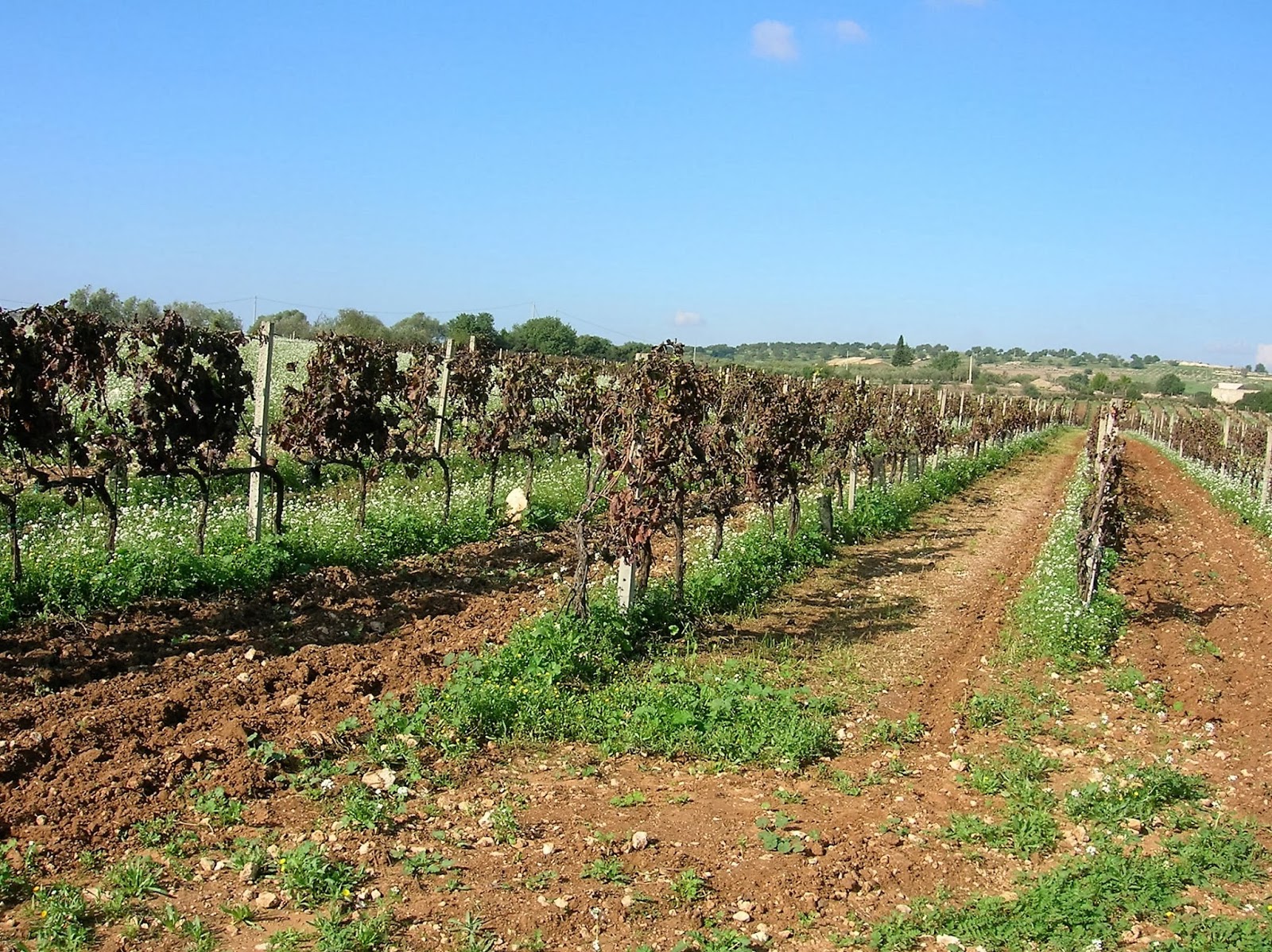
IT is spring and perhaps more than ever my personal vision of the world of wine seems a little out of focus. Maybe it is just the time invested or the true nature of cycles, or even the lack of personal critical success, but it does give one pause to reflect. By the way, above is a photo of the old vineyards in Hungary's Soproni Borvidek. It sits in the border foothills of the Alps in the southeastern region of neighboring Austria.  As early as the XIV century, this former Roman colony was classified as the most important wine region in Hungary. Talk about wine history!  Its old soils have seen the shift in empires, numerous wars and an Eastern Block trade restriction, yet today there is the new promise of a wine renaissance here as investment and more international markets expand opportunity. In 2004 Hungary was admitted to the European Union and its spectrum of wine-lovin' customers. Current results here display hundreds of these unique vineyards increasingly planted to 'international varieties'. And to perhaps anchor its history, Hungary also produces the botrytized amber nectar, Tokaji.
Mechanical harvesting in lower region Hungary
Perhaps our vision of the wine world becomes clearer if we continue to step back, away from the consuming game that is the contemporary wine business. On those northern shores of misty Lake Neusiedler in neighboring Austria, the vine has also been cultivated for thousands of years, and survived across many a regional cataclysm. Today, the principal grape variety is Grüner Veltliner, which finds itself in classification systems defined by its regions, not nationality. Following the creation of the important Austrian Wine Marketing Board in 1986 and its admission into the EU in 1995, the Austrian wine industry has continued to produce some of the greatest wines in its long viticultural history.  Its evolving regulatory system assures consumers of high standards in quality(red/white bandolier capsule) and regional typicity for each varietal, and this former home of reform philosopher Rudolf Steiner continues to be among international leaders in vineyard sustainability, organic and bio-dynamic practices.  From disaster to contemporary eco-poster child, Austria has created a model of what is possible in the contemporary international wine marketplace.

Wine Folly graphics(nice!)


Heading northwest to focus on the current commerce engine of the EU with its diverse economy, neighboring Germany shares a lot of the same central European culture. This is white wine country, increasingly dominated by the noble Riesling grape, a native varietal which has hardily adapted to its northern climactic extreme vineyards.  Just as in the time of the Romans, here it is about a vineyards proximity to the river. A historically challenging landscape, the river valleys are dominated by many small hand-working growers. The vine has followed the rivers moderating influences along the mighty Rhine, and the Mosel, above the Elbe, the Saale and the Unstrut in the southeast. Its sweet fruit is harvested late in the grape season, sometimes a berry at a time;  the vines make it thru brutal winters and awaken annually with bud break again in the spring.

Hardly anything says spring quite like acid-driven Riesling, which is found in each of these three countries. Its greatest heights surely are found in Germany, but most of what is produced is from the broad category labeled Landwein, or ubiquitous table wines.  The best of the varietal most often come from a specific place.  Upper tiers of the German Wine Law offer first pick, mostly dry Kabinett; fuller, off-dry Spatlese; and textured, sweeter Auslese. Even with their confusing labels and language, the industry has advanced to simpler, user-friendly label declarations(trocken=dry) and friendly consumer symbols displayed. It is just another example of Old World producers staying true to their nature, yet acknowledging growing consumer trends, such as food & wine pairings.
Replanted vineyards above the Mosel in Zell

Again we ask ourselves why would a wine educator continue to spend time & resources to do this month after month.  There is little independent financial gain in its present form and I am not motivated to be the family 'wine expert'. Revived, it remains these new stories like those coming out of central Europe, seeped in history and turmoil. Step back, and you can see that wine history is our shared history.  It is the continued exploration and non-stop development of an agrarian life, the search for a unique expression of site, and stories that in ways define what it is to be human.  Wine Educators often times then become the oracle of this truth found in the cultivation of the vine.  Each of these countries with their common wine roots and independent cultures has grown, evolved with the ever-expanding international marketplace. And, even in a world filled with turbulence and strife, wine itself can be for many of us a return of focus.  It is all ready happening, for in wine there will always be truth.

In Vino Veritas & Cheers!
Vine renewal

Wine Links:
http://www.austrianwine.com/
http://www.winesofgermany.co.uk/
http://www.abouthungarianwine.com/

Friday, January 27, 2017

BRAMBLES: Taste This,...Maybe?

Winds of change in rural Sicily DOC
Looking back, we have left more than a few empty bottles behind in 2016.  There was that delicious wine holiday in Sicily, and some very important family events, which were all richer in part because we enjoyed them with a glass or two of good wine.  It was another year of growth and value exploration with our tasting groups, and the enriching opportunity to improve the experience of wine for hundreds of thirsty consumers.  It was also the year when I closed two tasting rooms.

They were small brands, to be sure, often described as craft, artisan or boutique.  None the less, they offered wine consumers a real choice, and for the savvy, a few authentic local values.  One of the rooms was a collective, that gathering of small producers with no brick & mortar location of their own.  As a result of that limitation(and others), they typically produced less than 3000 cases and swam at their peril in the premium wine shark tank. Each was a slightly different business model, but all had a vignerons' passion fanning their sails.  In the end, after more than 5 years at a prime commercial location, they could not generate enough foot traffic to keep it moving forward.

The other was a single artisan brand, the juicy love affair with a former "Winemaker of the Year", with a recognized name for the informed and a mentor to many in this industry.  This brands business model was different, as it had wholesale distribution contracts with many states wine suppliers, and a greater quantity of premium product to promote in more places.  It has a brand manager, and a marketing manager, and even a direct to consumer manager.  Ultimately, the operating cost of a physical retail location in a new commercial marketplace outweighed its local popularity.  It is a very tough market out there; sadly, the numbers did just not add-up for continued investment in a retail storefront.

By any measure, competition across the retail marketplace is increasing for California wineries, she who produces about 90% of all of American wine.  In Sonoma County AVA alone, the number of wineries has doubled from a generation ago, yet with agri-limits the counties premium growers only farm about 6% of its beautiful, rural landscape.
Winter pruning of vines in the Loire

According to a recent Nielsen survey, the State has held its own; showing a continuing and healthy growth rate in global retail sales. Danny Brager, senior vice president of the beverage alcohol practice at Nielsen announced at the recent Unified Wine and Grape Symposium, " I almost can't think of any other consumer category where there is such a huge choice today.  If (wine) consumers can't get something, they will find something else."

Imports from foreign wineries have also continued to increase in volume and value during the last measured calendar period.  Growth in the bottle marketplace increasingly results in consumers having more choice than ever before, and that is a delicious thing for the informed value hunter. In spite of the wealth of these cheaper, value imports and a growth in national competition, shipments of U.S. wines continue to grow in volume year, after year.  Furthermore, there is an indication that entry level consumers are 'trading up'; last year the average bottle price of a U.S. wine exceeded $10. a bottle for the first time in recorded history! 

Knowledge is power for todays wine consumer

A recently released annual industry $urvey from a prominent lender, the State of the Wine Industry Report, predicted marketplace growth in premium imports in the year ahead.  Additionally, millennial's are expected to move in greater numbers away from red blends and increasingly towards pricier wines(+$10).  The dark umbrella remains as labor issues in the vineyard are anticipated to continue to be of weighted concern for the wine industry, even as the survey predicts a strong sales year in premium wine categories.

Whether the long established cooperative business model, or a singular artisans' passion, or even a modest brand in a broad portfolio managed by a beverage behemoth, it remains a challenging industry even for the optimistic producer. After all, there is a new brand(domestic or foreign) available to domestic consumers almost everyday, a new flavor of the week as consumers follow a trend, new on-line retailers and discount brokers to tempt neophyte wine consumers.  That new favorite may come from Chile or the Santa Maria AVA, from sustainable Sicily or from Rattlesnake Hills AVA of Washington state. For consumers, informed choices make for better wine experiences, and better wines in comfortable price points will increase not only bottle sales, but the broad variety of global values available to new wine drinkers.  Maybe we just have to taste a little more and let the wine speak.

Salute!
Tasting Values:
Leitz "Eins Zwei DRY"  2015 Rheingau Riesling Trocken(dry): Lemondrop, lemondrop!


Thursday, December 15, 2016

BRAMBLES: Thankfully, Celebrate Something!

Bruno Occhipinti sharing a Marco de Bartoli Marsala

It is routine to look back at the end of the calendar year, something like looking into your car's rear view mirror on the highway.  There you can clearly see what has transpired in the recent past, and as we get older the recent past may be all we can easily remember.  As it has evolved, the year 2016 had many twists and turns, disappointments and regret, enchanting episodes of magic that foil against heartache.  But, if you are reading this, you have made it this far, and we have all that tempered experience to build upon.  It is fortunately that end of year wine time to thankfully raise a glass of cheer and celebrate something!
Beautiful Sonoma County agri-business.

  • Thankful for a memorable wine tasting in Sicily with the veritable patriarch of the Occhipinti cantina in Sicily's only DOCG.
  • Following a short-supply 2015 grape harvest, this year saw many premium local grape growers able to charge more for their quality fruit in a year of premium quality. North Coast spot markets increased significantly, according to our Allied Grape Growers cooperative.
  • 2016 offered a relatively even growing season statewide, producing a normal harvest of exceptional quality fruit(Wine Institute).
  • A new university graduate in the family, and a new lawyer in the family, who happen to be the same talented individual. 
  • Domestic wine lovers continue a familiar trend, with annual per capita consumption at around 10+ liters, so we can at least sit at the table of other established wine cultures.
  • Consumer market minor grape selections continue to show growth away from leaders Cabernet and Chardonnay; Beverage Dynamics reported impressive 2016 sales growth in Red Blends(10.1%) and Sauvignon Blanc(13.3%), as trends indicate buyers continue to trade up.
  • My Mom got to embrace a new grandson, and then visit with a few of her favorite major league ballplayers in the stadium clubhouse.
  • Direct to consumer wine sales continue to grow, according to Beverage Dynamics, up 8.1% over 2015, as more Prohibitionist states relax regulations and more consumers find confident selection, quality on-line.
  •  At home, our best Thompson Seedless grape harvest ever, and then drying to wonderfully sweet raisins.
    Traditional method cavas and cremants offer celebration value.
  • Fine wines, those above the declining table wine sector, are continuing a positive trend of a growing number of consumers trading 'up' to higher priced quality wines, as quality domestic & import selections improve.
  • With thanks to our premium grape farmers, there is more than twice as much quality Pinot Noir crushed around here compared to just 10 years ago.
  • U.S. wine consumption is at an all time high(more than 750 million gallons), as new wine lovers(mostly women) increasingly come to the table(or bar, or bottle).
  • Thankfully, I can still stand and share the delicious mysteries of wine with friends, old & new, and on occasions find a nectar that authentically inspires.
Looking back in the mirror that is 2016, we see many things that are a reflection of who we are as a culture and as people, yet our history is not yet written for our future.  Certainly, here then is our opportunity to raise a glass, and to celebrate something!  Cheers!
 
"what matters is the countless small deeds of unknown people, who lay the basis for the significant events that enter history". Howard Zinn

Wine Links:
 http://www.agricolaocchipinti.it/en/
 http://www.wineinstitute.org/resources/pressroom/10192016
 http://beveragedynamics.com/2016/01/26/9-trends-driving-wine-sales-in-2016/
 http://www.winesandvines.com/template.cfm?content=175163&section=news

Wednesday, November 16, 2016

SICILY; Lost & Found

Sun-baked, wind swept vineyards of Occhipinti, Vittoria DOCG
 Everything on this sunny, wind swept Mediterranean island seems to have seeds; the eggplant, the tomatoes, the prickly pear, and certainly the grapes.  The nucleus of life, the seeds of Sicily are a reflection of the native spirit and passion, a time capsule of its long history of cultural occupation that creates a wonderfully unique confluence.  Grillo and Catarratto, white grapes that are the basis for fortified Marsala DOC, as well as sea food-friendly table wines, combine here with reds Frappato and Nero D'Avola to create a uniquely native wine grape palate, distinctively Sicily.

Greeks may have introduced the vine here almost 3000 years ago, followed by the Phoenicians of the Fertile Crescent, and the cultivating, wine loving Romans.  Goth's, the Byzantine's, the Arabs and the Normans followed in rapid succession, creating a broad stroke of multi-cultural influences and instability. As the unity of Norman rule influenced language and religion, creating the Kingdom of Sicily in 1154, it eventually would fall under the influence of the Crown of Aragon in the late 15th century. Even as this period would usher wealth and influence for the strategic island, the 18th/19th centuries would again create instability, culminating in a constitution that initiated the end of feudalism and eventually a unification with the Kingdom of Italy in 1860. Neglectful governing would then give way to powerful networks of organized crime and radical left-wing peasant labor, the popular fascist rise of Mussolini, and eventually the Allies devastating Invasion of Sicily in 1943.  It would be then a miracle that any Sicilian identity would persevere, or even survive, for to be Sicilian was to be under the influence of others.
Amphora of Sicilian antiquity
In post-war reconstruction, sweeping land reforms of the 1950's gave new rise to the workers small farm cooperatives, and for its survival, Sicily became the undistinguished volume wine producer for all of Italy.  A national launch ushered in 1963, established an official system, regulating the wine industry, and creating important categorization and guidelines.  Over the following decades the Italian DOC(Controlled Designation of Origin) system was updated, creating top-tier DOCG and the regional typicity of the IGT categories in 1992.  Even as it was presented with its lone DOCG, Cerasuolo di Vittoria, Sicily remained a source for mostly simple table wines, or Vino di Tavola produced from its unique native grapes. 

What perseveres is a love of this land, a dedication to the life it gives; from the broad, fertile soils of the Mt. Etna wash, to the clay & limestone jagged profile of the rugged south. In the most recent generations her wine producers have moved towards an increasingly sustainable landscape, to smaller vineyard yields that enhance indigenous grape characteristics. Experiments with IGT blends that include recognizable international varieties, like Cabernet Sauvignon, are also becoming increasingly marketed.  And, global recognition for its diverse quality wines grows daily, from innovative and contemporary producers like Hugues de la Gatinais, Marco de Bartoli, and the dedicated enterprises of the Occhipinti family. Today, from their ancient and indigenous vines, Sicily is generating new and vibrant life from the seeds of its resilient past. And for the generations to come, a Sicily which was so often lost can once again be luminously found. Salute'!

Sicilian palmento in an 18th century farmhouse(restored)
"If we want things to stay as they are, things will have to change."
The Leopard, Guiseppe di Lampedusa

Tasting Values:
  Stemmari Nero D'Avola, Sicilia DOC 2014
  Tenuta Rapitala 'Nahar' Nero D'Avola-Pinot Nero, Sicilia IGT 2013


Wine Links:
winesofsicily.com


Sunday, February 28, 2016

BRAMBLES: Tasting the Difference

Tasting diversity-Viewing wine Sideways
In nature competition breeds diversity, the strongest survive.  It is certainly like that for the long history of the domesticated old world wine grape, vitis vinifera. So too for local winery tasting rooms, where the best offer something distinctive/memorable.  With more than 500 local wine brands, there are hundreds of brick and mortar production facilities and many dozens of boutiques that connect daily with hopefully loyal consumers by the virtues displayed thru stylized wines and their winery tasting rooms.


Quirky to inspiring, there are all types of tasting rooms. Some have deep wine caves to alter perceptions, others offer beautiful architectural achievements or formal salon settings.  Still others impart historical family legacies, like Gundlach-Bundschu(1858), or Foppiano(1896).  And, then there are wineries that identify with salmon fishermen, with duck hunters, and a few that take local ecology and sustainability so seriously they are painstakingly bio-dynamic certified. Of course there is only one in all of Sonoma county that has the distinction of being first, Buena Vista, California's oldest commercial winery,
Being first in anything certainly helps a brands marketing efforts, so too does consistently awarded quality.  Commonly, all of these wine brands would like to create a wine ambassador from every tasting room visitor, someone to sing their praises in discrete locations far away and in mixed company.  With few exceptions, isn't the job of the tasting room to emotionally connect you with their product, without distraction?  As an affordable luxury item, wine is a product that makes us feel good when we remember the label, or the recommendation of a friend, or the confident opportunity to share it with company.  Tasting rooms that do a good job connecting us to these good feelings are often the public face of successful brands.

I once asked a tasting room host what made their brand distinctive. They spoke of their vineyard sources and their foreign born wine maker, but really their wines were fairly generic. Increasingly, we are blessed locally with the evolution of viticulture; the right vine planted in the right place with a yield that annually would be 'in balance'. With more academically trained and internationally versed wine makers than ever before, wine quality produced by these wizards has never been so consistently high. If this is today's landscape, then there must be something else, something notable that makes a brand 'distinctive'.  Memorable wines, wines of place, I believe, speak to you in a way that other 'generic' wines do not and those are the wines, and the tasting room the visits I remember.
Mustard flowers carpet warming winter vineyards

  • At the recent annual United Wine & Grape Symposium, the largest industry event of its kind in the western hemisphere, continuing domestic consumer trends were identified. Above all of the segmented measures, industry leaders noted that U.S. wine shipments continue to rise, continuing a 20-year trend of domestic growth. At the entry market level, wines under-$9 continue to lose market share.  That trend is also reflected in young adults leaving 'big beer' for more premium craft beers in greater numbers.  For volume grape growers at the lower end of the scale, 2015 saw an additional 20,000 acres of vines reportedly pulled from vineyards of the Central Valley AVA, and that is following a loss of 21,000 in 2014. There then are strong indications that these trading-up trends will continue across the demographics. On the premium side, imports(makeing up about 1/3 of sales) continue to grow, as do sales of higher average priced California wines.
  •  New AVA for  super-San Franciso Bay Area, Central Coast: La-Mor-Inda AVA, composed of the sandy-clay soils and warmer environs of Lafayette, Moraga, and Orinda was recently approved by our federal regulators, the TTB.

For those of us who enjoy the sight, the aromatic swirl, and sip of complex/balanced premium wines that delight, wines found in a setting that inspires, we are now being rewarded with an increasing number of high quality choices.  Our consumer challenge remains in finding something memorable in this crowded vineyard,  and to taste the difference.

Wine Links:
http://www.sonomawine.com/
http://www.sonomacounty.com/articles/7-tips-sonoma-wine-tasting

Salute'

Tuesday, June 17, 2014

ITALY; Springs Eternal

Spring to the Market
Self-indulgent to a point, one of the important things about wine is the opportunity to be self-exploratory in the physical sensations and unique properties that a fine glass offers us. On a recent food & wine tour of northern and central Italy, continual reminders of the delightfully integral relationship between these joys of life were presented to us on a daily basis.  The fruitful bounty of this sun blessed landscape, the rich woodlands, and the generous sea produced marvels making each day a special occasion; a delicious reminder of what springs eternal.

A crisp Arneis and a grapey Barbera from Alba; Lombardy's delightful Franciacorta Rose' from producer, Cola; tart, food-friendly Dolchetto from Dogliani; a thick skinned Grechetto from Umbria's Torgiano DOC; and bright Verdicchio from Jesi of the region le Marche were all wonderful palate discoveries that enhanced each of the meals that accompanied them.  Regional wine tastings with agricultural entrepreneur Lungaroti of Umbria and then Poliziano of Montepulciano with its award winning, mouth-watering Rosso di Montepulciano (2012) only confirmed the joie de vivre that beautiful springtime Italy can offer. Regional wine events such as Asti's, Vinissage, a wine showcase of organic, bio-dynamic and natural products afford springtime visitors here a unique occasion to taste a broad range of emerging Italian wines in a single public location. Should you care to explore the surroundings by foot or auto, there's the serendipitous scattering of outdoor/indoor individual producer tastings during the fun annual weekend event known as WineStreet with numerous locations around the Piemonte area.

It is the delicious regional food, too, as much as anything that reflects so positively on springtime in these rich, undulating hills. Here products from the woodlands: pig and fungal(mushroom & truffel) populations are introduced in countless ways to enhance many types of dishes. Year round produce of fertile valleys festively decorate rural farmstands and the many colorful city markets. Fresh, unpasteurized dairy products, yogurts and fresh cheeses enhance the farm to table movement that seems always to be alive in Italy. Ultimately, there are marvelous plating's of delicate pastas with truffel, funghi, panceta, sausage or wild boar, a baseline to crescendo of second courses displaying the freshest sea foods, poultry and savory woodland rabbit(and my favorite, veal).
Whimsical New Age slow food plating with foam essence: Il Postale
Here in these diverse regions there is found the evolution of traditional Italian cooking as well as the advance guard of the new age gourmands, like Marco Bistarelli of Il Postale outside Perugia. There are the high standards regulated upon traditional regional winemaking, as well as the consistency of excellence created in the sustainable winegrowing of Verona's Aldrighetti family. In our recent tasting, their Adlrighetti Lorenzo e CristoForo Valpolicella offered bright, fresh aromas of dried red fruits that carried a food-friendly song throughout the generous and lengthy finish.

Vinissage exhibitors offer broad quality selections
Each day of our tour of these regions, Piemonte to Umbria to le Marche, offered the rich excitement not only of new regional discoveries, but also of seeing familiar things anew.  Wines here are an essential part of the balanced meal, and we rarely found ourselves spending any more than 13 Euro for a quaff-able bottle, even in a restaurant.  Sunshine filled these many days of discovery, and around every corner we delighted in what Italy today offers the food and wine visitor.  Here, the celebration of the land and of its life springs eternal.

 
Grazie mille, and salute!

Friday, February 28, 2014

BLENDING: Truth in Plurals

Tradition is a wonderful thing because it takes time. So much time in fact, as it cannot be the latest or a nouveau trend.  In wine traditions, balance becomes harmonious when more than a single note is played. But are two notes enough?  Wouldn't three or four or a dozen be richer, more interesting. Complexity in wine is also a wonderful thing when found as by expanding the palate of flavors, and even textures, as well as its structure. Yin and yang, Merlot ripens earlier in the vineyard; its feminine roundness is there to balance out the course, in your teeth structure of late ripening Cabernet Sauvignon. Blending then sees that a sum is greater than its individual parts. Early ripening Sauvignon Blanc is lean and brightly acidic. Semillon is richer, its late ripening berries almost waxy in its stone fruit textures. Together they make a more interesting, a fuller white wine. It's a vino scored correction, and I love the music.
Drinking outside of school, Bordeaux
On a cool and rainy evening, I recently presented an informational Bordeaux seminar to a small group of dauntless and supportive wine lovers.  They attentively listened as I hemorrhaged dusty detail after (hopefully)intriguing detail of the serendipity that is the story of the evolution of Bordeaux white wines. As its tale unfolds, it is not just a few events strung together over the long course of history, but rather a series of actions and re-actions, geography and politics, necessity and innovation, that harmonize into the engaging wines of Bordeaux.

This white Bordeaux presentation also included a few examples of fascinatingly blended wines.  As is my nature, these products with 'Bordeaux' on the label were not expensive by contemporary standards. For less than the price of a lunch at a local diner I was able to enjoy centuries of harmonious evolution in a thirst quenching glass!  They presented aromas and a texture that altered my memory of Sauvignon Blanc, because it was a wine of beautiful complexity.  Sure the characteristic herbaceous was there in the nose, but it was not alone, sharing each wiff with yellow tree fruits, an almost familiar tangerine pith, and a hint of vanilla.  Round on the palate, it rolled over my tongue and presented reinforcements of its aromas, but now on the back of racy minerality. Its marriage to Semillon and its textured flavoring with oak created a sensation in the mouth that gave me pause.  It was quite unlike what I had tasted in recent memory.
And, it lingered.  Another sip followed a bite of a waterwafer smeared with L'Ami du Chambertin, a soft cows milk cheese, and the wine's expression was transformed.  There was that herbaceous personality, now sharing palate space with a refreshing, mouth-watering tartness. This wine had changed. With dairy fat its texture was diminished, yet it refreshingly made me thirsty for more.  Blending estate grown Sauvignon Blanc and Semillon, combined with a little oak aging, composed in this wine a richness and balance that I have rarely found in a white wine.

Throughout its long wine production history, Bordeaux has had an evolution of quality.  Native varietals, long known as the components of the 'Bordeaux blend', have been tested, acclimated and composed, to present a standard of quality found today in few other places in the wine world.  Whether a product of a historical estate(chateau), a negociant, or a local rural cooperative, the blended wines of Bordeaux(rouge or blanc) continue to reflect a long tradition of quality in blending.  It is truth in plural, from the most generic Bordeaux AOC, to the higher standards of sub-regional and village appellations.

Sauvignon Blanc harvest Ch. Couhins-Lurton, Graves
With our seminar video recording currently received by the Society, it is now a waiting game.  I've got a few Old World bottles and some unread wine books in the home library to keep me occupied.  The SWE will critically evaluate our submission for its educational merits and its continuity to our accepted production outline.  If approved, the video should satisfy the Presentation Skills Demonstration advancement requirement for my long awaited CWE certification. It is exciting to be near the end, but daunting to look forward into the unknown.  How will the Certificate, the initials after my name and a lapel pin translate into secure revenue or professional opportunities?  Perhaps I should explore another wine industry specialty, because as we know tradition tells us that there are truth in plurals!

Salute!


Sunday, May 20, 2012

CALIFORNIA: Thirsty Work

Cruise ship Old World wine selections
Cruise ship winelists are not unlike the average to below average restaurant wine lists in my Sonoma County neighborhood, except the limited choices are large production wines of national or international distribution.  So cruisers should expect to find Bogle California Chardonnay for around $32, and Ecco Domani Pinot Grigio for a little above $42.  My wife and I recently returned from a much needed and sunny Caribbean cruise, making wine choices that included better quality to value Oyster Bay Sauvignon Blanc($33.) and Melini '06 Chianti Classico Riserva($42.). Our wine holiday was a celebration of sorts.  Over the past four months we have seen the passing of each of our family pets, as well as the end of a long-term and courageous battle from my wife's only brother. On a brighter note, I was advised that I had earned a passing score on yet another portion of the Wine Educator's certification exam, the worldly blind Varietal/Appellation Varietal Identification. It was time to take a break and re-set.

Grape flowering promotes Fruit set

It is not surprising that in our absence our garden and in the surrounding vineyards things continued to grow in the Spring sunshine. Premium grape growing is farming, and as such is subject to many of the same factors and influences as those shouldered by apple or soybean growers.  Here in California's North Coast, over the last 50 years premium grape growers have endured many cycles of supply and demand, threatening vineyard pests, and flavor-of-the-week consumer trends. In Sonoma County, every harvest following 2007 has been smaller than the one before, with harvest wild fires, critically wet Springs and irregular growing seasons thrown in along the way. With the nation's economy in recovery mode, wine bottle pricing at retail has for consumers has fortunately remained generally stable, if not stagnant. But now the winds of change are blowing across these vineyard lands.

Recent surveys from wineries and grapegrowers offered stark indications of what consumers should expect in the years ahead. Can you say 'domestic wine price increases'?  My overview understanding is that the California bulk wine market(they buy unsold left-overs & lower end fruit) has very shallow inventories currently, and that grapevine nurseries have very little inventory for needed replanting or vineyard expansion. Industry symposiums in this part of the state have reported that wineries are working hard to secure long term grower contracts now after a succession of marginal volume harvests. To confirm,  recent reports have indicated that many Lake County Sauvignon Blanc contracts have increased by as much as 50% for premium fruit that only last year could not find buyers. Here in Sonoma County we are seeing premium Cabernet Sauvignon fruit contracts now approaching double what they were just last year at this time!

Fruit set
Land(vineyard) costs, labor costs, quality costs combined with production costs each contribute to that bottle price of California wine.  As a result, we have a broad range of price points from the generic to the very specific(vineyard).  But, what about the prestige of the brand name? “For something like Poppy(Pinot Noir), it could be a wine that is very well made, but it's made from Monterey County so the vineyards don't have that prestige,” wine consultant Fred Daniels explains. "While the(higher) $46 bottle comes from the Russian River Valley. “The wines there are typically run in this price range. If I go to Russian River and buy grapes from that area, the wines automatically will be priced in this price range.” And consumers should expect to pay more for these 'prestige' wines, as well as many more generic wines in the near future.  The current supply and demand challenges are just another reason that savvy wine consumers are looking to the quality wines of foreign producers: from New Zealand to South Africa, and the Languedoc region of France or the Dao of Portugal.

Domestic wine consumers do have, of course, domestic options. In a recent addition of Wine Spectator (April 30 '12) more than 100 West Coast value wines were reviewed and rated. Noted were more than 25 Sonoma County wines, and another 20 Central Coast wines rated very good to excellent at $20, or less. Widely distributed California brands like Estancia, Dry Creek and Kenwood made the annual value list. Not to be outdone, Washington State offered more than 20 value wines in this review, anchored by venerable Chateau Ste. Michelle and Columbia Crest wineries, contributing to the sub-$20 'Smart Buy' parade. For my part, I'll continue to pursue certification as a Wine Educator and continue to search out these and other quality international/domestic wine values.

The Society of Wine Educators annual conference in July will be yet another opportunity for me to measure my wine knowledge. One of the last hurdles in my quest, the Faults and Imbalances Wine Identification  has always been a big challenge for me.  But, with a new perspective after my re-set,  I look forward to re-focusing my attentions once again to the wines of the world. It is just another reminder that this is globally thirsty work!


Saturday, September 3, 2011

PORTUGAL: Paradox of Iberian Discovery

Distinct Discoveries of Difference await wine lovers in Portugal.
Douro Valley's Cima Corgo
Arguably among the world's great wines, Port, Moscatel de Setubal and Madeira's, all fortified, sweet wines, are produced with regional style in the independent country of Portugal. This is also the modernizing wine producer who in recent decades gave the world bulk, sweetened Lancers' and Mateus Rose', so perhaps the real Portugal lies somewhere in an exploration of what lies in-between. A wet and mountainous landscape, the wine grape has been part of this culture for 4000 years, and today proudly touts as many as 300 native varieties, few grown anywhere else! Following Roman and Moorish occupation, Portugal finally became independent with the 1143 Treaty of Zamora, and quickly developed a trade relationship with powerful England, galvanized with the protectionist 1386 Treaty of Windsor.

Atlantic accessed Oporto developed as a gateway trading center; only to find that conflict and international commerce were to become the parents of the modern Portuguese wine industry. Importantly, the Methuen Treaty(Port Wine Treaty) of 1703, established a military/commercial alliance and tax-free exchange status between Portugal and thirsty England. In an effort to protect its domestic interests, in 1758 Marquess des Pombal with a royal charter became the first noble ever to formally demarcate a European production area, the English influenced Douro, almost 200 years prior to the French AOC system. Following the devastating outbreak of the vineyard louse phylloxera, Portuguese wines remained stagnant throughout the 20th centuries authoritarian Salazar corporate era, then saw a quick rise of even more small farm cooperatives in the decade that followed, and only finally began modernization with newly adopted EU agricultural regulations and investment in 1986. Throughout all this turbulent Portuguese history, Port remained constant in wine quality.


Within the Douro DOC and more than forty(40) miles inland from Oporto lie the Porto DOC's three(3) important sub-regions: cool Baixo Corgo, the higher quality central Cima(Alta) Corgo, which produces more concentrated wines and Douro Superior, the warmer eastern sub-region.With more than 80 varieties of grapes(castas) sanctioned, only five(5) red(tinto) varieties: Tinta Roiz(Tempranillo), Tinta Barroca, Tinto Cao, Touriga Francesa, and Touriga Nacional and three white varieties are recommended for quality Ports, as regulated by the I.V.D.P. This official body administers the Cadastro vineyard ranking system, regulating vineyard rank, grape production and price, as well as declaring the superior Vintage year classifications. Barrel(wood) aged that benefit from evaporation and reductive bottle aged(Ruby, Vintage, Late Bottle Vintage-LBV) are the two(2) principal families of Port production styles. Barrel-aged Tawny's from a single vintage are designated, Colheita, and a rare intermediate barrel & bottle aged Port from a single vintage may be labeled Garrafeira.

Single vineyard estate (quinta) Ports are becoming increasingly common, as the majority of Ports historically have been blends of grapes and quintas assembled, aged and bottled by the shippers lodges in Vila Nova de Gaia across the Douro river highway. The valley composed of pre-Cambrian schist is also home to quality regional table wine production from the same native Port grape varieties, as Douro DOC. Between the Douro and the Minho to the North lies the provincial provinces of Atlantic-influenced Entre-Douro-e-Minho, and Tras-os-Montes, with the important demarked region Vinho Verde DOC in the northwest being the most prominent. Portugal's largest production DOC, Vinho Verde, is a low alcohol, high-acid blended red or white(branco) wine from regional grapes(dominated by the white Alvarinho) that is produced in a light and fresh style from within the quality (9)sub-districts of the Minho VR. Today, it is Portugal's second most-widely exported wine(vinho).
Cool, Green Minho Vineyards

South of the Douro lies the inland high country of the Dao DOC; principally a red wine temperate climate region, and today producing increasingly elegant, quality wines from blends based in Touriga Nacional. Bairrada DOC is located on the Atlantic side of the Beiras VR, and finds the thick-skinned and tannic native red variety, Baga(Tinta Fina?) its most widely planted grape in its clay soils. This maritime environment proves beneficial too for a regional sparkling wine industry from the fragrant white native Maria Gomes or a blend of local red grapes.

North of  Lisbon(Lisboa VR) is the hilly wine region formally known as Estremadura VR, Portugal's largest bulk wine producing area(Mateus & Lancers). Prominent, historical DOC's within its demarcated region include Bucelas, Carcavelos, and Colares DOC, home to the un-grafted, phyllloxera-free Ramisco red grape, grown in the sandy vineyards of this maritime climate. Here near Lisbon, the Tagus or Tejo river out of Spain separates Portugal into halves with great plains fanning to the south. On the Peninsula de Setubal, south of Lisbon, one of the world's notable dessert wines is produced from fortified, wood aged Muscat of Alexandria grapes, Moscatel de Setubal DOC. Along with native red grapes(Castelao) and newly planted international varieties, like Merlot, there are local sweet wines here also similar to Port, but DOC rules require a minimum of 70% Moscatel for the regions most classic treat.

In the past, Portuguese were quick to joke that the expansive Alentejo VR region, with its broad, golden wheat fields, was 'the land of bad bread and bad wine'. Known mostly for cork oak production(about half of the world supply), this arid region has recently embraced investment and moderization, with eight(8) sub-regions entitled to the higher DOC designation for their production of fruity, improved quality native and international variety wines. Sunnier still is the touristy Algarve to the Mediterranean south,classified only as Algarve VR, the designation offered to the country wines similar to the Vin de Pays of France.

Off the northwest coast of Africa sits Madiera DOC, home to long history producing a fortified dessert wine that is both deliberately heated(estufagem) and exposed to air(oxidized); a process so unique it has an identity that is enshrined by the EU's Protected Designation of Origin status. Although the workhorse red variety, Tinta Negra Mole is most widely planted on these islands, it is the four(4) noble grapes from the graduating strata's of this volcanic landscape: Bual(Boal), Mavasia(Malmsey), Verdelho and off-dry Sercial, that give quality aged Madiera's their special status. Maderized and long living, wines labeled 'Finest' have been aged for at least three(3) years, while Seleccionado are between 3 - 5 years old, 5 Anos or Reservas are between 5 - 10 years old, and all the way to Mais de 40 Anos. Colheita's are minimum 85% single grape variety, minimum 85% single vintage, and the best of these is aged more than 20 years to earn the label, Frasqueira.
Modern Bairrada winery

One of the world's largest wine producers and exporters, Portugal today is a paradox that is greater than Port vs. Lancer's Rose'. It is the resolution of tradition against viticulture and winemaking improvements; going beyond Vinho Verde, to other regions like modernizing Alentejo, which is producing an ever increasing amount of Portugal's top quality DOC table wines. Among its rising stars today are the old, rustic provincial regions, now producing the best table wines from the Dao, like 'Alianca' and 'Grao Vasco' , or the Douro's Quinta de Crasto. Here native grapes grown for a thousand years are finding new contemporary markets to showcase how unique and individual they really are. Last year's Decanter World Wine Awards saw the Regional Trophy's and Gold medals to Portugal's sweet, fortified wines as expected, but a surprising 93 Silver medals to distinctive wines from the Minho, the Dao and the Alentejo. As we look to our rustic, Old World image of these wines, the discovery of what is different and distinct about today's wines of Portugal may be the biggest paradox of all.
Saude!

Monday, August 8, 2011

CHAMPAGNE: Blending for Bubbles on the Edge!


On the edge of where grapes can ripen sits the benchmark for sparkling wines. It could only happen here in northeastern France, in a singular region of controlled origin, Champagne AOC. Only here in its rolling hills of impoverished soils atop chalky, seeping limestone  would the regions heavy rainfall and cool temperatures not doom a winegrape crop.  With the development of thirsty nouveau riche markets of the late 18th century in the commercial /social centers of the North and Baltic seas to the west, only here could the region's river Marne, which joins the Seine outside of Paris, become the world's expressway for this unique sparkling wine. Not beyond the influence of nearby rival Burgundy, only here in the Champagne region, could the under-ripe grapes Pinot Noir, Pinot Meunier and Chardonnay be partners to the art of blending in their high acid states to create one of the world's most important wines, known simply as Champagne.
Champagne village in chalky limestone
Above the 49th parallel of latitude, this cool regions still wines have re-fermented in the warmer Springs that follow harvest throughout history. As such, the re-ferment of a harvest was nothing new to French winemakers. In the Southwest of France, Limoux re-fermented sparkling wines have been purposely produced from around 1531, and the English physician and naturalist, Christopher Merret, described the process of adding a liqueur de tirage back to the wine in 1662, six years before Dom Perignon even took his post as cellar master for the Abbey of Hautvellers near Epernay. Decades of innovation and  trialed evolution were required in this part of France to create the sparkling benchmark we know today. Importantly, it was here in Champagne that the art of blending an under-ripe harvest of different Burgundian varietals from many different regional vineyards was to create the world standard for sparkling wines.

Following its establishment by the Romans, cities like Reims had remained a strategically important regional trade center. This regions prominence was galvanized with the early Middle Age's crowning of Louis the Pious, son of Charlemagne, and continued throughout the centuries that followed as a nobility Mecca, the site for the crowning of the Kings of France. In addition to its historic cereal grains, recent centuries have seen the regions cooler northern Montagne de Reims department became dominated by Pinot Noir, bringing a firm structure and important high acid to the cellar masters artful blend. All three regional grape varieties can be found in the East to West  river causeway, Valle'e de la Marne, around Epernay, but it's fruity, dark skinned Pinot Meunier that is most widely planted. South of Epernay, on mostly east-facing vineyards of Chardonnay, the important Cote des Blancs contributes finesse to the cellar master's grape and vineyard blend. Heading further South lies the Cote de Sezanne, offering a riper Chardonnay from its more protected South facing vineyards. The most remote and warmer Aube, once the scorn of the Champenois, is a dryer region that brings a fuller bodied Pinot Noir from its drier climates. Combined, these low-sugar grapes allow a great Champagne to became a blended sum that is greater than its individual parts.
Grand Cru vineyards of Verzenay

These forested and grain blanketed departments are the domaine of small, independent growers, more than 19,000 of them, many of whom contract their fruit to the houses of Champagne. Today, the large Champagne houses only grow and produce a small amount of the wine produced here, with smaller houses, coop's and independent growers accounting for the majority. After decades of debate and conflict, the I.A.N.O. (Institut National des Appellations d'Origine) mapped out the appellation to its current configuration of over 80,000 total acres in 1927. Seventeen(17) villages have been rated through the percentile E'chelle de Crus as Grand Crus, annually earning the top price for their grapes. Tiered below are the Premier Cru villages, who get from 90 to 99 per cent, and then more than 260 crus(villages) sell at 80 to 89 per cent of the established price. Such a hierarchy combined with the regions annual cool climate challenges means simply that blending not only vineyard lots, but, also grape varieties as well as reserve wines from previous harvests are necessary for the production of a consistent product and the economic health of this region's wine industry.


It is the artful blend that consistently defines the style of each producer, their signature as it were. Non-vintage blends make up the overwhelming majority of all production, and even when a producer declares a 'vintage' year, a minimum 20% of it must be held in reserve. Similar to Sherry, each vintage is not only a blend of different grapes, lots and vineyards, but also of years. Following harvest, the fruit clusters are gently pressed so as not to extract color, chaptalized if needed to increase potential alcohol, and then are mostly fermented to low alcohol dryness in stainless steel tanks. In the racking that follows, the cuvee or blend is created(assemblage) to achieve the artfully consistent house style. A dosage of a sugar and wine mixture(liqueur de tirage) added to the clear wine ignites a second fermentation(prise de mousse) inside the capped bottle, creating(autolysis) the dead cell sediment(sur lie) that is eventually trapped in the bottles neck. Following a minimum of 12 months aging, the degorgement or removal of the sediment, introduces a small amount of dosage(here as, liquer d'expedition) which is returned to the topped off bottle to create it final level of dryness(or sweetness), and then is cellared for a minimum of 15 months for non-vintage. I know simply, it's complicated.

We've all seen Champagne in the tiny and giant bottles of celebrations. Only the smallest bottles, or splits, and bottle sizes larger than Jeroboam(4 standard bottles) are allowed to be produced by a method called Transvasage.  Here, standard sized bottles are disgorged into a pressured tank where the wine receives its final dosage prior to a transfer to its final package. Every bottle produced carries a code assigned by the regulatory body, C.I.V.C., designed to identify the type of producer who made the wine. Most large houses are noted as, "NM", or Negociant Manipulant, or a producer who purchases some portion of their grapes or base wine. Grower-producers are labeled as, "RM", or Re'coltant Manipulant, and "CM", Cooperative Manipulant(a producing grower's cooperative) are among the most widely used declarations. Although the overwhelming majority of production is non-vintage, Vintage wines are presumably produced in the best years, where 100% of its content is from that declared year. The finest, most expensive wines that a house can offer are labeled as Prestige Cuvee, and are produced in all styles following additional years of aging.
Not all that sparkles is Champagne!

In the world of sparkling wines, only these refined products from this edge of wine-growing can be called Me'thode Champenoise. Outside this AOC, producers who follow the same production regiment have been EU regulated to identify their wines as, Me'thode Traditionnelle or Me'thode Classique, and within France as Cre'mant. The Champagne region also produces still wines from the same grapes, under the wide regional appellation of Coteaux Champenois AOC and the Aube's Rose' de Ricays AOC. Champagne alone remains the world standard in winemaking that is greater than the sum of its individual parts. It is a place that could not exist as a village or commune, but only a region. A place where the annual harvest on the edge is uniquely situated to artfully blend for those tiny bubbles. Cheers!

Monday, July 25, 2011

SOUTHWEST FRANCE: Explored Identities

Could this be Basque country? No, not all of it. Vasconia? Not for the last thousand years. Then can we call this land Guyenne-Gascony? Maybe, but it needs to include the important Lot-et-Garonne & Tarn-et-Garonne departments to the north-northeast. The Pyrenees-Atlantique is only its western half to the Atlantic and it can't correctly be called the Aquitaine because it covers precious Bordeaux. Then Midi-Pyre'ne'es is only its Mediterranean influenced eastern half. Today, this rural landscape that makes up the wrist to the Iberian fist to the South is composed of nine(9) administrative departments across two(2) regions.  It is commonly known as the Southwest, or Sud-Quest. Primarily a red wine region, it is most notably the home of the oldest distilled spirit in France, Armagnac.

Among France's oldest wine regions, it is perhaps also its most diverse. It produces wines that can be often compared to Bordeaux, as well as wines from unique indigenous grapes that grow no where else. Defined by valleys and its rivers: the Dordogne in the North, the Lot, the Garonne, and the Gers cutting across its middle, to the Adour River valley in the foothills of the Pyrenees, the Southwest is a broad landscape of dissimilar wines.  In total there are about 16000 hectares planted, where 6000 winemakers, peasant farmers and cooperatives work in the giant shadow of Bordeaux to the mountainous border with Spain.

South of Bordeaux lies the large Bergerac AOC of the Dordogne/Bergerac sub-region, which continues to be defined by good value Bordeaux varieties.  All the major grape players are here, including dry Muscadelle and botryized sweet Sauvignon Blanc and Semillon, notable products of the small sub-appellations Monbazillac AOC and Sussignac AOC. Some of the regions best reds are quality wines of Cabernet Sauvignon, Cabernet Franc, Merlot and indigenous Fer, using the Cotes de Bergerac AOC.
Cahor AOC Chateau

The Garonne sub-region to the south includes Cahors, historic Gaillac AOC on the river Tarn, and on to Buzet AOC. Red wine Cahors AOC on the river Lot, is the home of the dark Malbec grape, known locally as Cot or Auxerrois, producing long lived wines which do not permit the Cabernets in their blend(getting back at the Bordelais?).  Some of the oldest vineyards in France(Celtic origin?) are in Gaillac AOC, today producing a full range of wines: from nouveau reds and whites, to sweets(doux) and sparkling(mousseux).  Some of its most interesting sparklers are the product of methode rurale, using just one(1) fermentation with no added liqueur de triage, so that the bottled sweetness is from the original grape sugars. Northwest of Toulouse is Buzet AOC, often described as a "supervalue" Bordeaux satellite, producing good quality still reds, whites and rose' from Bordeaux grapes.

Heading south, the Gascony sub-region includes world famous Armangnac, the distilled product of ten(10) allowed grapes, including workhorse white grapes Ugli Blanc, Colombard and Folle Blanc(Italy's Trebbiano), and the notable region of Madiran AOC. This small appellation is the only AOC based on the tannic Tannat grape, comprising a minimum 70% of any blend. The broad rolling hills and river valleys of the Baise and Gers rivers to the east are the landscape for the sub-regions Cotes de Gascogne, France's largest producer of white Vin de Pays.

Raisined Petit Manseng in Juracon

Within sight of the Pyrenees Mountainsin the southern foothills lies Juracon AOC, a white only appellation known historically for its sweet wines from native late harvested Gros Manseng and Petit Manseng grapes. Also in this Northern Basque region is isolated Iroule'guy AOC, known for its red soiled vineyard terraces, and producing mostly red wines from Tannat and Cabernet Sauvignon.

Scattered across this large, diverse region, artisan wine-grape growers and their many cooperatives here have not been as politically active as elsewhere in France. They do remain tied to the land, slowly benefiting from modernization, and producing a wide range of wines of distinctive character. But, rather than having a regional identity, they are a mix of cultures from lands that have been fought over since the beginnings of recorded history.  Whatever we choose to call these lands of the southwest, they remain uniquely different from every other part of France. To discover these wonderful products is what wine exploration is all about.
Barge life on River Baise, Buzet AOC

Cheers!