Showing posts with label DOCG. Show all posts

Saturday, December 29, 2018

BRAMBLES: Holiday Surprise!

Baby, it's cold outside, but winter pruning awaits
 Lucky boy. Over the course of these current holidaze, there are always surprises in store for the domestic wine lover.  It could be that long lost friend found at a local party, with a chance to catch up on the time that was missing.  Or, that surprise gifted bottle, festively dressed, for which you find yourself unprepared to reciprocate at that particular moment.  And, it may also be that discovery of taste, something fantastic in your wine glass that you have never before had a chance to explore.  Indeed, this time of fellowship and good will, a time of seasonal joy and warming fires, may just offer the wine lover who has gathered with good natured friends an unexpected and eye-opening surprising wine holiday.

In the north of Italy, framed by the alpine foothills and the lakes Como & Garda, lies the ancient Lombardy vine region of Franciacorta DOCG. In spite of making wine here for thousands of years, this important region has a relatively young sparkling wine tradition of producing traditional method sparkling wines(second ferment in bottle, just like Champagne).  Only designated DOC for its wines in 1967, it became the first Italian region to regulate the laborious bubble process just back in 1995 when elevated to DOCG status.  Only regional chardonnay, pinot blanc and pinot noir are permitted, and the minimum 18 month lees contact in bottle is greater than that required in the traditional sparklers of Champagne AOC.  This typically results in fine bubbles, and a yeasty, but refined, mouth-watering signature.

Like soldiers on a parade ground, the stemmed flutes were lined up as the cork escaped from the celebratory bottle of non-vintage Franciacorta.  In the golden glass, beads of tiny bubbles streamed to the top.  With anticipation, upon our first whiff of its bouquet it was apparent that this wine was faulted by TCA(trichloroanisole), a natural chlorine based compound that mutes the nose and mouthfeel, promoting a flat and musty character akin to damp newspapers or 'wet dog in a phone booth'. Despite its appearance, the 'corked' wine had lost its magic, and as a result, muted the hopeful celebration.  As such, it was again a reminder, a holiday surprise that we are always hopeful to avoid in such gleeful company.  Faults can occur when our excitement and our spirits are high.
Summer Chardonnay of Franciacorta
With shopping bags at your feet, sliding down the restaurants' wine list, one may dismiss selections that are more than twice the cost of any entree, until finding a familiar name.  So it was with an Anderson Valley AVA pinot noir selection from a quality boutique producer, Phillips Hill. Perhaps it was the warm hospitality found inside the old apple barn off Hwy. 128, or the distinctive, artsy labels, and certainly, the high standards of quality enjoyed across the winery's portfolio selections. But, it resonated a trust and anticipation that was rewarded when a 2016 vintage Boontling Pinot Noir, Anderson Valley is presented at table.

Shimmering garnet in the glass, its pronounced aromas fill the head with the scent of racked dark seasonal fruits.  On the palate, it was a broad, but refined range of cherries, red currants, and a hint of baking spice that evolved across the mid-palate to a deliciously lingering finish, all held together by its brisk acidity.  The wine represented all that's grand about this cool region; the diversity of its soils and micro-climates, it's high standards of expression from a blend of local pinot growers'.  Bites of the rabbit casserole at table sang harmoniously with the pairing, lifting spirits bright.  Oh, what fun it is to find in one's glass a delight that is so much more than just a beverage.  It's a warm memory, a whimsical escape, a dinner companion that's a joy to share, and, a delicious Holiday Surprise.

Salute! 

Wine-Links:
 https://www.franciacorta.net/en/wine/typologies/
 https://www.avwines.com/

Thursday, December 15, 2016

BRAMBLES: Thankfully, Celebrate Something!

Bruno Occhipinti sharing a Marco de Bartoli Marsala

It is routine to look back at the end of the calendar year, something like looking into your car's rear view mirror on the highway.  There you can clearly see what has transpired in the recent past, and as we get older the recent past may be all we can easily remember.  As it has evolved, the year 2016 had many twists and turns, disappointments and regret, enchanting episodes of magic that foil against heartache.  But, if you are reading this, you have made it this far, and we have all that tempered experience to build upon.  It is fortunately that end of year wine time to thankfully raise a glass of cheer and celebrate something!
Beautiful Sonoma County agri-business.

  • Thankful for a memorable wine tasting in Sicily with the veritable patriarch of the Occhipinti cantina in Sicily's only DOCG.
  • Following a short-supply 2015 grape harvest, this year saw many premium local grape growers able to charge more for their quality fruit in a year of premium quality. North Coast spot markets increased significantly, according to our Allied Grape Growers cooperative.
  • 2016 offered a relatively even growing season statewide, producing a normal harvest of exceptional quality fruit(Wine Institute).
  • A new university graduate in the family, and a new lawyer in the family, who happen to be the same talented individual. 
  • Domestic wine lovers continue a familiar trend, with annual per capita consumption at around 10+ liters, so we can at least sit at the table of other established wine cultures.
  • Consumer market minor grape selections continue to show growth away from leaders Cabernet and Chardonnay; Beverage Dynamics reported impressive 2016 sales growth in Red Blends(10.1%) and Sauvignon Blanc(13.3%), as trends indicate buyers continue to trade up.
  • My Mom got to embrace a new grandson, and then visit with a few of her favorite major league ballplayers in the stadium clubhouse.
  • Direct to consumer wine sales continue to grow, according to Beverage Dynamics, up 8.1% over 2015, as more Prohibitionist states relax regulations and more consumers find confident selection, quality on-line.
  •  At home, our best Thompson Seedless grape harvest ever, and then drying to wonderfully sweet raisins.
    Traditional method cavas and cremants offer celebration value.
  • Fine wines, those above the declining table wine sector, are continuing a positive trend of a growing number of consumers trading 'up' to higher priced quality wines, as quality domestic & import selections improve.
  • With thanks to our premium grape farmers, there is more than twice as much quality Pinot Noir crushed around here compared to just 10 years ago.
  • U.S. wine consumption is at an all time high(more than 750 million gallons), as new wine lovers(mostly women) increasingly come to the table(or bar, or bottle).
  • Thankfully, I can still stand and share the delicious mysteries of wine with friends, old & new, and on occasions find a nectar that authentically inspires.
Looking back in the mirror that is 2016, we see many things that are a reflection of who we are as a culture and as people, yet our history is not yet written for our future.  Certainly, here then is our opportunity to raise a glass, and to celebrate something!  Cheers!
 
"what matters is the countless small deeds of unknown people, who lay the basis for the significant events that enter history". Howard Zinn

Wine Links:
 http://www.agricolaocchipinti.it/en/
 http://www.wineinstitute.org/resources/pressroom/10192016
 http://beveragedynamics.com/2016/01/26/9-trends-driving-wine-sales-in-2016/
 http://www.winesandvines.com/template.cfm?content=175163&section=news

Wednesday, November 16, 2016

SICILY; Lost & Found

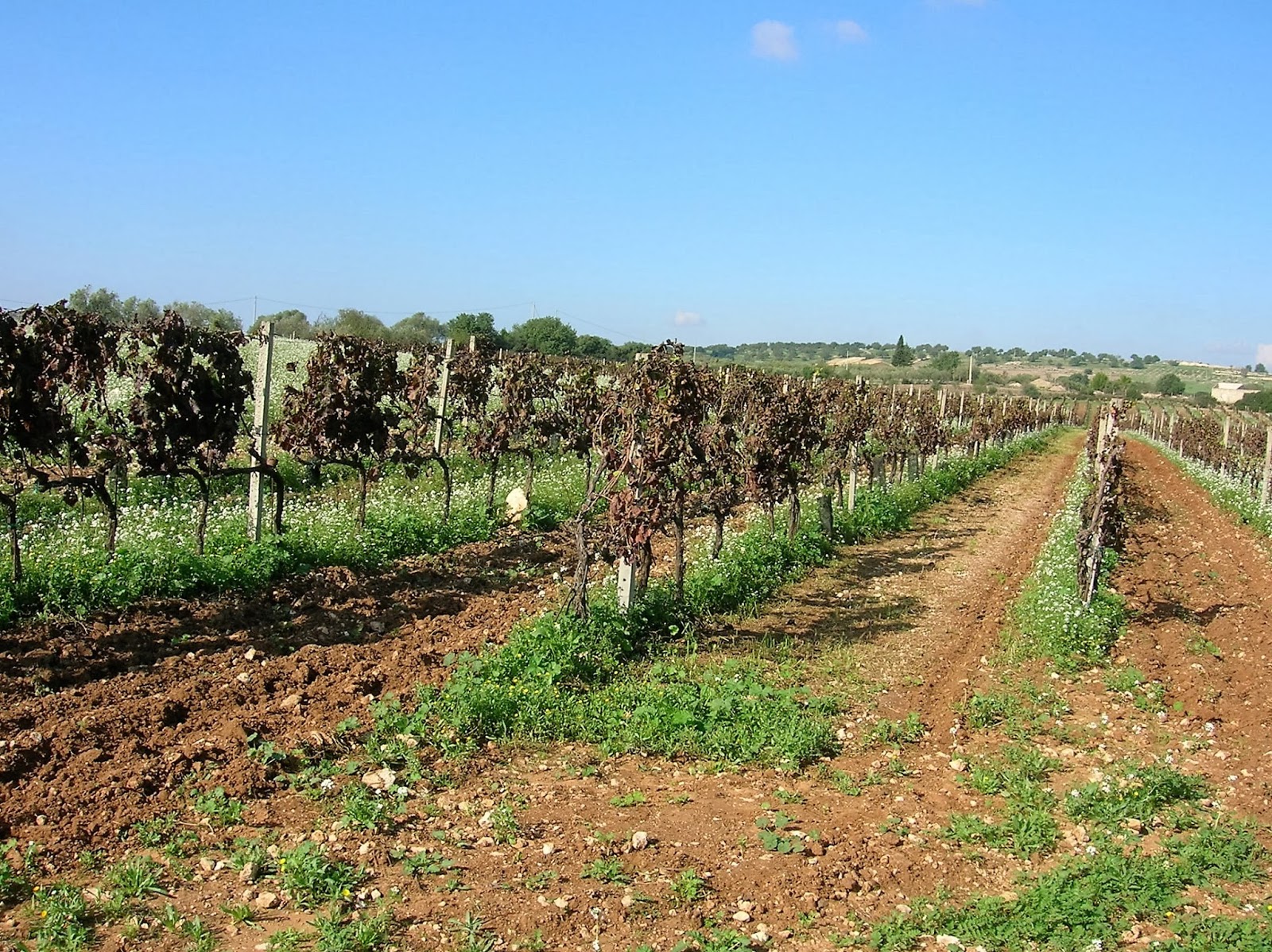
Sun-baked, wind swept vineyards of Occhipinti, Vittoria DOCG
 Everything on this sunny, wind swept Mediterranean island seems to have seeds; the eggplant, the tomatoes, the prickly pear, and certainly the grapes.  The nucleus of life, the seeds of Sicily are a reflection of the native spirit and passion, a time capsule of its long history of cultural occupation that creates a wonderfully unique confluence.  Grillo and Catarratto, white grapes that are the basis for fortified Marsala DOC, as well as sea food-friendly table wines, combine here with reds Frappato and Nero D'Avola to create a uniquely native wine grape palate, distinctively Sicily.

Greeks may have introduced the vine here almost 3000 years ago, followed by the Phoenicians of the Fertile Crescent, and the cultivating, wine loving Romans.  Goth's, the Byzantine's, the Arabs and the Normans followed in rapid succession, creating a broad stroke of multi-cultural influences and instability. As the unity of Norman rule influenced language and religion, creating the Kingdom of Sicily in 1154, it eventually would fall under the influence of the Crown of Aragon in the late 15th century. Even as this period would usher wealth and influence for the strategic island, the 18th/19th centuries would again create instability, culminating in a constitution that initiated the end of feudalism and eventually a unification with the Kingdom of Italy in 1860. Neglectful governing would then give way to powerful networks of organized crime and radical left-wing peasant labor, the popular fascist rise of Mussolini, and eventually the Allies devastating Invasion of Sicily in 1943.  It would be then a miracle that any Sicilian identity would persevere, or even survive, for to be Sicilian was to be under the influence of others.
Amphora of Sicilian antiquity
In post-war reconstruction, sweeping land reforms of the 1950's gave new rise to the workers small farm cooperatives, and for its survival, Sicily became the undistinguished volume wine producer for all of Italy.  A national launch ushered in 1963, established an official system, regulating the wine industry, and creating important categorization and guidelines.  Over the following decades the Italian DOC(Controlled Designation of Origin) system was updated, creating top-tier DOCG and the regional typicity of the IGT categories in 1992.  Even as it was presented with its lone DOCG, Cerasuolo di Vittoria, Sicily remained a source for mostly simple table wines, or Vino di Tavola produced from its unique native grapes. 

What perseveres is a love of this land, a dedication to the life it gives; from the broad, fertile soils of the Mt. Etna wash, to the clay & limestone jagged profile of the rugged south. In the most recent generations her wine producers have moved towards an increasingly sustainable landscape, to smaller vineyard yields that enhance indigenous grape characteristics. Experiments with IGT blends that include recognizable international varieties, like Cabernet Sauvignon, are also becoming increasingly marketed.  And, global recognition for its diverse quality wines grows daily, from innovative and contemporary producers like Hugues de la Gatinais, Marco de Bartoli, and the dedicated enterprises of the Occhipinti family. Today, from their ancient and indigenous vines, Sicily is generating new and vibrant life from the seeds of its resilient past. And for the generations to come, a Sicily which was so often lost can once again be luminously found. Salute'!

Sicilian palmento in an 18th century farmhouse(restored)
"If we want things to stay as they are, things will have to change."
The Leopard, Guiseppe di Lampedusa

Tasting Values:
  Stemmari Nero D'Avola, Sicilia DOC 2014
  Tenuta Rapitala 'Nahar' Nero D'Avola-Pinot Nero, Sicilia IGT 2013


Wine Links:
winesofsicily.com


Monday, August 29, 2016

BRAMBLES: What to Drink Next?


As the tasting glass was returned to the bar, he sheepishly looked up and offered that he really likes wine, but was unable to talk about it. "I am not a poet", he declared.  We should not be required to be lyrical in order to enjoy a glass of wine, yet, the marketing focus increasingly seems to be that wine consumers should to be able to confidently offer some quippy 'wine-speak' to demonstrate their prowess as knowledgeable wine lovers. Has wine loving reached the point in its luxury consumerism that we only pronounce enjoyment in our glass of syrah that 'offers 'mulled juniper berries and damp forest floor'?

Throughout its long history wine has been a social beverage, a libation to be shared and enjoyed responsibly.  As a luxury commodity however, premium wine has earned(paid for) its long and increasingly marketed history, evolved from booze for the privileged to a fine gentleman's refreshment, to a liquid symbol that segregates the proletariat.  On one hand it is evelage(rising or development) for such a pleasure as wine, something that was felt as strongly as poetry in a bottle  to be described in a lexicon of poignantly beautiful terms.  But at its core, wine is about the delicious, individual discovery to be found in a every glass.
Austria's Heuriger wine tavern

Brilliant color, perhaps found no where else in nature, combined with the symphony of aromas that lift from the glass only begin to introduce wines' charms.  That tactile dance in your mouth, the complexity of its delicious liquid personality, and lingering aftertaste warmed on the palate to enhance its unique memory combine to make our individual relationship with wine something quite special.  Genetic variations in individual taste perceptions mixed with our unique food histories result in no two of us having the very same taste perceptions, meaning that the wine party in your mouth and brain are yours alone!  All the more reason to share the pleasure of the experience, and raise a glass(or two).
  

Glossy industry magazines flush with premium brand advertising, those lifestyle features promoting a particular glamour label, combined with the omnipresent shelf talkers of retail displays commingle to find us swimming in a remontage(pump-over) of marketplace enhancement that seduces wine consumers without yield. Reach for a bottle off a retail shelf, and collect a wine-speak catch phrase in the bargain.  Even as the overwhelming volume of wine we consumers regularly drink is below the premium categories, our expedition into higher priced bottles finds us within a torrent of testimonials and inherited greater responsibilities to speak of wine knowledgeably. And, for novice premium wine consumers a little sense for wine will reward beyond the pocketbook and into the unique qualities to be found in every glass.


"The joy is in the journey"' certainly applies to wine with its individual and emotional connection to our sense of pleasure. So then it may be most important for wine lovin' consumers just to venture forth, to continue to explore different labels, regions beyond the norm.  In doing so they will begin to absorb wine knowledge in the most pleasurable way, one glass at a time, no matter how they can describe it. Now, what to drink next?

Salute'

Tasting Values:
Piero Mancini 2014 Vermentino Di Gallura 2014; yellow-green hue, citrus and mineral aromas, with moderate acidity leads notes of yellow apple, stone fruit and a kiss of bitter almond; and dances with white fish or light dishes! (could not help myself)


Thursday, July 30, 2015

PINOT BLANC: Refreshingly Under the Radar


Pinot Bianco, the mutant
Surprisingly, I've become a Student of wine, rather than the Educator that became my goal.  I continue to consume wine information in the form of many books, articles and beverage/lifestyle blogs. There are days every week when I engage wine country visitors, sharing wine trivia and subjective impressions of personal taste.  And, I even absorb retail wine displays and restaurant wine lists with a perspective I could not offer prior to becoming a Certified Wine Educator.  Yet, a Student of wine is the lifelong path that I have found myself on.  It is an exploration into a world of wonder and mystery, bottle to glass.  To that end, our congenial wine tasting group recently focused on an under the radar grape varietal, Pinot Blanc, and the expose' was enlightening for a journeyman on a path as a Student of wine.


An offspring of Burgundian Pinot Noir, this widespread white juice variety is the result of a progressive genetic alteration in the noble grape resulting in the permanent change in its DNA; the loss of its skin color pigments.  It is easy to imagine that the powerful14th century Dukes of Burgundy who famously outlawed prolific Gamay rouge in favor of Pinot Noir would have also found displeasure with the albino bastard of Pinot. Today, we can find Pinot Blanc widely dispersed in vineyards from Alsace to Austria and beyond. In Alsace, the spectrum of this grape is prominently featured in lovely Cre'mant d'Alsace traditional method sparklers, traversing to the still, mineral driven and crisp wines(Pinot Bianco) of Italy's wine regions northeast of Venice.
Fittingly for such a world traveler, our tasting group samples covered three(3) countries, with typical descriptions of apple/pear aromas, stone fruit and citrus flavors, having floral notes, as well as medium-bodied currents of mineral and honey.  As is our tasting groups quest, all wines tasted were considerably less than $20/retail.  Some of the domestic selections seemed to be out of balance, a shadow of other examples we tasted.  Prominent among the best of them was the Navarro Mendocino County 2014 Pinot Blanc, a recent sweepstakes winner at the North of the Gate wine competition.  France's northern Alsace region was well represented with the refined Domaine Allimant Laugner 2013 Vin'dAlsace showing well; its tight focus and long length on the palate found it a favorite among most of our experienced tasters.
A widely distributed selection from Italy's glacial Alto Adige DOC, brilliant and stainless steel fermented Elena Walch 2013 was my top rated selection.  Slightly restrained on the nose, it amplified those impressions of scent with a rich volume of white peach and citrus fruits, joining wet flowers and honey with rich texture and mouth-feel that gracefully danced to a moderately long finish.  I found myself pleasingly thirsty for more.  At the close of the tasting I was left with the undeniable impression that the domestic selections were not as focused, or even as refined as those from Alsace or Alto Adige, and yet all were examples of the varietal less expensive than their domestic comparisons.

Alto Adige vineyards
This pleasing international variety was certainly under the radar.  Interestingly, upon review, all of our varietal reviews(Gamay, Muscat, Barbera) have been under the radar grapes.  As I reflect upon that discovery, I am reminded that what I typically drink without analysis on a regular basis are under the radar varietal selections.  They consistently seem to offer the most interest with typically the best value and generally the quality for my particular palate. If you just know where to look, there are a broad selection of friendly, available food wines, like Pinot Blanc, that will keep wine interesting. What more could a frugal student of wine want?


Wine Sip: Germany is second only to Italy in the amount of Pinot Blanc(aka Weissburgunder) planted nationally, and the dry varietal is on a dramatic & popular increase with savvy consumers.


Cheers!


Wine Link: http://www.germanwineusa.com/index.html


Tuesday, June 17, 2014

ITALY; Springs Eternal

Spring to the Market
Self-indulgent to a point, one of the important things about wine is the opportunity to be self-exploratory in the physical sensations and unique properties that a fine glass offers us. On a recent food & wine tour of northern and central Italy, continual reminders of the delightfully integral relationship between these joys of life were presented to us on a daily basis.  The fruitful bounty of this sun blessed landscape, the rich woodlands, and the generous sea produced marvels making each day a special occasion; a delicious reminder of what springs eternal.

A crisp Arneis and a grapey Barbera from Alba; Lombardy's delightful Franciacorta Rose' from producer, Cola; tart, food-friendly Dolchetto from Dogliani; a thick skinned Grechetto from Umbria's Torgiano DOC; and bright Verdicchio from Jesi of the region le Marche were all wonderful palate discoveries that enhanced each of the meals that accompanied them.  Regional wine tastings with agricultural entrepreneur Lungaroti of Umbria and then Poliziano of Montepulciano with its award winning, mouth-watering Rosso di Montepulciano (2012) only confirmed the joie de vivre that beautiful springtime Italy can offer. Regional wine events such as Asti's, Vinissage, a wine showcase of organic, bio-dynamic and natural products afford springtime visitors here a unique occasion to taste a broad range of emerging Italian wines in a single public location. Should you care to explore the surroundings by foot or auto, there's the serendipitous scattering of outdoor/indoor individual producer tastings during the fun annual weekend event known as WineStreet with numerous locations around the Piemonte area.

It is the delicious regional food, too, as much as anything that reflects so positively on springtime in these rich, undulating hills. Here products from the woodlands: pig and fungal(mushroom & truffel) populations are introduced in countless ways to enhance many types of dishes. Year round produce of fertile valleys festively decorate rural farmstands and the many colorful city markets. Fresh, unpasteurized dairy products, yogurts and fresh cheeses enhance the farm to table movement that seems always to be alive in Italy. Ultimately, there are marvelous plating's of delicate pastas with truffel, funghi, panceta, sausage or wild boar, a baseline to crescendo of second courses displaying the freshest sea foods, poultry and savory woodland rabbit(and my favorite, veal).
Whimsical New Age slow food plating with foam essence: Il Postale
Here in these diverse regions there is found the evolution of traditional Italian cooking as well as the advance guard of the new age gourmands, like Marco Bistarelli of Il Postale outside Perugia. There are the high standards regulated upon traditional regional winemaking, as well as the consistency of excellence created in the sustainable winegrowing of Verona's Aldrighetti family. In our recent tasting, their Adlrighetti Lorenzo e CristoForo Valpolicella offered bright, fresh aromas of dried red fruits that carried a food-friendly song throughout the generous and lengthy finish.

Vinissage exhibitors offer broad quality selections
Each day of our tour of these regions, Piemonte to Umbria to le Marche, offered the rich excitement not only of new regional discoveries, but also of seeing familiar things anew.  Wines here are an essential part of the balanced meal, and we rarely found ourselves spending any more than 13 Euro for a quaff-able bottle, even in a restaurant.  Sunshine filled these many days of discovery, and around every corner we delighted in what Italy today offers the food and wine visitor.  Here, the celebration of the land and of its life springs eternal.

 
Grazie mille, and salute!

Tuesday, May 20, 2014

WINE STUDY: Sangiovese, Please!


Lazio's Tarquina_Tomb of the Leopard fresco
It's the 'Blood of Jove', and has been around so long that it has developed in its native land numerous successful clones(14).  Having long history in this land of wine, you might expect that its development is shrouded in some mystery, having evolved from varieties Calabrese Montenuovo, an ancient parent, and Ciliegiolo(disputed) which is rooted to Italian as 'cherry'.  Throughout the centuries, it has traveled from its home, with only a very few pronounced successes.  This thick skinned, high tannin red grape of robust natural acid, also tends to be quite finicky in its flourishing vineyard site selections.  And yet, when comparing the localities where it does do well, it offers a unique sense of place, of terrior. In Tuscany it has found a home, and Sangiovese is its name.

Tuscany alone has 33 DOC's, 9 DOCG's, defined and regulated production areas, and most of them dedicated for zones of Sangiovese production.  Little grown outside Italy, this iconic varietal only represents about 10% of all plantings within its native Italy. Although the grape is recommended in as many as 53 provinces, Sangiovese has been identified in 259 DOC's across Italy, but it is in Tuscany where it shines brightest. That being said, the varietal over its long history has produced relatively few notable wines, squandered its place on the wine globe with straw-wrapped (fiascos)bottles, damaging its pedigree perception. and in the past seemed only to draw attention to itself via scandal. Reform was instituted in new national regulations 1963, and overhauled in 1992 to comply with the expanding EU requirements.

Even within Tuscany there are style and regulatory variations. Fruit forward to rustic in style, Tuscan Sangiovese can be lighter if blended with permitted a sub-zones white grapes(Malvasia and Trebbiano), or hearty if blended with domineering Cabernet Sauvignon. It can be oak driven if a Chianti Superiore, which has a minimum aging of 9 months with a minimum alcohol of 12%, or have a fruit-driven style if labeled simply Chianti, which has minimums of 3 month aging and 11.5% alcohol. It can be confusing, but such distinctions offer a broad compositional canvas for regional Sangiovese.

Regulations differ region to region, consortium to consortium, perhaps because of the historical power of the unified growers & producers.  As an example, Chianti Classico, the original administrative dictated zone, requires minimum 80% Sangiovese, and blending varieties are restricted(prohibits white varieties). Historically blended with Colorino or Mammolo, some contemporary producers have blended non-native, international varieties, such as Merlot or Cabernet Sauvignon, creating blends outside what was allowed, and thereby creating the IGT's of 'Super Tuscan' fame.

In the south of the region, Vino Nobile Montepulciano DOCG is made with the Prugnolo Gentile clone; a wine which is minimum 70% Sangiovese, with components of Canaiolo Nero and Mammolo.  South of Sienna, Brunello di Montalcino DOCG, is restrictively vinted from the Sangiovese Grosso clone, and has longer minimum aging requirements than any other Sangiovese production zone. Reflected by growing price points & awards, within the last generation or two, the blood of Jove, has had a regional quality revolution, spawning many estates crowning achievement after a successful vintage.  A congestion of vowels, the names of great producers lumber across the palate; Marchesi Antinori, Castello di Fonterutoli, and Fattoria di Felsina. And, there are more and more traditionalists finding their way to advancing quality and consistency every day.

Soon I will embark on a personal discovery of the regional and sub-regional terrior driven Sangiovese clones of central Italy.  Our exploration will take us from the land of Nebbiolo to the ancestral land of Verdicchio, traversing Tuscany and Umbria on the way. Future posts will provide personal insights from this newly certified Wine Educator into our immersed  wine study where we will commonly have the opportunity to say, "Sangiovese, please"!
Salute! And thanks for coming along to raise a glass or two!!

Wednesday, April 2, 2014

ITALY: Foothills of the Alps


Monferrato Barbera vineyards
Everyday, it is the mystery of wine that has always drawn me in.  A planned Spring holiday touring Italy has me drawn into the wines of the northern region of Piemonte, that highway of Hannibal and the realm of the regal House of Savoy.  It would be hard to deny that this was a proud and strategic landscape, surrounded by mountains on three sides that give birth to the fertile Po Valley. It declares itself nobly, Piemonte, sitting at the foothills of the mountains(Alps).  Notably, the large region is ancestral home to one of the world's great vitis vinifera varieties, Nebbiolo.  This journal, however, reviewed that ethereal grape back in 2011, so I decided to explore the region's widely popular indigenous everyday varieties, dark-skinned Dolchetto and Barbera.

Piemonte is home to more defined and regulated growing regions, called DOC's, than any other Italian region(more than 40).  The classification system of Denominazione di Origine Controllata was introduced in 1963, and in theory identifies wines at a higher quality designations to conform with the French AOC laws, which subsequently were adopted by the EU.  Further sub-classifications of Classico, Superiore and Riserva present more stringent qualifications for viticulture and production. At the top of the rankings sit the limited wines designated as of  'Controlled and Guaranteed Designation of Origin' or DOCG, from specific designated areas and having not only passed strict analyses, but also tasting requirements.
Vineyards of Langhe hills

Due to the fact that tannic Nebbiolo wines traditionally take so long to be drinkable, it is said that widely planted Barbera, with over 50,000 acres planted and Dolcetto(little sweet one) are the everyday wines. Juicy, savory Barbera(Roberto Ferraris, Ettore Germano, Vietti are favorite producers) with its opaque skins, offers a grape that is high in acid strength, with remarkably low concentrations of bitter tannin.  As a vinified product it can give the ripe impression of being tart, yet fruit forward; waves of dried red and black fruits with herbaceous notes. Ever evolving Barbera, where typically large Slovenian oak or chestnut barrels were used limitedly, produced friendly wines with oak nuance not a big part of it's ripe, approachable personality. Today, quality producers who integrate smaller, new oak barrels in longer production schedules are offering structured wines of stronger oak flavors and firmer tannin, producing an everyday wine that is actually capable of aging.

Grown in the broad swath of rolling hills of Asti and Alessandria provinces, tart Barbera d'Asti DOCG dominates here in soils of clay, silt, sand and limestone.  From its ancestral origins, Barbera del Monferrato DOC is today grown in a broad zone covering over 200 nearby communes. When upgraded with even more restrictive production requirements, Barbera del Monferrato Superiore DOCG, represents some of the best examples of this regions most popular varietal. Heading southwest, even fuller bodied (+value priced) Barbera d'Alba DOC grows along the warmer south-facing hillsides that are inching closer to prestigious Barolo.
Barbera at harvest

Early ripening, Dolcetto has been described as 'grapey' or fruit-forward, thus questioning its aging potential. Curiously, this fruity, low-acid varietal is naturally high in tannin, leaving an impression of bitter cherry in the mouth.  The easily grown varietal has found its place in less prestigious vineyard locations here, grown in soils of calcareous clay and limestone. Combined with its slightly lower minimum alcohol and aging DOC requirements, this varietal historically too has seen little or no oak.  Fortunately, contemporary producers are beginning to experiment to the betterment of this much loved native varietal. In southern Cuneo province, Dogliani DOCG(Luigi Einaudi, a consistent quality producer) with its calcareous or siliceous clay soils has long been thought to be the varietals ancestral home. Here it can evolve, with a longer minimum 12 month aging requirement and higher minimum alcohol levels to attain Superiore status.

In Dolcetto d'Alba DOC(Mirafiore, Giuseppe Cortese, Francesco Rinaldi) food-friendly bitter cherry values can consistently be found for under $25. Typically, these are easy drinking wines produced from 100% Dolcetto.  Throughout the region, wines of higher minimum alcohol would be qualified for Superiore status, an increasing evidence of the producers challenge to master the little sweet one. Grown in the clay, tufa and limestone soils of Alessandria province to the east, Dolcetto di Ovada wines must be of Superiore status to qualify for its DOCG status. Beyond, sitting on the hills between these preferred Dolcetto zones is Diano d'Alba DOCG, consistently producing some of the varietals best examples.
Vineyard dominated Piemonte hills

Under the broad Langhe DOC appellation that covers Cuneo province, the DOC's roll off of the tongue with names like Canavese, Gabiano, and Valsusa. These high standard everyday wines contribute to the Piemonte volume, giving it today more quality wines than any other Italian region.  Natives have often known these and many other everyday values above the simple Vino di  Tavola designation in the cafes and osterias of Piedmont.  The food-friendly regional wines of Dolcetto and Barbera can here enhance the sweet life, the dolce vita, as patrons sit to converse and watch the late hours of the day pass. Even as their mystery unfolds in each glass, perhaps the greatest mystery is why so many American wine lovers have yet to discover them!

Salute!

P.S. Society of Wine Educators results for our submitted Presentation Skills Demonstration have not yet been released, but are anticipated shortly.  Hopefully, we'll soon have another reason to celebrate la dolce vita!


Wednesday, July 31, 2013

BRAMBLES; What am I Drinking?

Aix en Provence vineyard in Summer
Summer daze, each early sunrise folding into the next, with dried grasses and leaves carpeting our hillsides and my gutters seems to relax my spirit. Perhaps it was the eleven(11) week kitchen remodel that had forced us to camp at home that set this seasonal picnic table.  I know that the late-Spring upheaval that marched thru our home lives was disruptive, but I continually found myself giving in to it.  Don't fight it, I thought, it is bigger than us.  My primal hope was that our major kitchen project would not overly stress our routines, that I could take a shower(even if was a cold one!), and that our resources would not run out before our kitchen was up and running once again.  And, of course, that I could continue to be able to search out and enjoy great value wines from around the world.

Shrouded over all of this was that fact that I needed to continue to pursue with focus my quest to be certified as a Wine Educator.  The national Society of Wine Educators had given me opportunity to overcome the challenge of the Faults and Imbalances wine exam, but I continually found it difficult to commit to the time, the research, and the unwavering focus necessary to effectively overcome its trial.  Our family obligations(including my son's college graduation), our work schedules, and the kitchen remodel were, for me, convenient excuses not to focus on wine testing.

Ah, but wine tasting was a different matter altogether.  If this quest of becoming a Certified Wine Educator has taught me anything, it is to be critically appreciative of each and every glass.  It tells me that on each and every day I present wines to consumers or shed light into the wines that they enjoy, I educate. The process reminds me of why I enjoy wine, a living story in a bottle, so much.  On our garden deck, under the sun or between those infrequent Spring showers, we share a bottle to enhance our food and enrich our experience, even if we have no kitchen.

Along with quality wine values of Chenin Blanc from the Loire, Sauvignon Blanc from Quincy & Reuilly, and the occasional Cru Beaujolais, here are a few selections that were recently enjoyed:
 
Commanderie de la Bargemone, 2012 Coteaux d'Aix en Provence(AOC): abundant aromas of wild strawberries, red currants and summer flowers; bright and crisp notes of red fruits dance across the palate with a hint of spice that refreshingly lingers. 12.5% Alcohol

Sansilvestro Cantine 'Domina', 2010 Barbera d'Alba(DOC): Dark ruby hue, with ripe aromas of red fruits and leather; bright and lively red cherries, black raspberries and licorice across a rich palate with integrated tannins that remains round in the mouth.  13.5% Alcohol
Barbera vineyards of Monferrato, Piemonte

Gabbiano 2009 Chianti Classico(DOCG): Dark garnet hue, restrained aromas of dark, dried fruits with a hint of leather; expressively rich flavors of dried cherries, dried cranberries and orange with an little dried tea leaf, framed in sweet wood with integrated tannins that echo over a moderately long finish. 13.5% Alcohol

Viticcio Riserva 2007 Chianti Classico(DOCG): Opaque garnet hue, rich aromas of dried red fruits and cedar, introduce rich and earthy notes of dried cherries and currants, licorice and tobacco over a long, silky finish.  13.5% Alcohol

Bodegas Ondarre 2006 Mayor de Ondarre Riserva (Rioja DOC): Dark ruby bright, ripe aromas of dark tree fruits and candied spice; robust flavor notes of black cherry, red currants and spicy vanilla ingrained in fine tannins over a long, elegant finish. 14% Alcohol
Garden Chardonnay, Russian River Valley
With our kitchen nearly complete and the garden tomatoes ripening, I have an renewed opportunity to commit to the tasks at hand.  Much like the Summer's bounty, there has been a long, slow and lazy development towards our upcoming harvest.  As we eagerly anticipate our first party from our new kitchen and as I look towards accomplishing the long nurtured goal of a professional certification, there will always be a lingering question in our house. "What am I drinking?"

To Your Health!


Sunday, May 20, 2012

CALIFORNIA: Thirsty Work

Cruise ship Old World wine selections
Cruise ship winelists are not unlike the average to below average restaurant wine lists in my Sonoma County neighborhood, except the limited choices are large production wines of national or international distribution.  So cruisers should expect to find Bogle California Chardonnay for around $32, and Ecco Domani Pinot Grigio for a little above $42.  My wife and I recently returned from a much needed and sunny Caribbean cruise, making wine choices that included better quality to value Oyster Bay Sauvignon Blanc($33.) and Melini '06 Chianti Classico Riserva($42.). Our wine holiday was a celebration of sorts.  Over the past four months we have seen the passing of each of our family pets, as well as the end of a long-term and courageous battle from my wife's only brother. On a brighter note, I was advised that I had earned a passing score on yet another portion of the Wine Educator's certification exam, the worldly blind Varietal/Appellation Varietal Identification. It was time to take a break and re-set.

Grape flowering promotes Fruit set

It is not surprising that in our absence our garden and in the surrounding vineyards things continued to grow in the Spring sunshine. Premium grape growing is farming, and as such is subject to many of the same factors and influences as those shouldered by apple or soybean growers.  Here in California's North Coast, over the last 50 years premium grape growers have endured many cycles of supply and demand, threatening vineyard pests, and flavor-of-the-week consumer trends. In Sonoma County, every harvest following 2007 has been smaller than the one before, with harvest wild fires, critically wet Springs and irregular growing seasons thrown in along the way. With the nation's economy in recovery mode, wine bottle pricing at retail has for consumers has fortunately remained generally stable, if not stagnant. But now the winds of change are blowing across these vineyard lands.

Recent surveys from wineries and grapegrowers offered stark indications of what consumers should expect in the years ahead. Can you say 'domestic wine price increases'?  My overview understanding is that the California bulk wine market(they buy unsold left-overs & lower end fruit) has very shallow inventories currently, and that grapevine nurseries have very little inventory for needed replanting or vineyard expansion. Industry symposiums in this part of the state have reported that wineries are working hard to secure long term grower contracts now after a succession of marginal volume harvests. To confirm,  recent reports have indicated that many Lake County Sauvignon Blanc contracts have increased by as much as 50% for premium fruit that only last year could not find buyers. Here in Sonoma County we are seeing premium Cabernet Sauvignon fruit contracts now approaching double what they were just last year at this time!

Fruit set
Land(vineyard) costs, labor costs, quality costs combined with production costs each contribute to that bottle price of California wine.  As a result, we have a broad range of price points from the generic to the very specific(vineyard).  But, what about the prestige of the brand name? “For something like Poppy(Pinot Noir), it could be a wine that is very well made, but it's made from Monterey County so the vineyards don't have that prestige,” wine consultant Fred Daniels explains. "While the(higher) $46 bottle comes from the Russian River Valley. “The wines there are typically run in this price range. If I go to Russian River and buy grapes from that area, the wines automatically will be priced in this price range.” And consumers should expect to pay more for these 'prestige' wines, as well as many more generic wines in the near future.  The current supply and demand challenges are just another reason that savvy wine consumers are looking to the quality wines of foreign producers: from New Zealand to South Africa, and the Languedoc region of France or the Dao of Portugal.

Domestic wine consumers do have, of course, domestic options. In a recent addition of Wine Spectator (April 30 '12) more than 100 West Coast value wines were reviewed and rated. Noted were more than 25 Sonoma County wines, and another 20 Central Coast wines rated very good to excellent at $20, or less. Widely distributed California brands like Estancia, Dry Creek and Kenwood made the annual value list. Not to be outdone, Washington State offered more than 20 value wines in this review, anchored by venerable Chateau Ste. Michelle and Columbia Crest wineries, contributing to the sub-$20 'Smart Buy' parade. For my part, I'll continue to pursue certification as a Wine Educator and continue to search out these and other quality international/domestic wine values.

The Society of Wine Educators annual conference in July will be yet another opportunity for me to measure my wine knowledge. One of the last hurdles in my quest, the Faults and Imbalances Wine Identification  has always been a big challenge for me.  But, with a new perspective after my re-set,  I look forward to re-focusing my attentions once again to the wines of the world. It is just another reminder that this is globally thirsty work!


Saturday, November 19, 2011

NEBBIOLO: A Dark Mystery to Celebrate

Serralunga a'Alba - Piemonte
At the foot of the mountains, and surrounded by the imposing Alps, lies hilly Piemonte(Piedmont). Its waters collected throughout these hills ramble and snake under a cool continental climate to converge at the mighty, easterly flowing Po. Above these fertile lowlands, a broad crescent of rolling hills are the home to grazing livestock, dark forests rich with game, and the much sought-after white truffles of Alba. Politically, Piedmont is composed of eight (8) provinces surrounding its capital of Torino(Turin), but our study will take us to Cuneo, Asti, and Alessandria.
Piedmont

Indigenous grape varieties here are the widely planted, low-tannin Barbera; the fruity Brachetto, Dolcetto, and Grignolino; as well as the tannic Freisa and Nebbiolo. Piedmont is also home to a number of white grapes, including a grapey grape, producing the lake-sized volumes and spectrum of wine styles of the popular Moscato d'Asti.

Nebbiolo can be found here in many corners north of the Langhe Hills, in the DOCG frontier wines of Ghemme and Gattinara, and the DOC's Nebbiolo d'Alba and Langhe Nebbiolo, but its greatest incarnation is to be found in the regions more temperate southern hillsides, where the best sites are planted near the hilltops, facing south. Here, the noble Nebbiolo grapes in these vineyards are among the first to bud, and the last to ripen. Every vintage they must fight the frosts of spring and the occasional early snows of October. As a internationally recognized variety, Nebbiolo surprisingly doesn't adapt well, preferring the calcareous marl and sandy soils of its foggy homelands. Being naturally high in acid and high tannin, Nebbiolo had often been traditionally blended with lighter regional grapes to modify its course personality. Fortunately, today's DOCG Barbaresco and Barolo's use newer equipment and modern techniques to meet the stringent requirements of artfully producing un-blended 100% Nebbiolos.

Often described as feminine, the Barbaresco production zone includes three Cuneo communes to the east of Alba: Barbaresco, Treiso, and Neive. As a smaller demarcated zone, Barbaresco wines generally have more continuity, but less production than the robust Barolo's. If declared DOCG wines, a minimum 2 years aging is required. The more masculine, longer historied Barolo's are of produced in eleven(11)communes located along the region's Tanaro River, west of the commercial center of Alba. Of these cooler communes, La Morra, Barolo, Castiglione Falletto, Monforte d'Alba and Serralunga d'Alba, represent the majority of DOCG production in the steep demarcated zone. Reflecting their tannic nature, current regulations require a minimum of 38 months aging prior to their release for these prestigious DOCG wines.

Lesser Nebbiolo's are cultivated in a limited areas outside these important zones. In some vintages, and some of these producers, as in Nebbiolo d'Alba,  can produce Nebbiolo's of great power while offering considerable value. In Piedmont's extreme north, the communes of Gattinara and Ghemme produce blended, long-lived Nebbiolo's under the synonym of Spanna. Even further north on the steep hillsides neighboring Lombardy, locally cultivated Nebbiolo grows in a very cool climate, producing a even lighter-style and blended Nebbiolo from the local Chiavennasca. Here Nebbiolo can also be produced with Amarone-style dried grapes, called Sforzato.

Barbaresco's Triesco
Opaquely dark, sometimes with an orange-tinted rim, with rich perfumes of dried fruits and even tar, these long-lived wines can be a prized memory for wine lovers. But, their scarcity keeps pricing high, which is one reason why I can count my Nebbiolo experiences on both hands, but I do remember each isolated discovery.
In spite of it's international prestige, dark, brooding Nebbiolo remains today a minor grape in its home region of Piemonte, and undeveloped in the rest of the viticultural world.  Now that's a mystery!

As I continue to await results from September's Wine Educator's exam, I raise a glass and wish all a Happy Thanksgiving!

To Your Health!

Sunday, September 18, 2011

ITALY: Defined by Grapes that Hang On

Life is wine and wine is life in Italy, among the world's largest consumers, producers and exporters of this ancient libation. If the whole of Italy is a vineyard, with over 300 defined production zones in twenty(20) political regions, then perhaps Italy can be defined by its regional and native grape varieties. The vine has been here in this hilly, mountainous peninsula with its moderating sea influences since the colonization of the ancient Greeks. Here it is the time-honored tradition to match the right grape(native or international) to the perfectly compatible climate, soils and landscape.

In the foggy North, from the Alpine foothills of Piedmont, the tannic red grape Nebbiolo(Spanna) produces the regions famed Barolo DOCG's within its delimited production zone of the Langhe hills. To the east of central Alba, the more feminine Barbaresco's are found from three(3) communes, and in the northern hills the communes of Gattinara and Ghemme produce lighter blended styles from the same grape base. The surrounding provinces produce defining whites from the Moscato and Cortese grapes(Gavi DOCG), as well as aromatic, red Brachetto d'Acqui DOCG, still or frizzante(sparkling), long established as a regional specialty. High acid, low tannin red Barbera and fruity Dolcetto are among the most widely planted varietals in these hills, but usually found in the less prestigious soils.

Head east and Chardonnay in Lombardy's traditional method Franciacorta DOCG is the sparkling superstar, while the remote outpost of Valtellina DOCG, is still a Nebbiolo(Chiavennasca) blend, and a white workhorse, Malvasia is found here as well. A Red Moscato, grown near Bergamo, is the passito base for the speciality Moscato di Scanzo DOCG. Emilia-Romagna, to the south is home to Italy's first white DOCG, Albana di Romagna, made from the local Albana grape, in a volume region mostly known as the producer of volumes of light, red Lambrusco blends.
Old & New: Alto Adige trellis & pergolas
One of the tri-states, autonomous Trentino-Alto Adige is a northernmost region proudly growing international varieties, most of it DOC status, with whites like Pinot Grigo, Pinot Blanco and Muller-Thurgau. Sweeping eastward is the Veneto, cultivating huge amounts of white Garganega blends for Soave DOC's. Another important regional grape is the red Corvina Veronese, found as the base in Bardolino and Valpolicella DOC blends,  reaching its greatest expression  as partially dried recioto in the notable Amarone della Valpolicella DOCG. Popular Charmat method Prosecco is made traditionally from the Prosecco(Glera) grapes, and the base of the region's Bellini cocktails. As the eastern border Slovakian neighbor, Friuli-Venezia Giulia, once part of the Austro-Hungarian empire, is a prominently white wine region, with a mix of international and native varietals like Pinot Grigio, Sauvignon Blanc and Malvasia. The region has one DOCG, sweet Ramandolo from the Verduzzo white grape. An important regional DOC is Colli Orientali del Friuli from the Friulano grape, with native Picolit produced as another important white grape which is allowed in the passito sweet DOC.

Montepulciano d'Abruzzo
Vast central hills of Tuscany, have cultured numerous clones of the native Sangiovese grape over the centuries. Delineation of a Chianti Classico region from 1716 recognized an original zone of production and was officially canonized in 1932, finally becoming part of DOC regulations in 1966. Hilltop Brunello di Montalcino DOCG is derived from an un-blended  Sangiovese clone, having a brown skin when ripe, it can produce one of the world's great wines.Vino Nobile di Montepulciano DOCG is from the 'Prugnolo gentile' clone of the same grape, and can produce great wines of good value. Carmignano DOCG is also based in Sangiovese, but was the first DOC to allow amounts of Cabernet Sauvignon or Cabernet Franc in its regional Italian blend. Notably, the region's white Vernaccia of San Gimignano was the first in Italy to be awarded DOC status

In the South, Umbria's popular Orvieto DOC is made from widely cultivated Trebbiano, Grechetto and Malvasia white grapes within the historic commune. The same grapes are blended further South in Latium's Frascati DOC, so popular in the cafe's of Rome. Local native Sagrantino grapes are the base of Umbria's Sagrantino di Montefalco DOCG, which is produced in dry or sweet(dolce) styles, and we also find Sangiovese blended again in the communal DOCG Torgiano Rossa Riserva. Widely planted Trebbiano(Ugli Blanc) appears again in mountainous Abruzzo as Trebbiano d'Abruzzo, but the regions DOCG comes from a local red variety, Montepulciano d'Abruzzo. Towards the Adriatic, the hills of Marche have the high-acid white grape variety Verdicchio, a perfect partner for the local catch of the day, as well as white Vernaccia grapes in numerous DOC blends. Red Montepulciano shows its cloned head again in the regions DOCG, Conero-Rosso Riserva.

Volume-producing Apulia is a dominant red-wine region and home for many migratory ancient varietals, such as the red/black Primitivo and Negromaro grapes. Aglianico is another ancient Greek variety, and known as the Nebbiolo of the South. It is proudly found as the principal red grape in Campania's Taurasi DOCG and in Basilicata's only DOCG, the volcanic-nurtured Aglianico del Vulture. As 'Magna Graecia' other historic white grape varieties, like Greco di Tufo, in still or frizzate styles, and the classic, aromatic Fiano di Avellino found DOCG homes in the Campania sunshine. Fiano was also planted on the large island of Sardinia, but is overshadowed by a more famous white, Vermentino di Gallura DOCG. Across the sea in Liguria the same Vermentino grape is known by the synonym Pigato. While under the Crown of Aragon, the vineyards of Sardinia also rooted imported varieties like the white Tourbat, the red Carignan and Nerello.Not every variety of the South has been imported. Autonomous and mountaneous, Sicily has the native black Nero d'Avola grape, important in producing the islands' Cerasuolo di Vittoria DOCG. Often conquered Sicily is known more as a volume producer and the home of Marsala DOC, a fortified and aged sweet wine from a collection of native white grapes dominated by Catarrato and Grillo.

Today, the wines of Italy are a curios mix of appellation and varietal labeling, as they have throughout history, perhaps because the region is defined by its grape(s). Labels offering a 'Riserva' designation additionally reflect additional aging, usually 2 years longer. While the often used 'Classico' claim typically refers to the original zone of traditional production for that regional product. Veiled over all of this are the top quality tier of the DOCG wines, those of 'controlled designation of origin guaranteed', applied to 47 regional wines, who in theory represent the best of their appellations. All that needs to be done is to match the right regional grape with the perfect spot to cultivate it, and then hang on for more than 2000 years.