Monday, October 29, 2012

MALLORCA: Seperate & Increasingly Sunny

Binissalem vineyards
 When looking at the view count from the over 50 installments of this post, those that seem to draw the most interest focus on a geographical region.  But now, as I've passed the theoretical portion in my pursuit of the Wine Educators certification, the details of worldly viticulture and oenology have given way to the practical: dissecting wine in a glass. It has been five(5) weeks since the last Wine Faults & Imbalances exam, and as yet the Society has not released my scores.  So I keep drinking the wines of the world, I try to keep up on wine news and find new opportunities to teach about the wonder of wine.  But within myself  I continue to find a steady undercurrent of streaming interest in wine places, most recently sunny Mallorca of Spain's Baleric Islands.

Although there is evidence of Stone Age fermentation vessels here on these isolated islands,  it is generally observed that the Romans brought wine to Mallorca prior to 100BC. Centuries later the Moors were here, then the Catalans, and then for almost five hunded years following, the wines of this island were celebrated with some of the best in Europe. Near the end of the 19th centuiry, this island barely 40 miles wide, had more grape vine acerage.than larger Sonoma County has today.  Mallorca was not immune when phylloxera raged across its agricultural and rugged landscape.  Even as the vineyard blight was not enough to bury the islands wine industry,  almost a century of political unrest, World and Civil Wars followed. With the expanse of middle class consumerism in post-WWII, eventually the sunny islands economies began a progressive move from agriculture to tourism. Today tens of millions of international visitors each year drink most of Mallorca's wine production on holiday and have seen a contemporary push towards new investments, technological improvements and increased quality in the islands long established wine industry.

Wines of the sun drenched Balearics have come a long way.  In the late 60's, the esteemed Andre Simon in Wines of the World said, (their wines) "never go higher than the simple vinos corrientes that are usually good...", and found the region so unworthy as to  not include the islands on his wine map of Spain. But, along the way, 1970's national legislation to align with its ECC trading partners upgraded the industry standards, regulating quality, production and varietal selections. Reflecting Spanish quality controls, its mufti-tiered system was topped by DO or Designation of Origin wines of superior quality and became law in 1990. But in Mallorca, like the majority of Spain, most of the production was in regional wines, generously grown in higher volumes across calcareous to fertile terrains.
Mallorca, largest of the Balerics

South of the impressive Serra Tramuntana, lies Binissalem DO, an expanse in the high central plain of about 1000 limestone and sedimentary soiled acres that parallels the cross island Ma-13a motorway. It is the first of the Baleric Islands DO's, and was established in 1991. Here quality wine lovers can now find growing a selection of Catalan whites, like Macabeo(Viura) and Parellada, international varieties of Chardonnay and Moscatelle.  The majority of the plantings, however, are the indigenous high-acid Moll(Prensal Blanc), its citrus/ floral, high acid a base for still and popular sparkling whites. Noting its expressive nose with ripe fruit, the respected English Decanter(906/09) recommended: Jaume de Puntiró, Daurat, Binissalem 2006 (Prensal Blanc) in its review of surprising Spanish white wines.

Across about 600 hectares, this largest of the DO's today supports more than a dozen prominent wineries, some with viticultural histories going back hundreds of years. Red varieties dominate grape plantings in Binissalem with the usual suspects of Tempranillo and Granache, plus Cabernet Sauvignon and Monastrell. As with white varieties, indigenous reds are more numerous with the full-bodied blackberry & fig notes of  Mantro Negro, dominating(about 40%) plantings in the DO, and the red fruit Callet, base for many of the region's rose's.
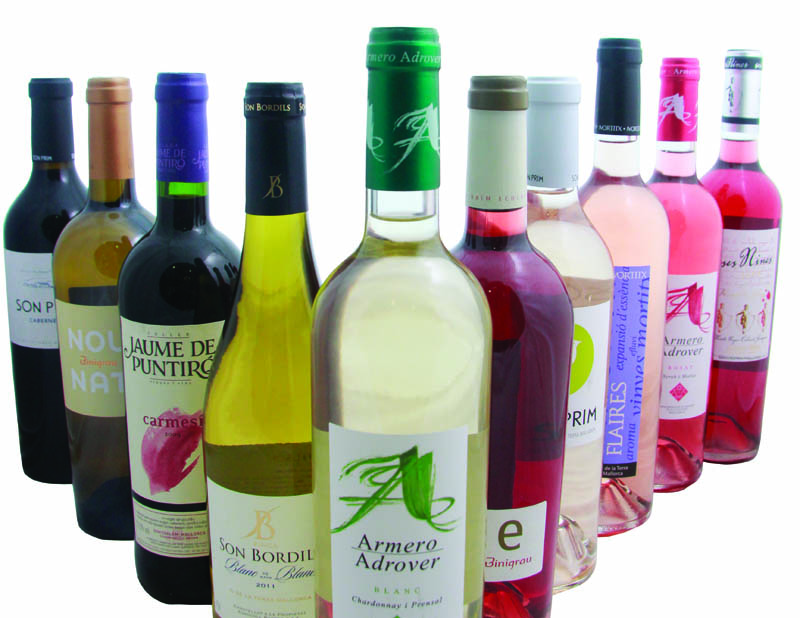


In the islands oldest wine growing region sits a collection of eighteen(18) villages that make up one of Spain's youngest Designation of Origins. With some of the current estates having a history going back to the end of the 19th century, it was this region that gave birth to Mallorcan wine more than two millennium ago. On the northeast side of the island eleven wineries and 64 growers on more than 200 hectares make up the region of  Pla i Llevant DO.  Here too grow international whites Chardonnay, Moscatelle and even some Riesling with the well-adapted native Prensal Blanc. Low alcohol Mediterranean reds of Pinot Noir, Monastrell, Merlot and Cabernet Sauvignon are here too, often to blend with native Montro Negro and Callet varieties.


Today, this isolated islands deeply rooted ancestral peasant culture is serving well the passion of the dedicated families of the regions small producers as they dedicated themselves to making better wines with each harvest. Increasing international awards and glowing reviews from global wine writers are beginning to put tiny Mallorca on the wine map.  Combined with excellent, critically acclaimed 2009 and 2010 vintages, Mallorca's centuries of isolation may soon be something of the storied, but sunny past. Yet, I remain anxious to prepare for the next phase of the Wine Educator's exam, so today I called the Society today to speak with the Director of Education. He advised that I missed passing by correctly identifying two(2) faults. As disappointed as I am, this chronicle will then continue and I'll try getting over this difficult(for me) section of the exam on the next scheduled date.

Alcu'dia
Until then, Salud!


Sunday, September 30, 2012

BRAMBLES: An Exam & A Tasting

We all taste differently.  At least that is what cannibals say.  Our tasting thresholds for recognition and identification of scents or flavors are as different as our taste memories. Of the thousands of odors our sense of smell can detect, tasters can only recognize a tiny portion of them.  With consideration that there are almost infinite differing concentrations and intensities of these scents, it's a wonder that we can recognize smells at all.  But, we do. In my most previous attempt at the SWE Faults & Imbalances Exam, I had problems identifying the scent(?) and body of sweetness vs.alcohol in a field of wine samples. So in the days prior to the exam I did a mock exam at home concentrating on these imbalances from the same base wine.

Almost six(6) weeks after my disappointing results, I tested once again with the Society during a regularly scheduled Wine Educator Exam.  In the business conference room of a high volume in Napa brand I joined seven(7) other aspiring Wine Educators who were also trying to make 'scents' of it. I found once again that on this occasion the perceived traces of darker hues to sight, off aromas to smell or imbalanced composition to taste were seemingly at very minimal levels. Distinguishing one sample from another was going to be a challenge. But, that is just me, and that is most certainly the point. It struck me that what has evolved personally over the past few exams is a developing or changing strategy, a revised focus, and an evolved concentration in trying to identify the distinctive features of the eight(8) wine samples. 

A few of the samples may have shown slightly darker hues due to higher concentrations of grape tannin or as a result of being a little oxidized(maderized).  After isolating those samples I nosed each of the remaining test samples looking for distinctive or tell-tale aromas. Did any smell like a burnt match(sulfur dioxide) or nail polish remover(acescence) or vinegar(acetic acid)?  Once isolated, the field was down to three, and only one matched the control sample.  If I was correct in my adopted strategy, the other two(2) were heavy in sugar or alcohol. One of the last students to complete this portion of the exam, I turned in my answer sheet with a confidence I cannot recall feeling from prior exams.  Outside in the parking lot I noticed that I felt lighter, less compressed than when leaving the exam in the past.  I took this as a good sign, and will get hopefully positive results from the Society in about six weeks.

Perhaps to celebrate, or most probably because the wife & I were housesitting in Napa, on Saturday, September 24, we traveled across the Napa Valley to attend the13th annual Mt. Veeder Appellation Wine Tasting on the grounds of the impressive Hess Collection winery. This large east-side of the mountain appellation benefits from the significant cooling influence of nearby San Francisco Bay. With most of its vineyard acreage in elevations above the fog line, the Mt. Veeder Appellation is dominated by shallow sedimentary sandstone & shale soils. It is planted mostly to Cabernet Sauvignon and for all the intensively labored,  handworked vineyards within its expanse, it is saddled with the lowest yields in the Napa Valley. The passionate vineyard workers of these mountain sides literally produce 'Napa Valley wines at their Peak"

Unlike most of the dispersed tasting 'events' on our Sonoma side, such as the well attended RRWR's Winter Wineland, or the WDCV's Passport to Dry Creek Valley, here twenty-six(26) brands were all in one glorious place. Under deep canopies that encircled the wineries patio gardens, the neighbors of Mt. Veeder poured side-by-side, only interrupted by the wonderful selection of antipasti cheeses, salumi, and pork sliders that were displayed non-stop by attentive staff from Chef Chad Hendrickson's kitchen.  As an appellation based tasting event, this was a wonderful day of easy tasting of some of the regions most sought-after wines.

Best wines of my tasting:
  • Rudd 2009 Susan's Blanc, a delicious Semillion/Sauvignon Blanc citrusy blend
  • Y. Rousseau Wines 2009 Milady mouth-rich and brightly balanced Chardonnay
  • Lampyridae Vineyards 2009 proprietary Cabernet Sauvignon/Syrah  cuvee, Communication Block Red Wine Blend
  • Yates Family Vineyard 2008 Cheval, displayed notes of dark fruit & caramelized figs with a red raspberry exit, making it one delicious Cabernet Franc
Cheers & Salute'

Friday, August 31, 2012

FAULTS; Imbalances in Wine II

Walking into the wine faults exam, I was feeling  prepared and confident.  I had taken the Faults & Imbalances exam before and knew what to expect.  For this effort I had practiced recognizing the imbalances of excess sulfur dioxide or acetic acid at home using measured samples provided by the Society of Wine Educators.  Unlike any preparation in the past, on the day prior to the exam I tasted through a flight of faults with a noted certified Wine Educator, and thought that I did well. Along with the other eight(8) students I was called into the exam room that late-July early afternoon and upon reaching the threshold was immediately blinded by the exam room's brilliant white light that washed through the west facing windows. Ready to employ my new identification strategy, I quickly realized that this was going to be a challenge in a different environment!
Sight

Almost four(4) weeks had past.  I was confident and anxious to get the results that would proclaim that I had successfully cleared the second to the last wine hurdle to my goal of becoming a Wine Educator.  When my call to the Societies offices in Washington D.C. was returned I sank beneath the weight of their informed reply. Sugar, alcohol and SO2 were not identified correctly on my exam.  Although I had significant improvement in my scores from previous efforts, the heavy disappointment was draped upon me.
Sniff

But, I am getting closer to my goal with each step, so I'll try again.  The next scheduled exam for aspiring Wine Educators is in late September, and I'll register, pay the fees and be there.  In the period prior to the exam, I'll again look at and taste faulted, imbalanced wine samples to get a sensory memory for their qualities. And, I will look with a greater emphasis on the faults that were incorrectly identified on my most recent previous attempt. It is frustrating, because excess sugar, alcohol and SO2 are faults that should have been among the easiest to identify because of the way they feel in the mouth.

Taste
Excess sugar may be difficult to detect by sight or sniff, but it should have a fuller body than wines offering less sugar.  These samples should of course be noticeably less tart and have a richer mouthfeel, and this I should have been able to identify.  Ethanol or alcohol is actually sweet, but not to the rich extent of sugar.  It may offer less viscosity or texture when the wine is swirled in the glass, and as previously described, be hot on the palate and in the nostrils upon exhale.  I should have not missed this one either. SO2 or Sulpur Dioxide should be recognized by the distinctive 'burnt match' aroma off the glass.

I need just one more correct answer in this test section, and there's a good chance I'll get it done in September.


Sunday, July 22, 2012

FAULTS in Wine; Always Too Much!

Imbalances in a wines character or composition are considered to be a fault(defect) in the wines character & physiology. Good wine should be a complex and balanced living entity where its building blocks are perceived to be in balance with one another.  These principal elements are the same for all wines: alcohol, sugar, acids, polyphenols(tannins & pigments), and grape extract(flavor). Beyond that, all wine is about 80-85% water.  It is the recognition of imbalances in the same base wine that will be tested on the third chapter of my upcoming Wine Educators certification exam, titled "Faults and Imbalances Wine Identification".

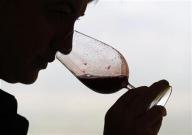
Nine(9) glasses of the same base white wine are displayed across the tasting mat, including two un-altered wines.  Of the remaining seven(7) samples, all have been altered to around the threshold of recognition for various composition/tasting faults.  The game is to correctly identify each of these, including the un-altered(base) wine.  On sight, they are all not the same color, as several samples appear to be a darker hue. The noticeably darkest sample is immediately isolated, as it can be only one of two possible faults: excess tannin or oxidation.  If overly tannic, it will won't give away its imbalance by aromas, but by taste where it will quickly dry the top & bottom gums of moisture(protein-based saliva)and have a short, very dry finish by comparison. If oxidized, it will have a distinctive cooked fruit or sherry-like aroma, and upon taste may offer a memory of caramelized sugars with a dry roof of the mouth as well as a short finish when compared to the control sample..
Oxidation may darken wine color early.

Upon nosing the glasses, scent molecules collected thru the nasal cavity are transmitted to the exposed nerve receptors and on to the olfactory bulb of the brain, hopefully triggering a scent memory. Samples that smell of rotten eggs or burnt matches probably are the result of excess hydrogen sulfide, a common wine production additive (sulfur dioxide) that prevents spoilage. Aromas that remind us of vinegar or nail polish remover(ethyl acetate) probably indicate an imbalance in the wines necessary acetic acid once it combines with alcohol(ethanol). This perceived imbalance should 'burn' the nose, and create a flatter wine with an almost pasty body to it. As a fault, this combined character in wines is known as acescence.  Another tainted sample that may feel like a singe of the nasal hairs is excess alcohol, but it won't have the ethyl acetate characters.
Acetone or Ethyl Acetate pronounced aromas

An imbalance of alcohol can create greater 'body' in a wine, and I find that familiar whiff of alcohol to be presented upon an exhale through the nostrils following a taste. By appearance, higher alcohol may also be represented by more defined 'tears' running down the glass following a swirl. Another wine sample with the feeling of greater or richer body would be a wine imbalanced with excess sugar(sucrose).  Because it's sweet component is in greater proportion, this wine should usually taste cloyingly less tart and offer a mouthfeel of richer body.

Not surprisingly, acidity in wine balances out sweetness and bitterness. Of the acids found in grapes, tartaric, malic and citric acids are primary and tend to be 'fixed' in the chemical process of winemaking.  Tartaric acid is the most important among these, as it provides a prominent role in maintaining the stability of any wine. It holds things together, just like cream of tartar. But when it is out of balance, it excessively lowers acid strength(pH), robbing the wine of freshness and usually making wine citric tart.  If we correctly identified our samples, the wine that matches the control sample should be the single taste remaining.  Good Luck!


Many other faults, such as diacetyl(rancid butter) or brettanomyces(barnyard, gamey horse aromas) can also be present in commercial wines.  These can reflect everything from poor hygiene or improper wine stabilization in the cellar and post-production incidents such as heated storage or dirty glassware. Even as volatile and complex compounds compose each and every wine,  individual recognition thresholds for any defect or flaw are unique and vary to each wine taster. Beyond making recognizing trace faults in wine that much more difficult, I also have a limited recognition threshold with any wine when I have had too much!.

The exam is next week at the Societies annual conference, and I'll report results as quickly as I'm advised or become sober, whichever comes first.


Tuesday, June 26, 2012

FLASH: Value Wine Driven?

Perhaps my quest for certification as a Wine Educator is just an excuse to amp up my life-long hobby of searching out the wine worlds quality values.  Regardless, over the last few years I have gotten great satisfaction in exploring and utilizing the new wave of the wine industry's flash marketing web sites. Combined with the increasing number of Tweets, blog pages and magazine articles that arrive on my desk top each day, I am absorbing more current wine information than ever before. Each of these tools helps to bring into focus the ever-evolving global wine market that consumers increasingly have unparalleled access to.

Lots of choices make it hard to focus!

Generally, flash wine marketing sites are professional and well-run, offering buyers a limited amount of time to select from a limited number of daily wine specials at very attractive markdowns. A flash site can focus on a number selections of one brand or a single wine selection, but either way the opportunity to buy at a discount may be gone in a flash. For these wine brokers and marketers, the results of their effort to create a irresistible offer is almost web immediate.  Consumers here can't procrastinate, and typically feel like if we move quickly we're getting a great deal. Plus, these sites usually don't share their proprietary customer information with the suppliers(winery/brand), so for these retail sites there's no relationship building with the winery, only the e-commerce discount sites.
Good retailers direct us to fewer choices.

In the last half decade, wineries have been dealing with a long, recessionary economy and the consolidation of many wine distributors that can restrict their channels of revenue. Yet, wine sales have remained solid and per-capita consumption(and dollars) continues to grow across the nation. The wineries don't generally want to be known as discounters because it is so hard to rebound from, and are always market building for sustainable perceived value for their brand(s). So why use another revenue flume, like flash marketing? With flash marketing sites, wineries can clear out slow moving inventory, and raise some quick cash, and extend their reach to a savy new customer base that otherwise they may not have accessed. Plus, these sites can be a launch pad for a new brand or an easy way for an established winery to hold its pricing and merchandise their second label wines to savvy consumers.
Each a Great Wine, but which one to choose?
Current Flash Marketing sites, Like Lot 18 or WTSO(WinesTillSoldOut) fall into one of two models: either they buy the wine from a wholesaler or directly from the winery and then fulfill the order themselves. Or they take and process the order, and leave the producing winery to fulfill their order and deal with the ever-changing shipping issues. Just four(4) years ago, 25 states only allowed direct shipping from wineries or brokers, with current thirsty voter and revenue-conscience state house legislative actions, today it's grown to 38 states! Back in April of 2011 the NY Times wrote that these new flash marketing sites quickly have gained sales ground, producing annual sales in excess of $100 million. And sales for flash marketing sites continue to grow as a viable revenue alternative, moving quality wines in a persistently sluggish economy.


As flash marketing sites evolve, perhaps we'll see their tracking(and marketing) of customer selection & price point preferences, or maybe the creation of buying clubs so that like customers can take advantage of group quantity discounts.  There surely will be new access apps developed, if they are not already in the works, so that you can use links to social media sites or mobile devices to have consumers are always connected to the latest deal.  Regardless, flash marketing companies will evolve and eventually learn how to sell. Over time, the best of these innovators will succeed and find inventive ways to connect us to the deal. "Customers using these sites are loyal to the deal, not the winery", says Patz & Hall President Russ Joy.

Regardless, as the pretenders will fall by a wayside of empty wine bottles, consumers will have one more way to search out the global ocean of quality value wines.  Ultimately, these sites provide consumers like me with a broader selection of fine wines that otherwise we would not have access to in our retail communities. And, because we are thirsty and want to explore the wine world, these sites are definitely not a flash in the pan!

My focus should really be on faults in wine.  Next month I'll test(once again) to see if I am able to identify correctly the faults in six(6) glasses of the same wine at the Society of Wine Educators national conference.  In the past, I have used the fault formulas found in The University Wine Course, or a Wine Tasters Essence Kit. But, I have not been able to improve my faults recognition on testing, so I ordered an expensive kit from the Society.  Anxiously, I opened the shipping box, only to find that the ethanol or another vial had leaked, and all the identification labels were washed.  But, I'll feel better if I order some more wine on-line!