Sunday, May 20, 2012

CALIFORNIA: Thirsty Work

Cruise ship Old World wine selections
Cruise ship winelists are not unlike the average to below average restaurant wine lists in my Sonoma County neighborhood, except the limited choices are large production wines of national or international distribution.  So cruisers should expect to find Bogle California Chardonnay for around $32, and Ecco Domani Pinot Grigio for a little above $42.  My wife and I recently returned from a much needed and sunny Caribbean cruise, making wine choices that included better quality to value Oyster Bay Sauvignon Blanc($33.) and Melini '06 Chianti Classico Riserva($42.). Our wine holiday was a celebration of sorts.  Over the past four months we have seen the passing of each of our family pets, as well as the end of a long-term and courageous battle from my wife's only brother. On a brighter note, I was advised that I had earned a passing score on yet another portion of the Wine Educator's certification exam, the worldly blind Varietal/Appellation Varietal Identification. It was time to take a break and re-set.

Grape flowering promotes Fruit set

It is not surprising that in our absence our garden and in the surrounding vineyards things continued to grow in the Spring sunshine. Premium grape growing is farming, and as such is subject to many of the same factors and influences as those shouldered by apple or soybean growers.  Here in California's North Coast, over the last 50 years premium grape growers have endured many cycles of supply and demand, threatening vineyard pests, and flavor-of-the-week consumer trends. In Sonoma County, every harvest following 2007 has been smaller than the one before, with harvest wild fires, critically wet Springs and irregular growing seasons thrown in along the way. With the nation's economy in recovery mode, wine bottle pricing at retail has for consumers has fortunately remained generally stable, if not stagnant. But now the winds of change are blowing across these vineyard lands.

Recent surveys from wineries and grapegrowers offered stark indications of what consumers should expect in the years ahead. Can you say 'domestic wine price increases'?  My overview understanding is that the California bulk wine market(they buy unsold left-overs & lower end fruit) has very shallow inventories currently, and that grapevine nurseries have very little inventory for needed replanting or vineyard expansion. Industry symposiums in this part of the state have reported that wineries are working hard to secure long term grower contracts now after a succession of marginal volume harvests. To confirm,  recent reports have indicated that many Lake County Sauvignon Blanc contracts have increased by as much as 50% for premium fruit that only last year could not find buyers. Here in Sonoma County we are seeing premium Cabernet Sauvignon fruit contracts now approaching double what they were just last year at this time!

Fruit set
Land(vineyard) costs, labor costs, quality costs combined with production costs each contribute to that bottle price of California wine.  As a result, we have a broad range of price points from the generic to the very specific(vineyard).  But, what about the prestige of the brand name? “For something like Poppy(Pinot Noir), it could be a wine that is very well made, but it's made from Monterey County so the vineyards don't have that prestige,” wine consultant Fred Daniels explains. "While the(higher) $46 bottle comes from the Russian River Valley. “The wines there are typically run in this price range. If I go to Russian River and buy grapes from that area, the wines automatically will be priced in this price range.” And consumers should expect to pay more for these 'prestige' wines, as well as many more generic wines in the near future.  The current supply and demand challenges are just another reason that savvy wine consumers are looking to the quality wines of foreign producers: from New Zealand to South Africa, and the Languedoc region of France or the Dao of Portugal.

Domestic wine consumers do have, of course, domestic options. In a recent addition of Wine Spectator (April 30 '12) more than 100 West Coast value wines were reviewed and rated. Noted were more than 25 Sonoma County wines, and another 20 Central Coast wines rated very good to excellent at $20, or less. Widely distributed California brands like Estancia, Dry Creek and Kenwood made the annual value list. Not to be outdone, Washington State offered more than 20 value wines in this review, anchored by venerable Chateau Ste. Michelle and Columbia Crest wineries, contributing to the sub-$20 'Smart Buy' parade. For my part, I'll continue to pursue certification as a Wine Educator and continue to search out these and other quality international/domestic wine values.

The Society of Wine Educators annual conference in July will be yet another opportunity for me to measure my wine knowledge. One of the last hurdles in my quest, the Faults and Imbalances Wine Identification  has always been a big challenge for me.  But, with a new perspective after my re-set,  I look forward to re-focusing my attentions once again to the wines of the world. It is just another reminder that this is globally thirsty work!


Tuesday, March 27, 2012

BRAMBLES; Growth and the Muscat

Flooded Vineyards are a Problem

There was a plan in our small Sonoma county garden.  Organized nature, I think it was, with a tapestry of colors, shapes and textures that blend into one another over small spaces, seemingly isolated from one another. That was five(5) years ago, and we continue to move and re-plant, replace and mourn our garden losses.  My curtain of vitis vinifera grape vines and our barrels of seedless vinifera table grapes over the same period have also never really reached our modest expectations.  There would be overly vegetal growth with long, irregular canes and poor fruit-set; or when they had promise, like in 2010, my fruit would became a steady diet for local birds or raisin from a flash of summer heat.  Chronically disappointed by these developments(or lack thereof), this new Spring is now following a dryer than normal, and again a mild winter, and I have come to the new philosophy that sometimes things just do not grow the way we want.  We just need to grow with it!
Domestic Concord grapes

What continues to grow are wine $ales. I remember hearing once that the 'American sweet tooth' was reflected by the commercial dominance of sweet wines in the domestic marketplace.  With sweetened White Zinfandel, Boones Farm, Concord and other fruit wines prominent outside of dry-wine California, it seemed to make sense. It was also understood that an easy way to mask flaws in any wine is to add up to the allowable measure of sugar. But recent trends here are indicating that there are now newly discovered wines that have continued to add to the domestic power of sweet.
  • Wine Business reports that sales of retail wine, off-premise segments below $20 and above $20 all showed significant growth in the four(4) weeks prior to early March. This continuing trend is supported in large part by the great growth of sweet red wines and the newly found popularity of white moscatos(Muscats).
  • As impressive as that is, Wine Business has also reported that U.S. imports of Rose' wines from the Provence region of southern France grew at an astonishing 62% in volume in 2011 over the previous year!
  • Continued domestic wine growth has currently been reported by the Wine Institute as well as Nielsen Company, citing the 18th consecutive year of volume growth for our industry.  In addition, current numbers confirmed that U.S. wine drinkers are continuing to firmly be the World's largest wine consumers by overall volume.
  • Western Farm Press noted that a 2011 survey of California nurseries showed a whopping 25%+ of all grape variety sales were for the Moscato vine. It is expected that plantings of Muscat grapes are to increase by as much as 136% by 2015!
Immature Moscato

Perhaps the world's oldest domesticated variety, Muscat grapes(WINE STUDY:01/23/12) known by many synonyms are grown around the world, and as such are a thirst-quenching workhorse. They have evolved into a pretty large grape family. Uniquely, the variety has high concentrations of antioxidant flavonoids; about the amount found in many black skin grape varieties. It can produce dry wines in Spain or Alsace, semi-dry wines in Croatia(near its ancestral origins), or a sweet wine in the U.S. or Austria. Muscat is often fortified to arrest its fermentation or sun-dried to concentrate its sugars as with the VDN's of France or the passito wines of Italy, respectively. It even is the base for sparkling wines, most notably the Moscato d' Asti products of Asti Spumante made from the pressurized-tank Charmat method.
Moscato d'Asti Vineyards

An azure blue bottle with a golden foil sat chilled recently on our dinner table.  What could only be described as tropical aromas escaped even as I opened the bottle. A clear, golden straw tinted wine poured into the glass and what arose left impressions of stone fruits and warm Summer flowers.  The La Sirena 2007 Napa Valley Moscato Azul enjoyed that evening was a rich, dry and balanced wine; described by my wife as being what could be only imagined as a papaya/ guava galette. Delicious, textured and flavorful, and it could not be mistaken for fresh. But, the evolution of this nectar was such that it filled and enriched our senses with its warm color, its complex aromas and its mouth-filling fruit character. This was one terrific food wine that added so much to our meal, and I had a moment where I understood its now growing varietal popularity. 
Ripe Moscato


From what has been reported by current wine trends and this reporters personal wine journey, Muscat or Moscato is in pretty good shape.  Pricing, both imported and domestic, continues to reflect value, and selection seems poised to grow consistently in our marketplace. Sometimes we just need to grow with it. Now where did I put that bottle of dry Provencal Rose'?

Update: Wine Educator practical exam results should be coming out in the next few weeks, and I'll advise.

Salute!

Monday, March 19, 2012

BRAMBLES: Springing thru Winter with Alcohol

Sonoma County Zinfandel
On a recent sunny Spring-like afternoon a gnat flew into my wine glass and seemed to enjoy a few moments swimming in the 2009 Piedmont Barbera.  Its plum-grape hue and aromas were complemented by its bright acidity, its candied plum and orange peel flavors, and quickly stained the gnat's wings. He/she(I can't tell) swam around to the opposite rim of the glass and seemed to try climbing out. As I'm not a supporter of animal cruelty, I tipped the glass away from the gnat and took a sip to flavor the meatball sandwich I was eating. It was a bright counterpoint and delicious(the wine, not the gnat!).  As my gnat seemingly staggered its way up towards the inner rim I wondered if he was showing the effects of alcohol?
Barbera d'Asti Vineyards


Alcohol in wines has recently been in the news once again. A consistent trend to pick riper fruit(higher sugar) had resulted over the years in critic approved and consumer accepted fuller bodied wines and typically higher alcohol. Numerous studies have confirmed that many wines have increased in alcohol content by as much as 2% over the last generation from wineries around the globe. It has not been uncommon to see New World wines of California and other warm locals producing white wines in the 14.5 alcohol range, and red wines above 15%! There certainly have been improvements in grape farming and fermentation sciences that may have contributed to this trend. Yet, I'm convinced that wines are made for consumers in consistent 'house styles' so that they are more easily branded for those who enjoy their stylings.

North Coast grape harvests over the last three years have been significantly cool and challenging for growers who have as a result picked less fruit.  One of the results of the smaller yields in the face of growing wine consumerism is that grape prices from growers are once again starting to climb(just like farming costs). But the real benefit, according to a SFGate report, is that nature has forced a welcomed change to less robust, more subtle wines with good brightness and acidity. As a result, wines from these most recent California vintages will be lighter in style and (thankfully)lower in alcohol.
Wine as Foods Companion

Decanter magazine has recently reported that a growing and significant minority of wine consumers prefer lower alcohol wines. Commissioned by the German wine trade fair, Prowein, the survey of more than 1000 wine drinkers from the US, the UK, Germany and China, indicated they preferred wines of 12% alcohol or less. Perhaps most surprisingly, the low alcohol preferences were markedly higher among the younger adults surveyed.

Those of us old enough to remember pre-1980's table wines saw 11 - 12% alcohol content in wines with regularity. Ultimately, the uniqueness of individual grape varieties and growing environments, farming yields and cellar practices, means that there can be no fixed acceptable level of alcohol in wine.  As a complex, living organism made up of organic compounds, good wine will always be the result of correct balance. Alcohol is just one link in the chain that is a wines ultimate balance
Party-Boy Baby Bacchus

Recently published studies out of the University of California San Francisco indicate that alcohol is part of a reward-seeking behavior in gnats who are not sexually satisfied. Apparently gnats that have recently mated show little interest in booze, but those that were shunned by lovers may require a more socially rewarding  experience, such as alcohol consumption, and choose to consume it.
.
And then my gnat flew back inside the wine glass.

Wine Sips:
  •  2009 Tres Ojos, “Old Vine Garnacha,” San Gregorio, Catalonia, Spain
  •  2009 Caldora Montepulciano d’Abruzzo, Abruzzo, Italy
  •  2010 Santa Julia Reserve Malbec, Mendoza, Argentina
 

Sunday, February 26, 2012

BRAMBLES: Mid-Winter Faults


Warm temps locally force blooming cover crops
Out of Balance. Typically, wines that are 'out of balance' have at least one compositional fault, sometimes more. With the upcoming Society of Wine Educators Wine Educator exam around the corner, I know that part of the test will be on the blind identification of numerous wine faults. Outside here there is bright sunshine, unseasonably warm temperatures, and an extended forecast that's mostly sunny.  This being mid-winter in the mid-upper latitudes of the northern hemisphere, the purposely tainted wines that I practice with are not the only thing seemingly out of balance.

Extended forecasts here in wine country predict day time temperatures above 60 degrees and little if any rain on the horizon.  Sonoma County will see about 30" of rainfall in an average year, most of it irrigating our vineyards in the December thru February months.  Season(July 1 to June 30) to date rainfall this year has been just barely around 11 inches, with most of it falling in a five(5) day period mid-January. Here at home, the last three sunny days have not been below 75 degrees, setting historical records. Most seasons we get about 5" of rain fall in February, but not this season.  We will be fortunate here to do better than 1.0 inch total rainfall for this entire month.  Because this is the dormant season for grapevines when they absorb most of the sustainable water they need, local vineyards have been tapping local water supplies and irrigating. And with the arrival of Spring, and its welcomed bud-break weeks away, there are sure to be watchful growers and even more water local river/reservoir usage misting potential frost damage.
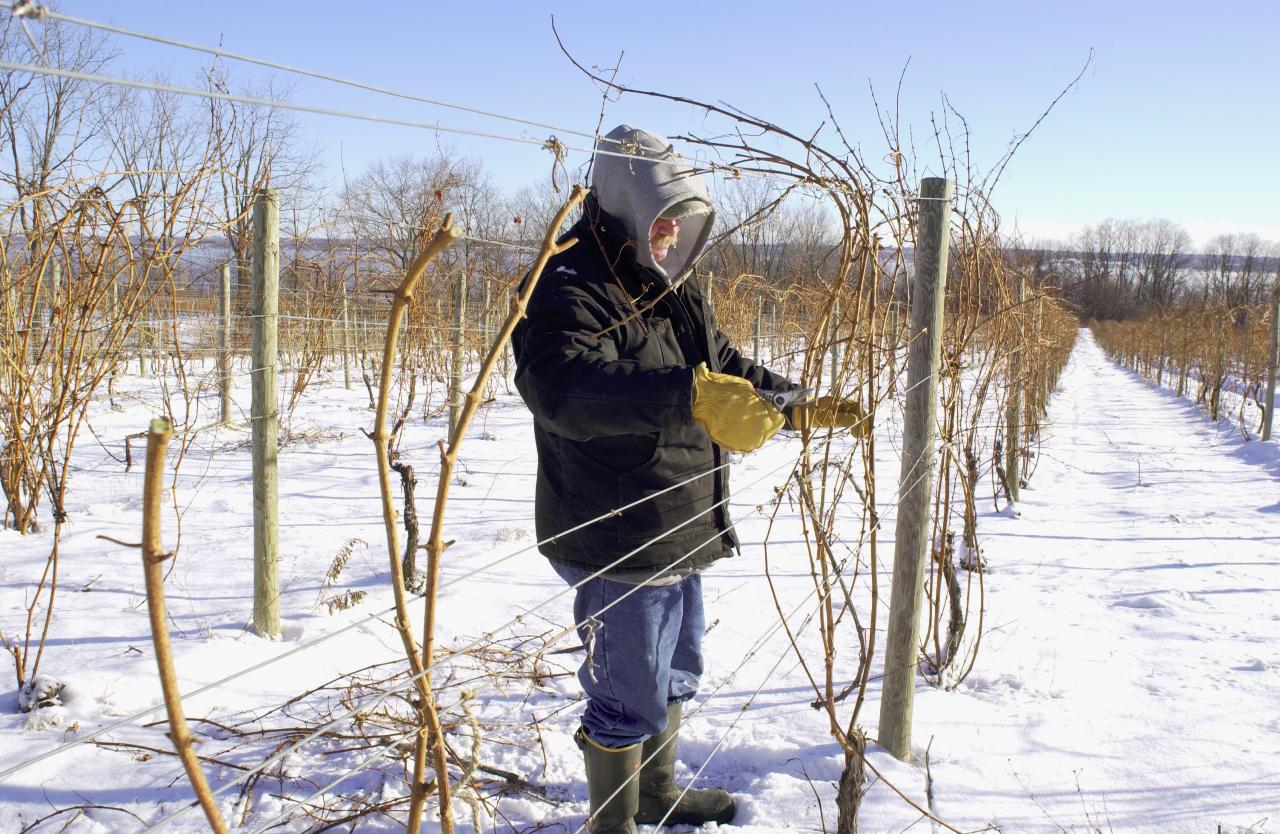
Northern Latitude mid-winter pruning of vines

Out of Balance, too, are wines that have one or more faults, or a problem with their composition.  These maladies can appear as off aromas or unappealing taste(s) in the tasters glass. Because wine is a result of chemical changes in grape juice, the precise control of these changing element levels can keep a wine in balance. However, cooked wines(lifeless or stewed) which often have been overheated or TCA 'corked' wines(aromas of wet cardboard) can be unknowingly served to the willing consumer. Of the many challenges to making good wine, there are a number chemical in-balances that remain prominent.

  • Acetaldehyde is the result of oxidized ethanol(alcohol), and creates a straw-like, almost acrid character that may increase a wines complexity while keeping it unbalanced.
  • Brettanomyces(Brett) which produces unpleasant aromas of barnyard or wet dog is the result of yeast spoilage.
  • Mercaptans(Ethyl Mercaptan), is sulphur related, producing the malodorous scent of rotting onions, stewed cabbage or skunk.
  • Fruitless and worn-out, Oxidized wines have interacted with too much air, becoming madeirised or sherry-like.
  • Sulphur(SO2), the wine-making preservative, can be guilty of producing volatile aromas & flavors of burnt rubber or burnt matches. Another sulphur compound, Hydrogen Sulfide(H2S) has the odor of rotten eggs. A small amount of sulfites are produced during the natural course of fermentation.
    Brett can smell like wet dog in the wine glass
  • Volatile Acidity(VA) is vinegar-like at its worst, but mostly displayed as the result of the overproduction(higher levels) of acetic acid or ethyl acetate(a common ester), reminding most of us of nail polish remover.
Wines that are too alcoholic, or hot to the palate, can also be out of balance. Some hot growing varieties, like Grenache, or uneven ripening grapes like Zinfandel can be prone to this trait, but may not result in a wine that is out of balance. Herbaceous aromas rising from a wine glass can often evoke a scent of green veggies or herbs like oregano. Not altogether unpleasant, these olfactory impressions such as those of asparagus or green grass aromas in Sauvignon Blanc, may not necessarily push a wine out of its natural balance. But, when present in compositional excess these elements could be considered a fault.
Over sulfured wines are a common fault
 
Tannins are a natural and necessary part of a wines structure, but when presented in excess can produce a perceived fault in the wine.This compound offers complexity and a fuller body to most wines, and that is a good thing. Alcohol, too, is a needed part of any wine, as it is a byproduct of yeasts feeding on grape sugars. But this basic element can be offered in excess.  When it is perceived as such, the wine will be considered out of balance. Other undesirable traits may be unsightly compounds such as sediment or tartaric crystals suspended in the wine.  As these are a natural by-product of winemaking and generally benign; they may be unsightly but are usually not considered a fault that causes a wine to go out of balance.

Fermentation odors that result from wines biochemical process are obviously quite natural, however, when they are poured out of the bottle they are undesirable. Likewise, CO2, or carbon dioxide, the naturally occurring chemical compound that is a byproduct of fermentation is necessary.  When it remains in the bottle of a non-sparkling wine it is described as effervescence or carbonation and may be a non-intended fault in the wine.  There are some traditional 'intended' examples of this trait, such as the Vinho Verde wines of Portugal.
It is true that we do not all taste things the same, in fact it has been estimated that about 10% of the population are super-tasters. But across the range of our unique olfactory perceptions we can individually find characteristics that are unpleasant or do not seem to be appealing. Next week during the Societies exam, seven(7) glasses of the same wine will be displayed to each applicant. One of those wines will match the control sample, but the other six(6) will have a wine fault and need to be identified correctly.  With the extended forecast here predicting rain on the test day, perhaps this aspiring wine educator in wine country will be seeing a positive return from being just a little out of balance!

Cheers!

Tuesday, February 7, 2012

WINE STUDY: Grape Characteristics (3)


Appearance, aromatics and flavor characteristics of any wine are assessed by each candidate of the upcoming Wine Educators Certification exam. By virtue of this process, tasters will be challenged to identify the dominant grape varietal of the wine, and in a separate exam, any of its potentially numerous faults that cause a wine to be out of balance.  As our exploration of global grape varieties continues, we arrive at a place where the grape names are not as familiar, but remain a principally important commodity not only to their individual international localities, but also to any aspiring wine educator. Fortunately for domestic consumers, these varieties can represent some of the greatest quality to price values on the broad, sometimes obscure, wine planet. Let's raise our glasses to some of the role players.

Pinot Blanc(Pinot Bianco, Weissburgunder) offers fruity aromas of apple, citrus and flowers while being typically medium to full bodied.  It's character is not unlike Chardonnay, which is understandable as they are both have history in Burgundy and may be genetic mutations of the same variety: Pinot Noir. Full bodied examples can be found most notably in Alsace and northern Italy, whereas in Germany or Austria the grape is shown as a medium bodied varietal where it can be found in stylings that are either dry or slightly sweet.
Semillon, easily cultivated and of prolific yields,  is a white grape distinguished by being modestly low in acid for such an early ripening variety.  Although easily sunburned, this thin skinned grape of almost oily texture is typically susceptible to Bortrytis cineria or noble rot fungus, and thus a principal partner in some of the world's greatest sweet wines. It can't be a Sauternes or a Barsac without Semillion in the blend. When grown as representative, this rich grape variety can show mineral elements, with rich and complex flavor notes of citrus, stone fruits and apples. Today, there are some terrific examples of the unique character of this grape in balance with Australia's Chardonnay.
Noble Rot fungus


Torrantes is an aromatic grape variety that typically is floral-citrus in its aroma, and is the principal white wine grape of long-isolated Argentina. On the palate it tends to be bright and crisp with good acid, flavor notes of flowers, stone fruit(like peach, apricot) and citrus. This perfumed variety can offer tropical fruit and distinctive kumquat flavors, and is a good foil for the regions staple chimichurri sauces. Today, most quality Torrantes wines are value priced and becoming more widely available throughout our marketplace 
Trebbiano(Ugni Blanc) is among the most widely planted wine grapes in the world! This high yield grape is generally undistinguished, but offers usually high acid to carry its fresh fruit flavors. Such 'fresh' characteristics allow Trebbiano to be very popular in its native Italy where it is broadly planted, and is principally important in the production of French distilled Cognac, Armagnac and even industrial alcohols. With its tough skins, it is easy to grow, and can offer subtle citrus and apple aromas/flavors, and finds itself typically blended with other white grape varieties.
Serralunga de Alba, Piedmont, Italy

Barbera is widely planted in its native Piedmont region of hilly northern Italy, where it grows vigorously, offering opaque skinned grapes of relatively low acidity. In its youth, it can be intensely aromatic, offering a nose of red and black berries. As it matures losing its freshness, the flavor notes become more of stewed or pruned vine fruits with the oak spice of its barreling becoming increasingly prominent.As the most widely planted and consumed grape of its native region, it is a terrific food wine for regional cuisine.
Gamay, an old cultivar in its native eastern France, is a purplish low tannin grape with naturally high acidity and typically high yields. Grown in the right soils, it can become very Pinot-like in the best growing years. Outlawed in Burgundy in 1395, it continued to prosper to the south in Beaujolais, as well as in the Loire Valley prior to becoming a world traveler. As an early ripen-er, the best of it today produces lighter, fruity wines with bright aromas of sour cherries, strawberry and even banana. On the palate, flavors of raspberry, dried berry and orange peel can be balanced with a hint of chalk, and rarely a dominant trace of oak.
Post-veraison Nebbiolo

Nebbiolo, may take its name for the Piedmont term for fog, 'nebbia'. In its youth, this high extract dark variety can produce light wines that are heavily tannic.  In fact this aromatic and structured native, with its aromas of tar, truffles and violets, is among the most tannic of all grape varieties.  It necessitates years of aging to expose its charms; offering herbal and woodsy notes of high acid red raspberry, ripe prunes and bitter chocolate. Generally producing wines of higher alcohol, this is one of the few of the world's noble varieties that has not successfully gone international.
Tempranillo (Cencibel, Tinta Roriz) has the distinction of being the Spanish 'noble' grape, getting its name from 'temprano', as in early to ripen. Here too, is another important grape that has not traveled auspiciously with any of the achievements it earns in its native vineyards. Across northern Spain it produces early ripening, thick skinned dark clusters that offer a woodsy and dusty character.  It can be 'fruit challenged' in the bottle, offering lean aromas of cherries, strawberries, leather, and road dust. Typically bush trained, it is a moderately tannic high pigment grape variety that also happens to be low in acid. As a result, its best examples tend to be blended with brighter varieties, producing more faint berry notes as well as increasingly earthy with advancing age.

Any of these or other grape varieties will stand ceremoniously in front of the aspiring wine educator on a placemat field of white paper. The best of these applicants will successfully identify principal grape varieties and major production regions using deductive reasoning from all the wine grape knowledge they have accumulated. They will ask themselves why that wine sample is not a Barolo from the Nebbiolo grape, but rather a Syrah. Or perhaps they will deduce that the white wine sample is a Sauvignon Blanc and not a Torrantes from the Salta region. In a separate testing, altered faults and imbalances of the same wine must be identified from the eight(8) similar wines that are displayed in front of them. An ability to recognize concentrated traits of sulfur dioxide or excessive tannin will serve the aspiring wine educator well in this portion of the faults exam. Only one sample in this field, however, will match the control sample, but which one?  For the successful student such questions will have the foundations of their answers in dedicated wine study. It probably doesn't hurt to also know as many grape variety characteristics as possible.

"Best while you have it to use your breath,
  for there is no drinking after death"
Cheers!